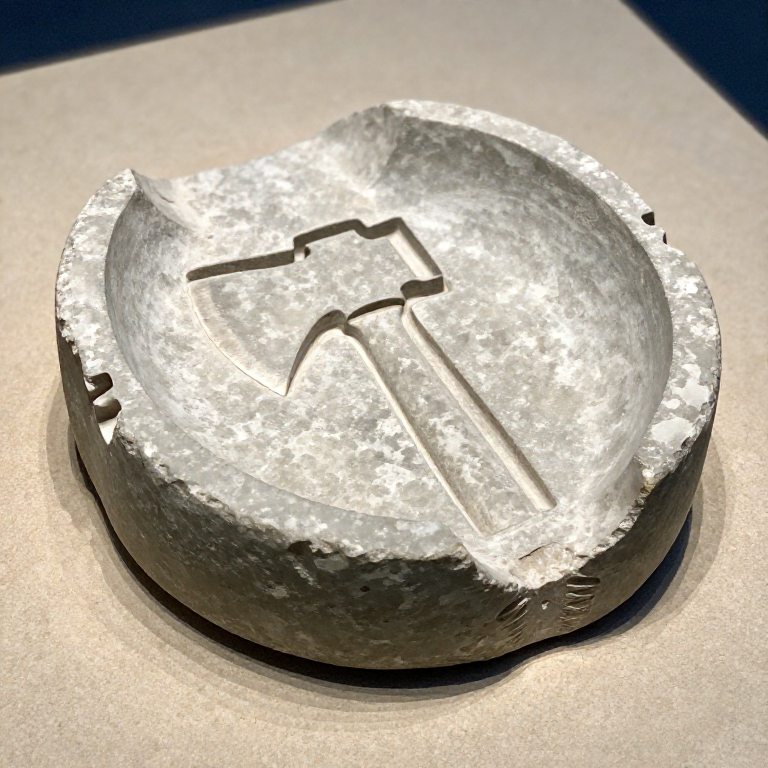


Carving a Stone Mould for Bronze Casting — Open-Face and Bivalve Moulds
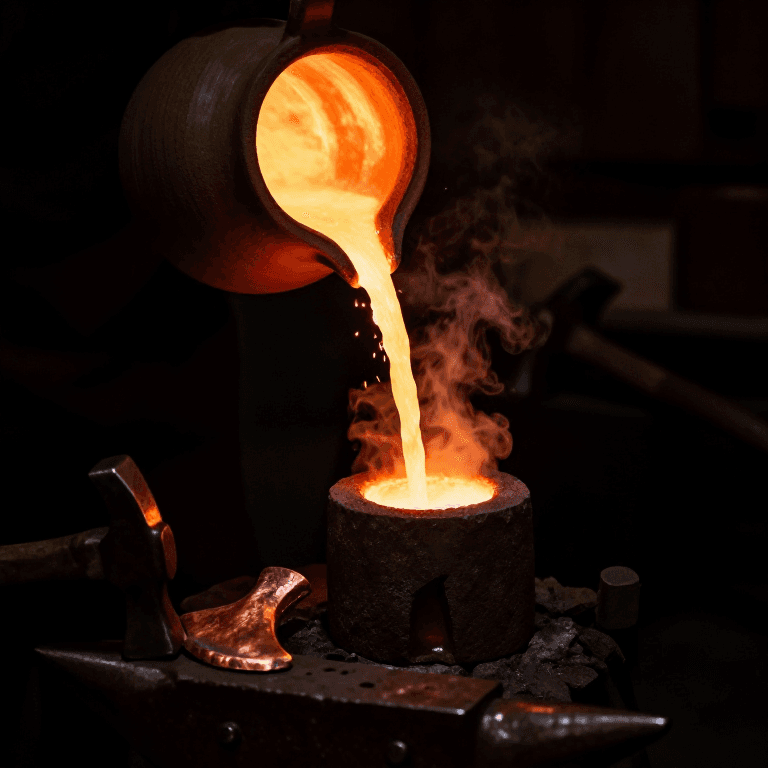
Before lost-wax casting existed, Bronze Age metalworkers carved moulds directly into stone. Soapstone (steatite) was the preferred material — soft enough to carve with flint tools, yet heat-resistant enough to survive repeated pours of molten bronze at 1,000 °C.
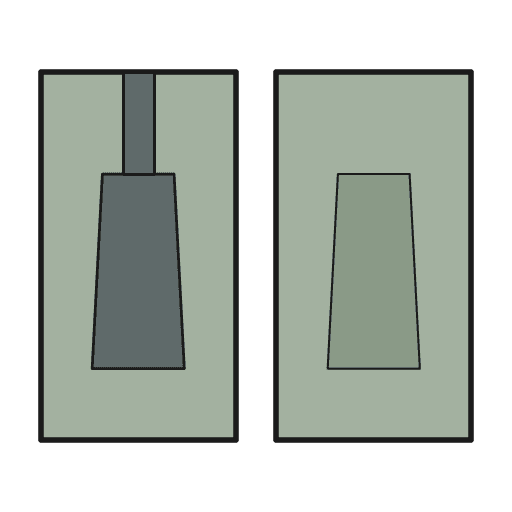
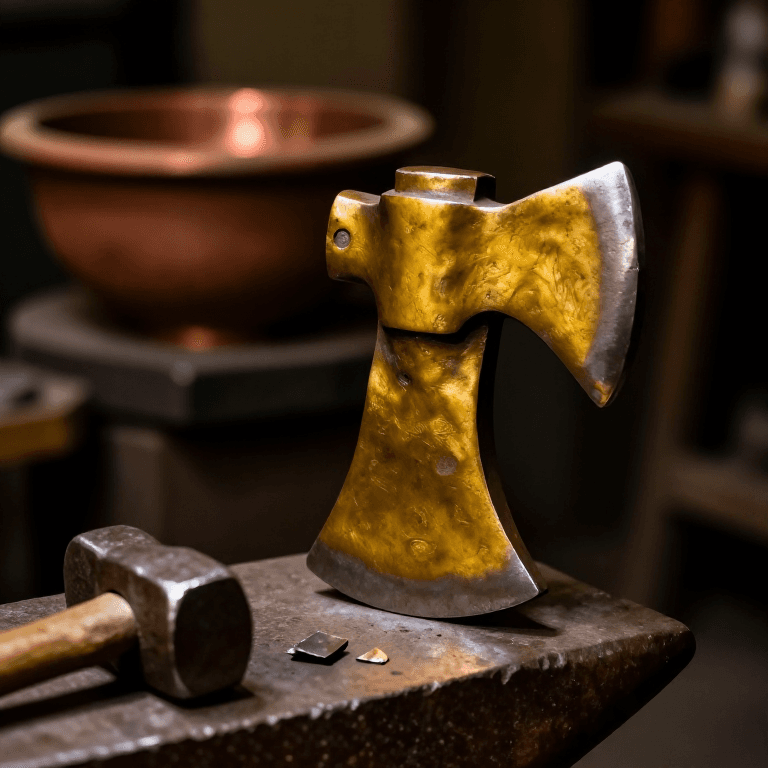
This blueprint covers both the simple open-face mould (one half, open top) and the more advanced bivalve mould (two matched halves clamped together for fully enclosed castings). The open-face mould produces flat-backed tools like axe heads and ingots. The bivalve mould produces symmetrical three-dimensional objects like spearheads and pins.
Alignment notches, vent channels, and pouring funnels are carved to ensure clean castings. A soot or tallow release coating prevents the bronze from bonding to the stone. A well-made stone mould can survive dozens of pours.
안내
Select a soapstone block
Select a soapstone block
이 단계의 재료:
 동석 블록1 개
Flatten the mould face
Flatten the mould face
이 단계의 재료:
 사암(연마재)1 개
Draw the object outline
Draw the object outline
Carve the cavity with flint tools
Carve the cavity with flint tools
필요한 도구:
 망치돌
망치돌Carve alignment notches (bivalve only)
Carve alignment notches (bivalve only)
Cut the pouring funnel
Cut the pouring funnel
Cut vent channels
Cut vent channels
Smooth the cavity surfaces
Smooth the cavity surfaces
이 단계의 재료:
 고운 모래100 g
필요한 도구:
 매끄러운 돌
Apply release coating
Apply release coating
이 단계의 재료:
 동물 기름 (우지)50 g
Pre-heat the mould
Pre-heat the mould
Clamp and pour (bivalve)
Clamp and pour (bivalve)
Cool and demould
Cool and demould
연결된 블루프린트 재료
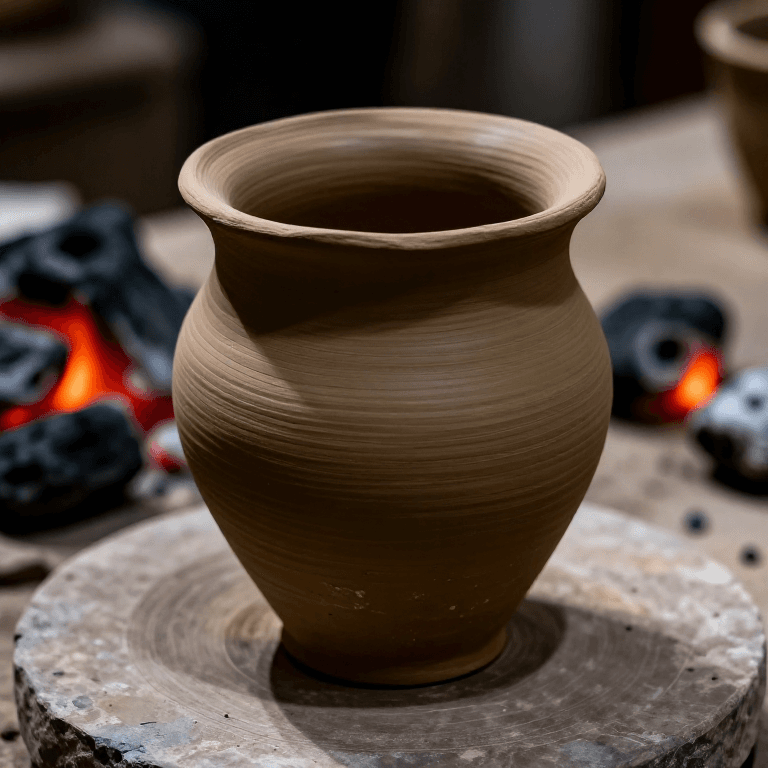
이 블루프린트로 만드는 것
관련 블루프린트
이 블루프린트들은 지식을 공유합니다 — 기술, 재료 또는 원리
CC0 퍼블릭 도메인
이 블루프린트는 CC0로 공개되었습니다. 어떤 목적으로든 자유롭게 복사, 수정, 배포 및 사용할 수 있습니다.
제품 구매를 통해 메이커를 지원하세요. 판매자가 설정한 메이커 커미션 을 받거나, 이 블루프린트의 새로운 반복을 만들어 연결로 포함시킬 수 있습니다.