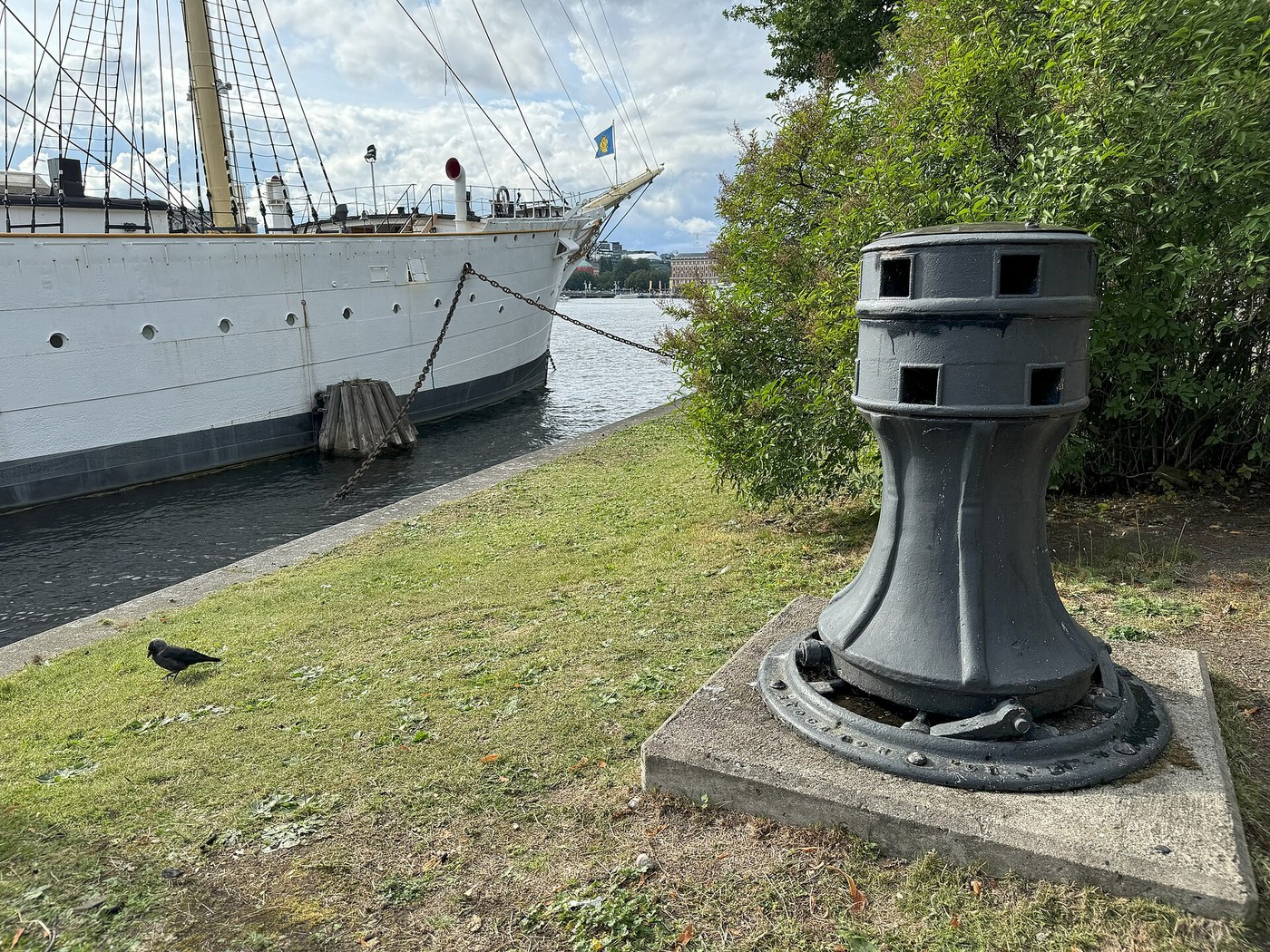


Capstan
안내
Turn the drum with a waisted profile
Turn the drum with a waisted profile
A capstan drum is narrower in the middle for a reason.
- Glue up three 140 mm plywood discs to make a drum about 54 mm tall.
- File or turn the outer face into a shallow hourglass — about 6 mm narrower at the waist.
- Bore the centre 8.0 mm.
- Sand the surface smooth but not polished.
The waist keeps the turns together. On a straight cylinder, wraps wander apart and can ride over one another, which fouls the rope and makes the grip unpredictable. The hourglass gathers the turns toward the middle by exactly the same self-centring logic as the crowned pulley in this batch — but inverted, because here you want the rope to gather rather than to spread.
Do not polish the drum. Surface roughness is part of the friction coefficient you are about to measure, and a glassy drum simply slips.이 단계의 재료:
 발트 자작나무 합판1 장
필요한 도구:
 직소
직소 줄 세트
줄 세트 무선 드릴
무선 드릴 드릴 비트 세트
 디지털 캘리퍼스 6인치
Mount it to turn, and add the handspike sockets
Mount it to turn, and add the handspike sockets
A capstan is driven by bars pushed by people walking round it.
- Mount the drum on a vertical shaft in two 608 bearings set into a plywood base.
- Fix the bearing blocks with M6 × 50 hex bolts × 4, M6 flat washers × 8 and M6 hex nuts × 4.
- Drill four square or round sockets radially into the drum's top for handspikes.
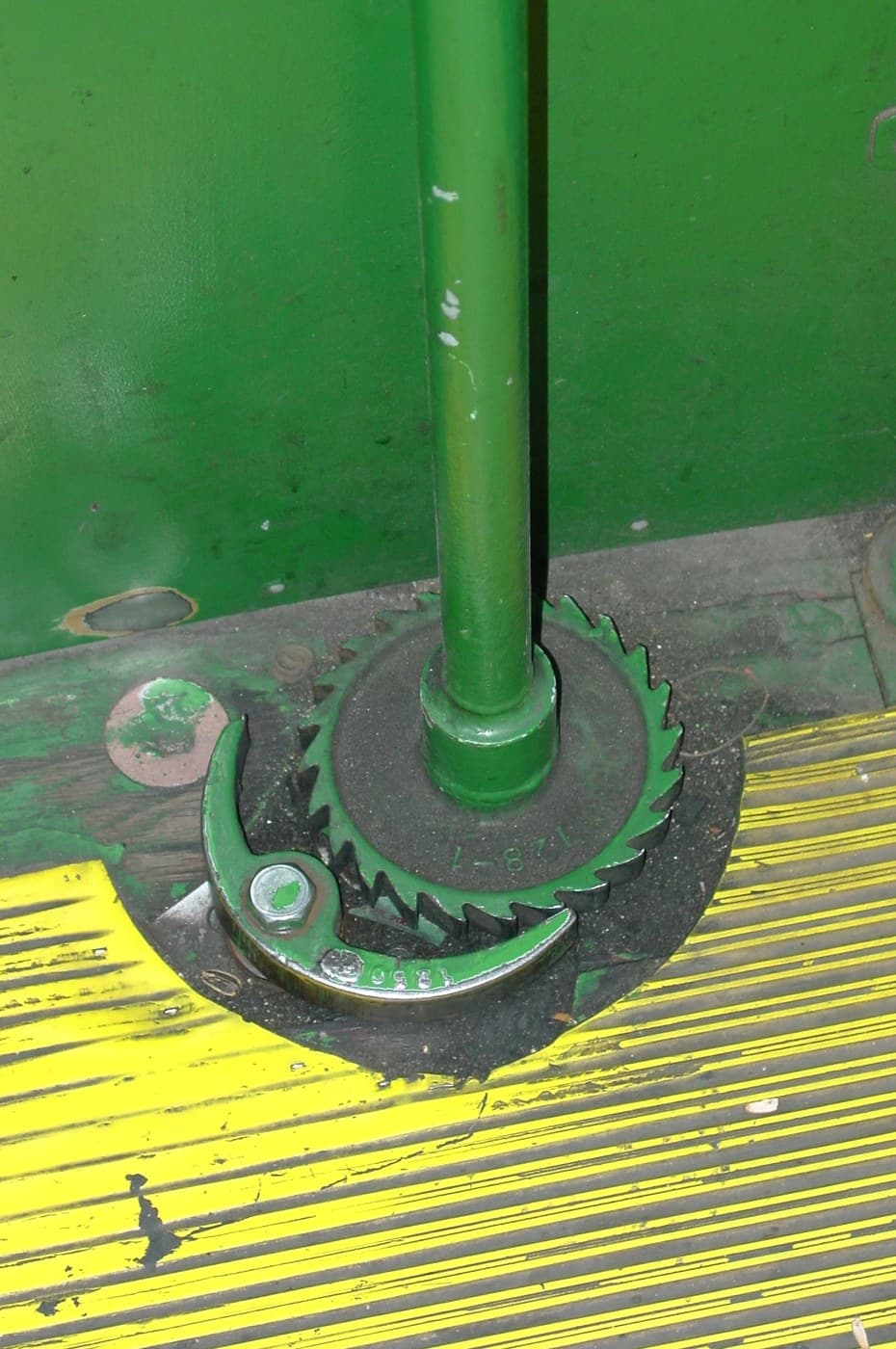
- Fit a pawl and ratchet to the drum's base so it cannot run backwards.
The pawl is not optional on a real capstan. If the crew's grip fails, the load runs the drum backwards at speed and the handspikes become weapons. This is one of the clearest cases where a ratchet is a safety device rather than a convenience — and it is why the ratchet blueprint sits in this catalogue alongside this one.
Round sockets and round handspikes are easier to make; square sockets transmit torque without the bar rolling in your hands. Either works at this scale.이 단계의 재료:
발트 자작나무 합판1 장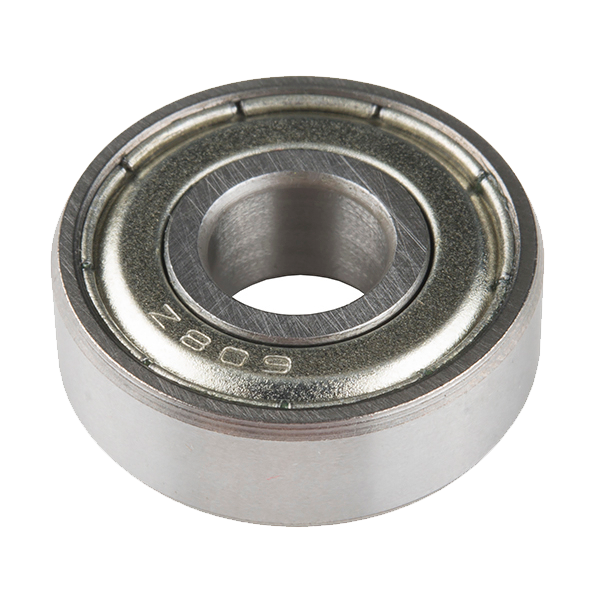 Ball Bearing - Non-Flanged (8mm Bore, 22mm OD)2 개
 평와셔8 개
 육각 너트4 개
 목재 다월봉2 개
필요한 도구:
무선 드릴드릴 비트 세트 실톱(코핑 소)
 육각 렌치 세트
 조합 직각자
Measure the multiplication, wrap by wrap
Measure the multiplication, wrap by wrap
The central experiment, and the numbers are startling.
- Lock the drum so it cannot turn.
- Hang a known load from one end of the rope.
- With ONE wrap, pull the other end with a spring balance until the rope just slips. Record the force.
- Repeat with two wraps, then three, then four.
- Plot holding force against number of wraps.
이 단계의 재료:
 무명 모슬린1 metre
 모눈종이1 pad
필요한 도구:
디지털 캘리퍼스 6인치 스톱워치
스톱워치Test different ropes and surfaces
Test different ropes and surfaces
The exponent depends on the friction coefficient, so change it and watch.
- Repeat the three-wrap test with a synthetic rope, then natural fibre, then a wire cable if you have one.
- Wet the rope and repeat.
- Try a smooth painted drum surface against the bare sanded one.
- Tabulate all combinations.
필요한 도구:
디지털 캘리퍼스 6인치One equation, many machines, and history
One equation, many machines, and history
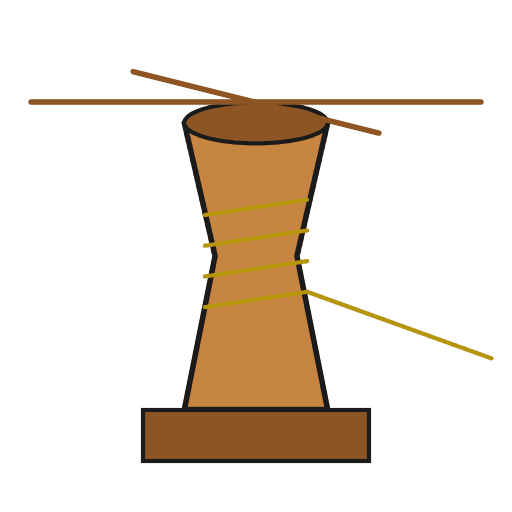
Capstans and windlasses are ancient — vertical capstans turned by handspikes and horizontal windlasses appear throughout maritime history, used to raise anchors, warp ships alongside and haul on running rigging. The crucial operational point is that the rope is never tied to the drum. It is wrapped, and a crew member tails the free end. The load is held by friction and released by easing that tail, so a load can be surged or checked instantly — something impossible with a rope made fast.
The same equation runs through this batch. The band brake's holding force grows exponentially with wrap angle; the jockey pulley increases a belt's torque capacity by increasing wrap; a belt drive's slip limit depends on wrap the same way. Rope on a post, band on a drum, belt on a pulley — three machines that look nothing alike and obey one relationship.
Where you meet it outside machinery: a climber's belay device is a capstan in miniature, using wrap angle so a hand can hold a falling body. A sailing winch is a powered capstan. Even a simple hitch round a bollard is the same physics.
Honest limits: the multiplication is real but it depends on a friction coefficient that changes with wet, wear, contamination and rope material — so it is never a precise number, and rigging practice builds in generous margins. And it holds only while someone tails the rope; let go entirely and there is nothing to stop the load, which is exactly why the pawl in step 2 exists.
재료
7- 1 장플레이스홀더
- ₩17
- 8 개플레이스홀더
- 4 개플레이스홀더
- 2 개플레이스홀더
- 1 metre플레이스홀더
- 1 pad플레이스홀더
필요 도구
9- 1 vendor sell this, none ship to you yet플레이스홀더
- 플레이스홀더
- 1 vendor sell this, none ship to you yet플레이스홀더
- 플레이스홀더
- 플레이스홀더
- 플레이스홀더
- 플레이스홀더
- 플레이스홀더
- 플레이스홀더
이 블루프린트로 만드는 것
관련 블루프린트
이 블루프린트들은 지식을 공유합니다 — 기술, 재료 또는 원리
CC0 퍼블릭 도메인
이 블루프린트는 CC0로 공개되었습니다. 어떤 목적으로든 자유롭게 복사, 수정, 배포 및 사용할 수 있습니다.
제품 구매를 통해 메이커를 지원하세요. 판매자가 설정한 메이커 커미션 을 받거나, 이 블루프린트의 새로운 반복을 만들어 연결로 포함시킬 수 있습니다.