협업
예술
뷰티 및 웰니스
공예
문화 및 역사
엔터테인먼트
환경
음식 및 음료
역공학
과학
스포츠
기술
웨어러블
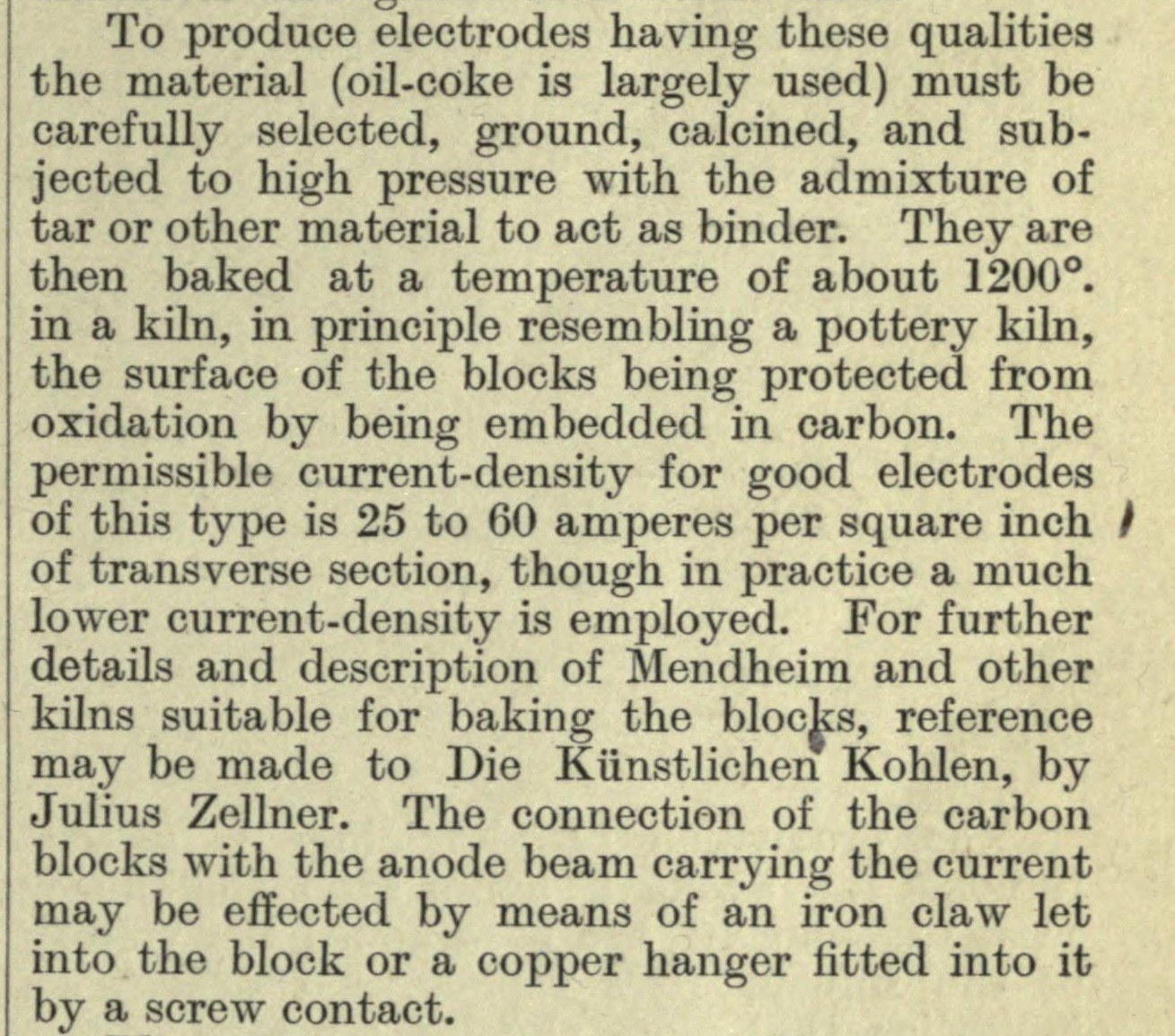


Carbon Electrode: Oil-Coke Pressed with Tar and Baked at 1200° (Thorpe, 1912)
Amorphous carbon electrodes as made for aluminium reduction: oil-coke is selected, ground and calcined, pressed hard with tar as a binder, and baked at about 1200° in a kiln like a pottery kiln, packed in carbon so the surface does not burn.
A good electrode conducts electricity well but heat poorly, is hard, resists surface oxidation, has low porosity and is even throughout. Thorpe gives 25 to 60 amperes per square inch as the permissible current density, though much less is used in practice.
Not given: the tar proportion, the pressure and the sizes.
Source: T. E. Thorpe, Dictionary of Applied Chemistry vol. I (1912), p. 107. Picture: the book's text.
고급
Unknown
안내
1
1
Grind and calcine the coke
Grind and calcine the coke
Select the oil-coke carefully for low ash, volatile matter and sulphur. Grind it and calcine it. Ours: the ball mill and the kiln for calcining.
이 단계의 재료:
 석유 코크스1 carefully selected
필요한 도구:
 철 볼 밀
 고온 가마
2
2
Press with tar
Press with tar
Mix the ground coke with tar as a binder and press it into blocks under high pressure. Ours: a hydraulic press.
이 단계의 재료:
 콜타르1 binder
 알 수 없는 치수1 개
필요한 도구:
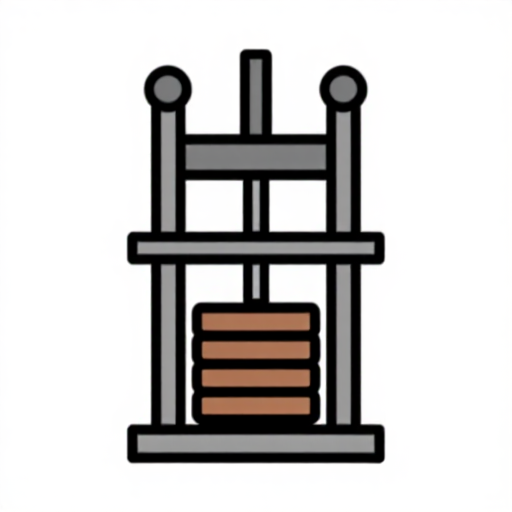 유압 프레스
3
3
Bake in carbon
Bake in carbon
Embed the blocks in carbon, which protects their surface from oxidation, and bake them at about 1200° in a kiln built on the lines of a pottery kiln. Ours: petroleum coke as the packing.
필요한 도구:
고온 가마석유 코크스이 블루프린트로 만드는 것
CC0 퍼블릭 도메인
이 블루프린트는 CC0로 공개되었습니다. 어떤 목적으로든 자유롭게 복사, 수정, 배포 및 사용할 수 있습니다.
제품 구매를 통해 메이커를 지원하세요. 판매자가 설정한 메이커 커미션 을 받거나, 이 블루프린트의 새로운 반복을 만들어 연결로 포함시킬 수 있습니다.