협업
예술
뷰티 및 웰니스
공예
문화 및 역사
엔터테인먼트
환경
음식 및 음료
역공학
과학
스포츠
기술
웨어러블
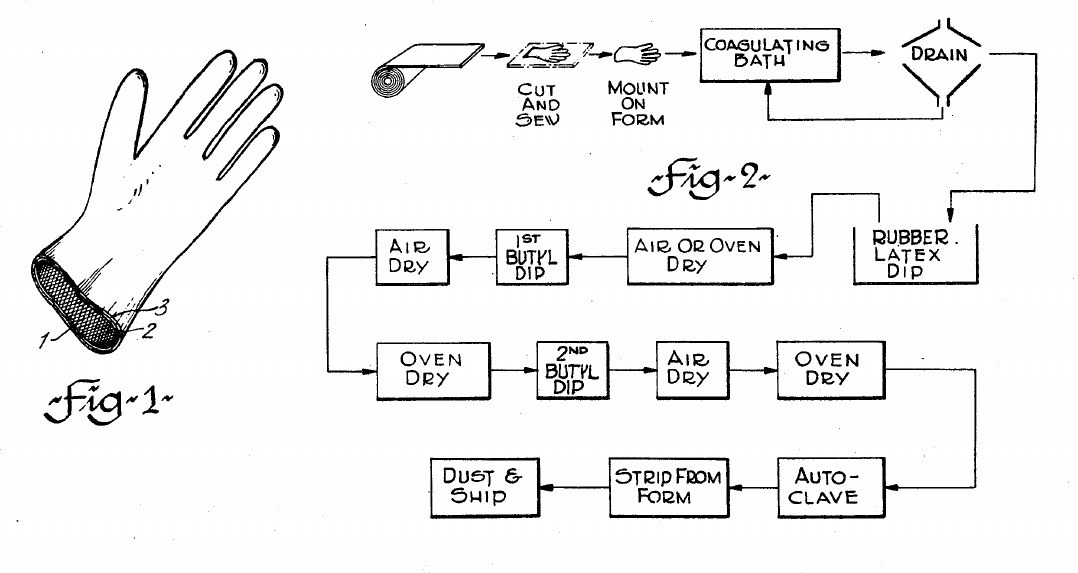


Chemical-Resistant Gloves: Butyl Latex over Natural Rubber on a Cotton Liner (Hart & Collyer, US 4,190,685, 1980)
Dipped rubber gloves built in layers on a knitted cotton liner: one coat of natural rubber, then five coats of butyl rubber, which lets very little liquid or vapour through. Each coat is dipped from latex on a porcelain hand form, and the whole glove is cured under steam and air pressure. Made in Canada to protect soldiers against chemical warfare agents; worn gloves showed no penetration in 24 hours of field use.
Result: flexible, soft chemical-resistant gloves with a comfortable cotton lining.
Source: J. A. Hart and J. C. Collyer, US 4,190,685 (1980), latex method. Unknown: sizes, the pigments. Picture: the patent drawing.
고급
Unknown
안내
1
1
Sew the cotton liner
Sew the cotton liner
Cut knitted or interlock cotton fabric to a glove shape and sew it into a glove. It stretches both ways, soaks up sweat and makes the glove easy to put on and take off. Not given: sizes, the knit.
이 단계의 재료:
 면 니트 원단1 liner
필요한 도구:
 가위
 재봉틀
 알 수 없는 치수
2
2
Dip in coagulant
Dip in coagulant
Pull the liner onto a porcelain hand form and flame it to smooth off the surface. Dip it in a 10 % solution of acetic acid in acetone, then turn the form for about 2½ minutes at 24 °C until it is dry. The coagulant sets the latex before it can soak through the cloth.
이 단계의 재료:
 아세트산(빙초산)1 10 % in acetone
 아세톤1 solvent
필요한 도구:
 장갑 손틀
 프로판 토치
3
3
Dip the natural rubber coat
Dip the natural rubber coat
Dip the liner into natural rubber latex (the patent uses LOTOL 1185) and leave it 5 seconds. Draw it out, turn it upside down and let it dry. Scrub the rubber film with an abrasive cleaner, a brush and water, and dry it again.
이 단계의 재료:
 천연고무 라텍스1 bath
 연마 세정제1 as needed
필요한 도구:
장갑 손틀 솔(억센 털)
4
4
Mix the butyl latex bath
Mix the butyl latex bath
Mix, in parts by dry weight: butyl rubber latex 100, sulphur 3, zinc dibutyldithiocarbamate 4, zinc oxide 5, formaldehyde 0.1 as a preservative, a liquid dithiocarbamate curing accelerator 4 (Merac 255 in the patent), and 6.5 of pigments (olive drab in the patent). Not given: the pigments.
이 단계의 재료:
 부틸고무 라텍스100 parts dry
 황3 parts
 디부틸디티오카바민산 아연4 parts
 산화아연 분말5 parts
 폼알데하이드 용액(37 % 포르말린)0.1 parts formaldehyde
 액상 디티오카바메이트 촉진제4 parts
 알 수 없는 재료6.5 parts pigment
필요한 도구:
 젓는 도구
5
5
Dip five butyl coats
Dip five butyl coats
Dip the glove into the butyl latex and draw it out at 10 cm per minute. At once turn the form at about 8 rpm at 24 °C until the film has gelled, then dry it upside down in an oven at 66 °C for 1 hour. Wash, dip and dry again until there are five butyl coats; do not use the abrasive cleaner on the butyl film.
필요한 도구:
장갑 손틀 건조 가마
6
6
Cure and finish
Cure and finish
Dry the glove at 66 °C for 1 hour. Cure it for 3 hours in a pressure vessel with 30 psi steam in the jacket (131 °C) and 26 psi air in the chamber. Strip the gloves from the forms while hot; when cool, trim them and wash them in soapy water.
이 단계의 재료:
 비누1 as needed
필요한 도구:
 탁상 고압증기 멸균기가위
재료
13- 1 liner플레이스홀더
- 1 10 % in acetone플레이스홀더
- 1 solvent플레이스홀더
- 1 bath플레이스홀더
- 1 as needed플레이스홀더
- 100 parts dry플레이스홀더
- 3 parts플레이스홀더
- 4 parts플레이스홀더
- 5 parts플레이스홀더
- 0.1 parts formaldehyde플레이스홀더
- 4 parts플레이스홀더
- 6.5 parts pigment플레이스홀더
- 1 as needed플레이스홀더
연결된 블루프린트 재료

10% 귀속
กรีดยางพารา — การเก็บน้ำยางธรรมชาติจากต้นยางพารา
SomchaiSang 작성
농업
55
0
0
0
1
0

위험
10% 귀속
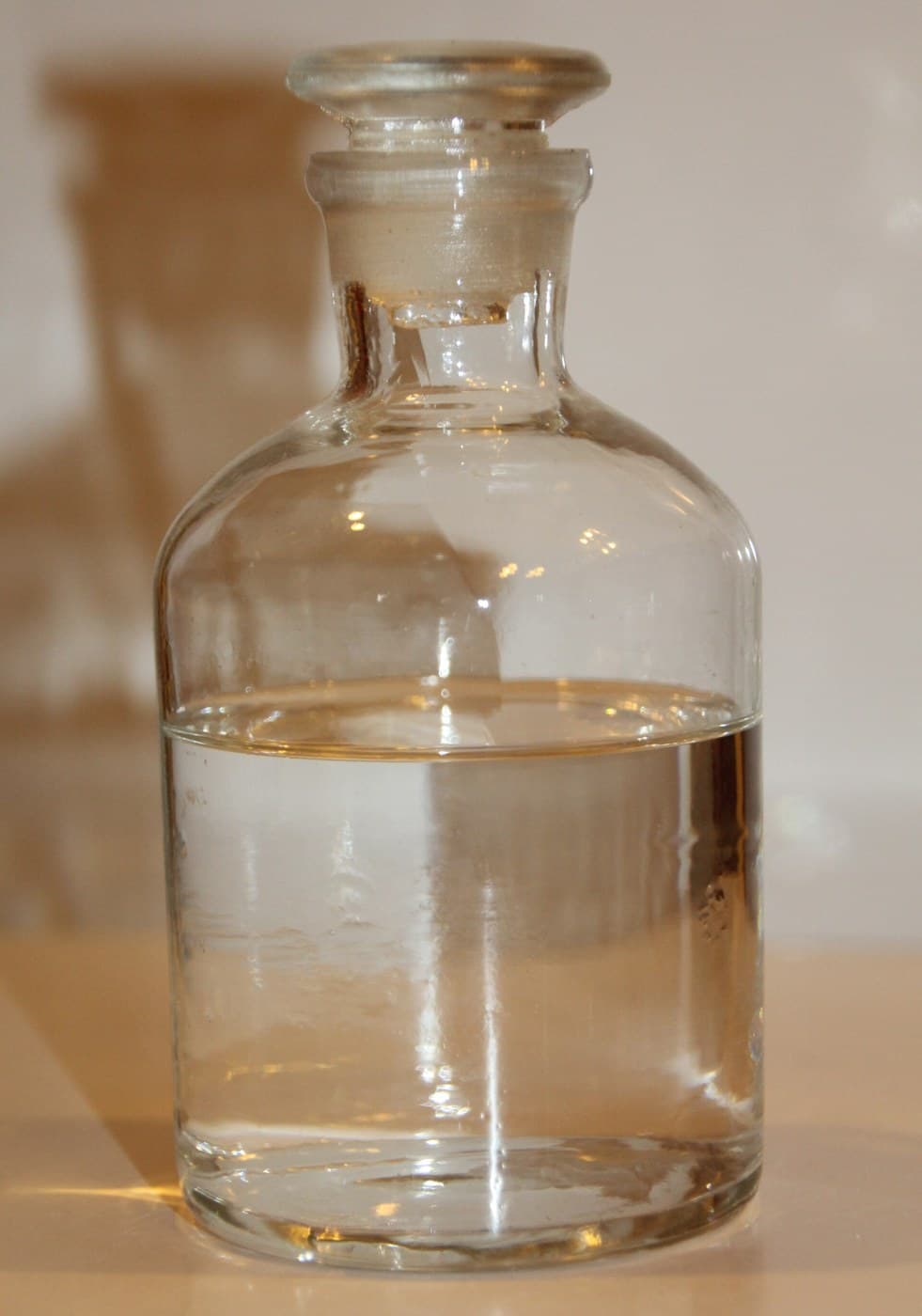
Glacial Acetic Acid from Wood Vinegar: Acetate of Soda, Oil of Vitriol and Freezing
Charlie 작성
산업용
21
0
0
0
1
0
10% 귀속
Acetone by Dry Distillation of Acetate of Lime
Charlie 작성
화학
35
0
0
0
1
0
10% 귀속
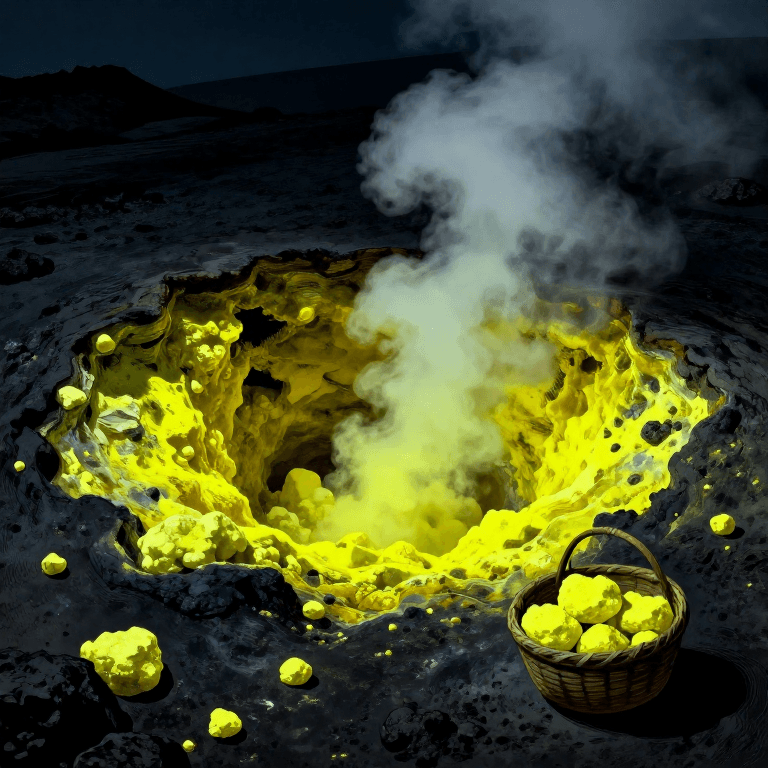
Collecting Native Sulfur from Volcanic Deposits
Peter 작성
사막
96
0
0
0
6
0
10% 귀속
Making Zinc White Pigment — The Non-Toxic Replacement for Lead White
Charlie 작성
예술
67
0
0
0
7
0
이 블루프린트로 만드는 것

CC0 퍼블릭 도메인
이 블루프린트는 CC0로 공개되었습니다. 어떤 목적으로든 자유롭게 복사, 수정, 배포 및 사용할 수 있습니다.
제품 구매를 통해 메이커를 지원하세요. 판매자가 설정한 메이커 커미션 을 받거나, 이 블루프린트의 새로운 반복을 만들어 연결로 포함시킬 수 있습니다.