
Cosecha de Cochinilla del Nopal — Del Insecto al Pigmento Carmín
안내
Identificar la cochinilla en el nopal
Identificar la cochinilla en el nopal
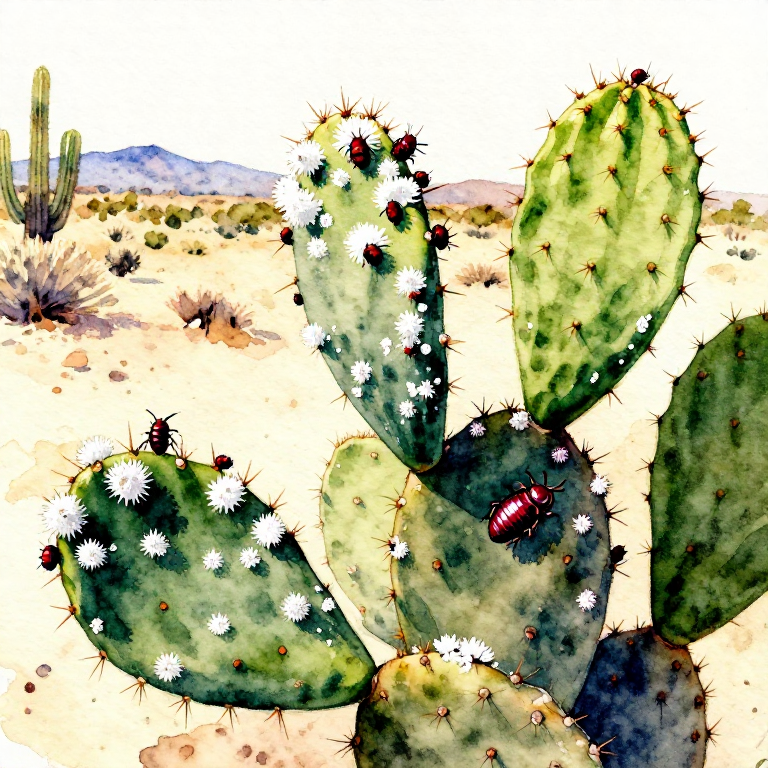
La cochinilla (Dactylopius coccus) aparece como manchas blancas algodonosas en las pencas del nopal. Debajo de esa cubierta blanca (cera protectora) hay un insecto ovalado de 3-5 mm, de color rojizo oscuro. La hembra es la que produce el pigmento carmín — los machos son más pequeños y tienen alas.
Distinguir cochinilla verdadera de silvestre
Distinguir cochinilla verdadera de silvestre
La cochinilla fina (Dactylopius coccus) produce mucho más ácido carmínico que la silvestre (Dactylopius opuntiae). La fina tiene una cubierta de cera blanca más abundante y un cuerpo más grande. Al aplastarla entre los dedos, la fina produce un rojo intenso carmesí. La silvestre da un rojo más apagado.
Elegir el momento de cosecha
Elegir el momento de cosecha
La cochinilla se cosecha cuando las hembras están maduras y llenas de ácido carmínico, aproximadamente 90 días después de la infestación. En Oaxaca, México, se hacen 3-4 cosechas al año. Coseche por la mañana temprano cuando los insectos están menos activos. Evite días lluviosos — la humedad diluye el pigmento.
Preparar herramientas de cosecha
Preparar herramientas de cosecha
Use un cepillo de cola de venado, una espátula de madera o un pincel suave. Se necesita un recipiente de recolección (una charola o plato hondo). El cepillo tradicional mixteco es de pelo de cola de venado atado a un palo — es suave para no dañar la penca del nopal.
필요한 도구:
 부드러운 붓
 수집 쟁반
수집 쟁반Barrer los insectos de la penca
Barrer los insectos de la penca
Sostenga la charola debajo de la penca del nopal. Con el cepillo, barra suavemente la superficie de la penca de arriba hacia abajo. Los insectos caen con su cubierta de cera blanca en la charola. No raspe con fuerza — dañar la penca reduce la producción futura.
이 단계의 재료:
 노팔 선인장 위의 연지벌레1 patch
Dejar insectos jóvenes para reproducción
Dejar insectos jóvenes para reproducción
No retire todas las cochinillas. Deje aproximadamente el 20-30% de los insectos más pequeños (jóvenes) en la penca para que se reproduzcan y mantengan la colonia. Una penca bien manejada produce cochinilla continuamente durante años.
Limpiar la cosecha
Limpiar la cosecha
Retire restos de cera, fragmentos de nopal y tierra de la cosecha. Separe los insectos de los residuos usando una malla fina o soplando suavemente. La limpieza mejora la calidad del pigmento final.
필요한 도구:
 고운 체
고운 체Sacrificar los insectos
Sacrificar los insectos
Los insectos se sacrifican por uno de tres métodos: (1) inmersión en agua caliente a 65-70°C por 1 minuto, (2) exposición al vapor por 5 minutos, o (3) secado al sol directo. El método del agua caliente produce el pigmento más intenso porque fija el ácido carmínico antes de que se degrade.
이 단계의 재료:
 뜨거운 물(65-70 °C)2 리터
필요한 도구:
 큰 솥
큰 솥Escurrir los insectos
Escurrir los insectos
Después de la inmersión en agua caliente, escurra los insectos en un colador. El agua se tiñe de rojo — guárdela, puede usarse como tinta o mordiente. Los insectos escurridos se ven ahora como granos rojizos oscuros, del tamaño de granos de pimienta.
필요한 도구:
 망 체
망 체Secar al sol
Secar al sol
Extienda los insectos en una capa delgada sobre una charola o petate al sol directo. Voltee cada 2-3 horas para secar uniformemente. El secado toma 3-5 días en clima seco. Los insectos secos se reducen a un tercio de su peso fresco.
필요한 도구:
 대나무 건조용 채반
Verificar el secado
Verificar el secado
La cochinilla seca es dura, liviana y cruje al presionarla. Al molerla entre los dedos, produce un polvo rojo intenso. Si aún se siente húmeda o blanda por dentro, continúe secando. La cochinilla insuficientemente seca se pudre y pierde el pigmento.
Almacenar la cochinilla seca
Almacenar la cochinilla seca
Guarde la cochinilla seca en frascos de vidrio con tapa hermética, en un lugar oscuro y seco. Proteja de la humedad y la luz solar directa. Bien almacenada, la cochinilla seca conserva su poder tintóreo por años. Un kilogramo de cochinilla seca produce aproximadamente 50 gramos de ácido carmínico puro.
이 단계의 재료:
 유리 보관 용기 세트2 개
Pesar y registrar la cosecha
Pesar y registrar la cosecha
Pese la cochinilla seca. De una parcela de 100 pencas de nopal bien infestadas se obtienen aproximadamente 200-300 gramos de cochinilla seca. Registre la fecha, cantidad, método de sacrificio y condiciones de secado. En el mercado, la cochinilla seca de Oaxaca es una de las más valoradas del mundo.
필요한 도구:
 디지털 주방 저울
재료
4- 1 patch플레이스홀더
- 2 리터플레이스홀더
- 2 개플레이스홀더
- 2 리터플레이스홀더
이 블루프린트로 만드는 것
CC0 퍼블릭 도메인
이 블루프린트는 CC0로 공개되었습니다. 어떤 목적으로든 자유롭게 복사, 수정, 배포 및 사용할 수 있습니다.
제품 구매를 통해 메이커를 지원하세요. 판매자가 설정한 메이커 커미션 을 받거나, 이 블루프린트의 새로운 반복을 만들어 연결로 포함시킬 수 있습니다.