예술
뷰티 및 웰니스
공예
문화 및 역사
엔터테인먼트
환경
음식 및 음료
역공학
과학
스포츠
기술
웨어러블
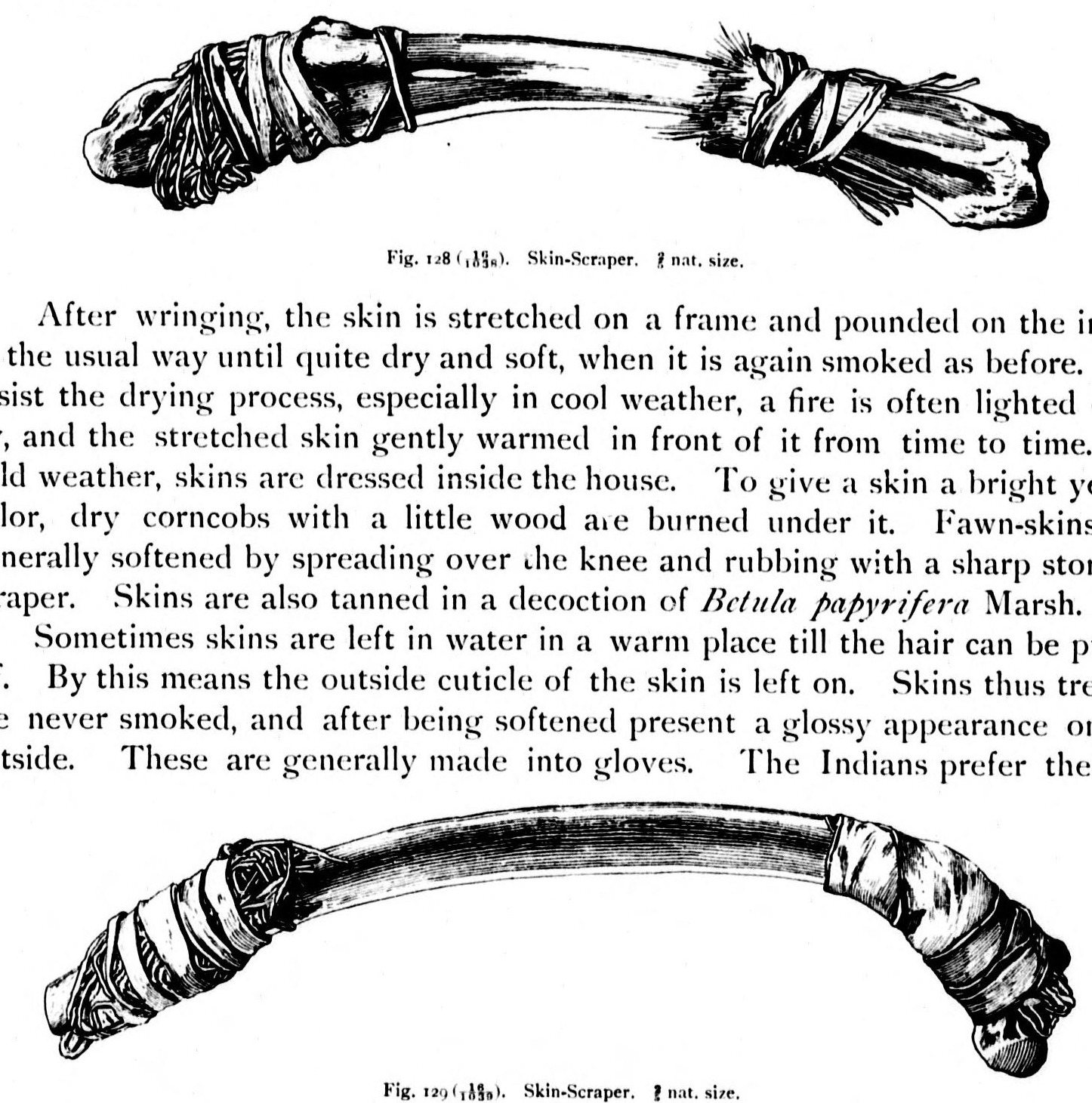


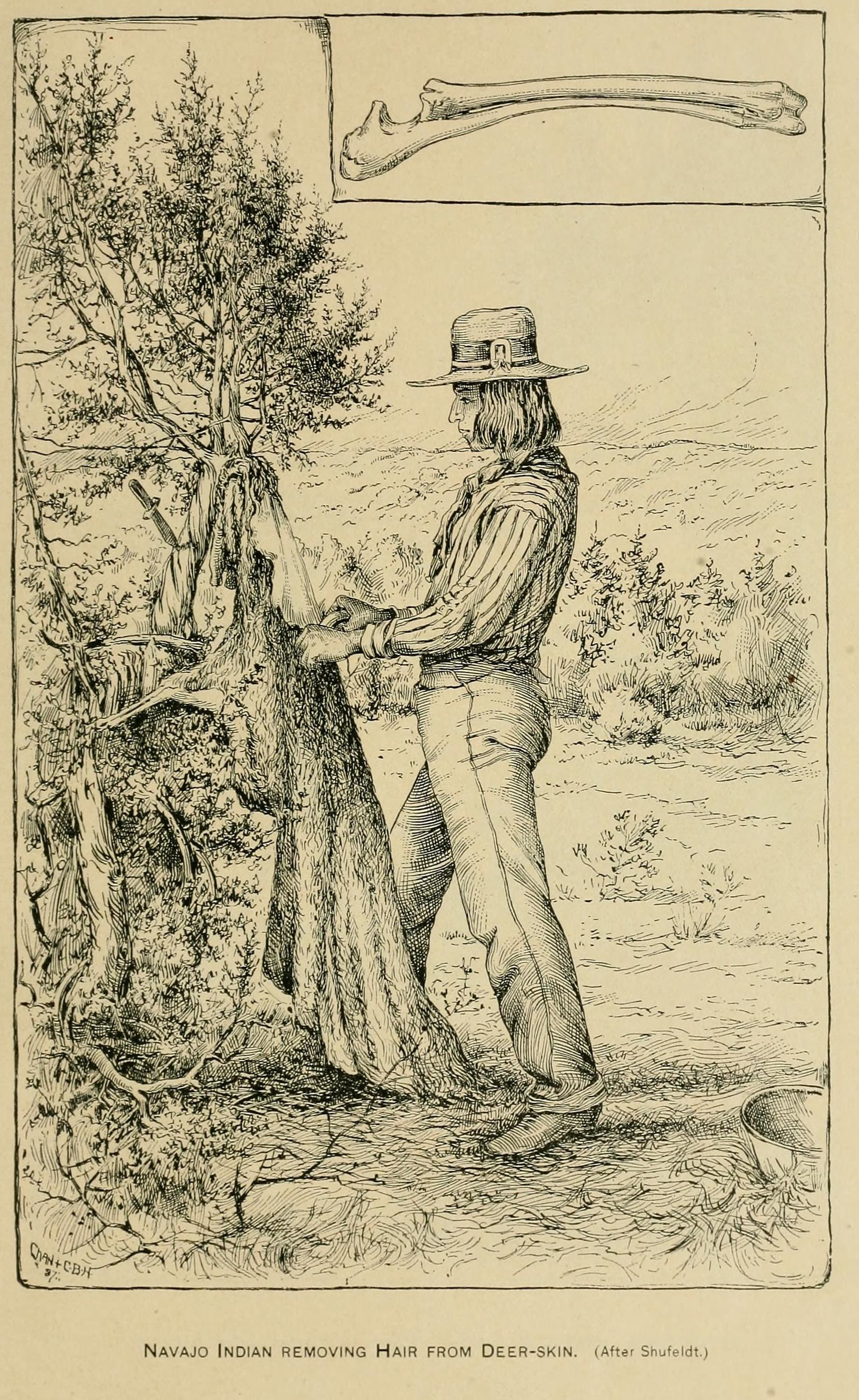
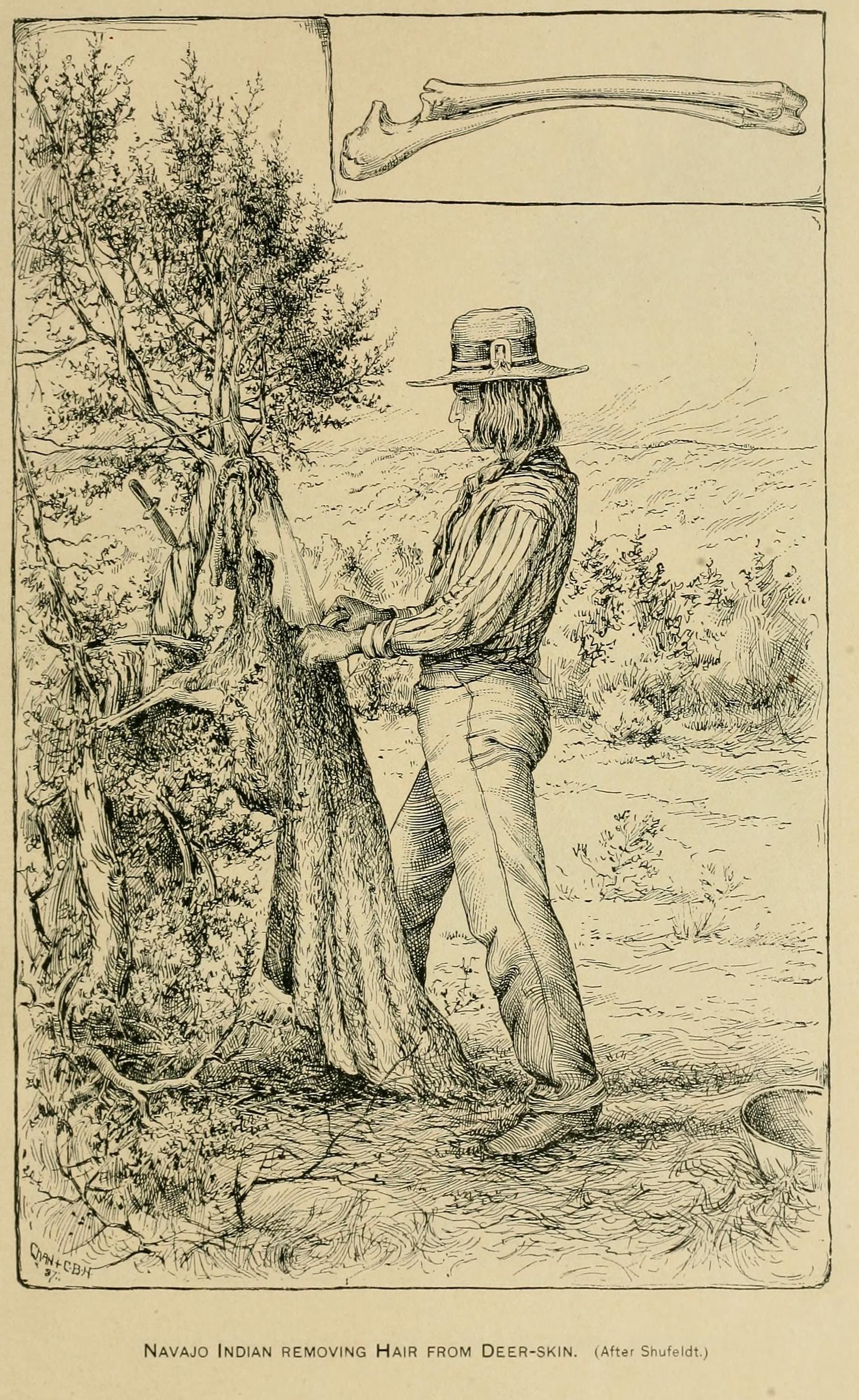
Navajo Hide Scraper from a Deer's Foreleg: Ulna Edge Sharpened with a Knife, Joints Left as Handles (Shufeldt, 1888)
The Navajo (Diné) hair-shaving tool Dr. R. W. Shufeldt described: the joined ulna and radius of a deer's foreleg, the thin back edge of the ulna scraped sharper with a knife, the elbow at one end and the wrist joint at the other kept on as handles, used two-handed like a spokeshave; it rarely cuts the hide.
초급
An hour
안내
1
1
Read Shufeldt
Read Shufeldt
"The ulna and radius of this limb are wonderfully well fitted to perform the work of this natural spoke-shave."
2
2
Clean the bone
Clean the bone
Take the fused ulna and radius of a deer's foreleg, leaving the elbow end (olecranon) and the wrist end with its small bones attached. Ours: simmer and scrape it clean of meat and let it dry.
이 단계의 재료:
 동물의 긴 뼈1 개
 물1 개
필요한 도구:
 무쇠 주전자
 모닥불 자리
 칼
3
3
Sharpen the edge
Sharpen the edge
Scrape the thin back edge of the ulna with a knife to make it sharper.
필요한 도구:
칼4
4
Grip and use
Grip and use
Hold it by both ends (ours: wrap the ends with rawhide for grip) and draw it over the hide on the beam like a spokeshave to shave off hair and outer skin.
이 단계의 재료:
 생가죽 끈1 개
필요한 도구:
칼5
5
Troubleshooting
Troubleshooting
Scraper troubleshooting.
Flow
Loading...
6
6
History and honest limits
History and honest limits
From R. W. Shufeldt's account in Otis T. Mason, "Aboriginal Skin-Dressing", **Report of the U.S. National Museum for 1889** (1891), pp. 575-576 (checked on the archive.org scan aboriginalskindr00maso). Some tanners used a deer or beef rib, or a dull hunting knife, instead. The hero shows the same tool type drawn by James Teit for the Thompson people (1900, Figs. 128-129). Cleaning the bone and the grip wrapping are ours.
이 블루프린트로 만드는 것
관련 블루프린트
이 블루프린트들은 지식을 공유합니다 — 기술, 재료 또는 원리

CC0 퍼블릭 도메인
이 블루프린트는 CC0로 공개되었습니다. 어떤 목적으로든 자유롭게 복사, 수정, 배포 및 사용할 수 있습니다.
제품 구매를 통해 메이커를 지원하세요. 판매자가 설정한 메이커 커미션 을 받거나, 이 블루프린트의 새로운 반복을 만들어 연결로 포함시킬 수 있습니다.