예술
뷰티 및 웰니스
공예
문화 및 역사
엔터테인먼트
환경
음식 및 음료
역공학
과학
스포츠
기술
웨어러블
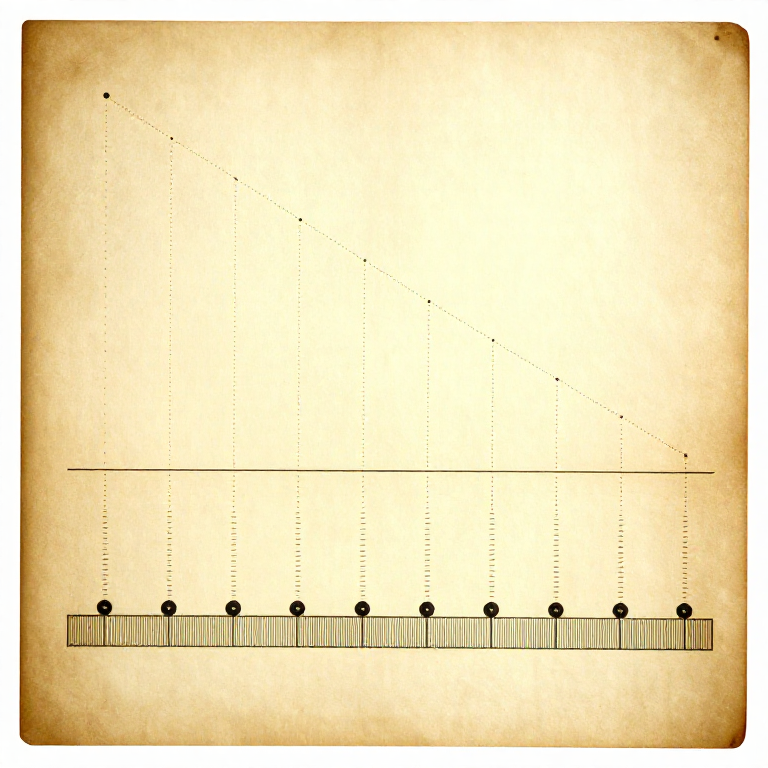


Cumulative Error: Why You Measure From One End, Not Piece to Piece
Mark the first position, then measure the next from that mark, then the next from that one — and every small error is carried forward and added to the next. By the tenth position the total can be several millimetres, and no single measurement was wrong.
Measure every position from the SAME origin instead and each error stays local. The tenth mark is as accurate as the first, because it did not inherit anything.
This is the arithmetic behind the face-side rule, the story stick and stepping off with dividers. All three are the same idea: share one reference, and errors stop compounding.
중급
3 hours
안내
1
1
Chain measuring versus measuring from one end
Chain measuring versus measuring from one end
CHAIN measuring is marking each position from the previous mark. It feels natural and it is what a tape measure invites, because you keep moving the hook.
ABSOLUTE measuring is leaving the tape hooked at one end and reading every position from there. Each mark has one measurement's worth of error and no more.
The difference is invisible for two or three marks and serious for ten. It is why a shelf unit made by measuring each shelf from the last has a visibly uneven top shelf, and why a cutting list should give cumulative positions rather than individual lengths.
이 단계의 재료:
 경목 판재1 개
필요한 도구:
 줄자
줄자 자
자2
2
How the error actually grows
How the error actually grows
Jupyter 노트북 불러오는 중…
필요한 도구:
 계산기줄자
계산기줄자3
3
Mark a whole set together, from one setting
Mark a whole set together, from one setting
Clamp all the identical parts side by side with their ends flush and their face sides all the same way up, then strike every line across the whole bundle at once.
Now the parts cannot disagree, because there is only one line. Any error in its position is shared, and a shared error usually does not matter — a shelf unit that is uniformly 1 mm shorter than the drawing is fine, while one with shelves at slightly different heights is not.
The same reasoning gives the stop block. Set it once and cut ten pieces against it, and all ten are identical; measure ten pieces individually and you have ten slightly different lengths, however carefully you measured.
이 단계의 재료:
경목 판재4 개필요한 도구:
 직각자
직각자 금긋기 칼
금긋기 칼 중량급 바이스
4
4
When the total matters, and when only the divisions do
When the total matters, and when only the divisions do
Decide which of the two you actually need before laying anything out, because the right method differs.
If the OVERALL size must be exact — a piece fitting a known opening — measure absolutely from one end and accept whatever the divisions come to. If the DIVISIONS must be even and the total can be whatever it is, step them off with dividers and never measure at all.
Most work is the second kind and gets treated as the first, which is why so much of it has a visibly narrow space at one end. Deciding this question explicitly is the whole of good layout, and it takes ten seconds at the start of a job.
이 단계의 재료:
경목 판재1 개필요한 도구:
 디바이더(양각규)줄자
 치수 막대
치수 막대관련 블루프린트
이 블루프린트들은 지식을 공유합니다 — 기술, 재료 또는 원리


CC0 퍼블릭 도메인
이 블루프린트는 CC0로 공개되었습니다. 어떤 목적으로든 자유롭게 복사, 수정, 배포 및 사용할 수 있습니다.
제품 구매를 통해 메이커를 지원하세요. 판매자가 설정한 메이커 커미션 을 받거나, 이 블루프린트의 새로운 반복을 만들어 연결로 포함시킬 수 있습니다.