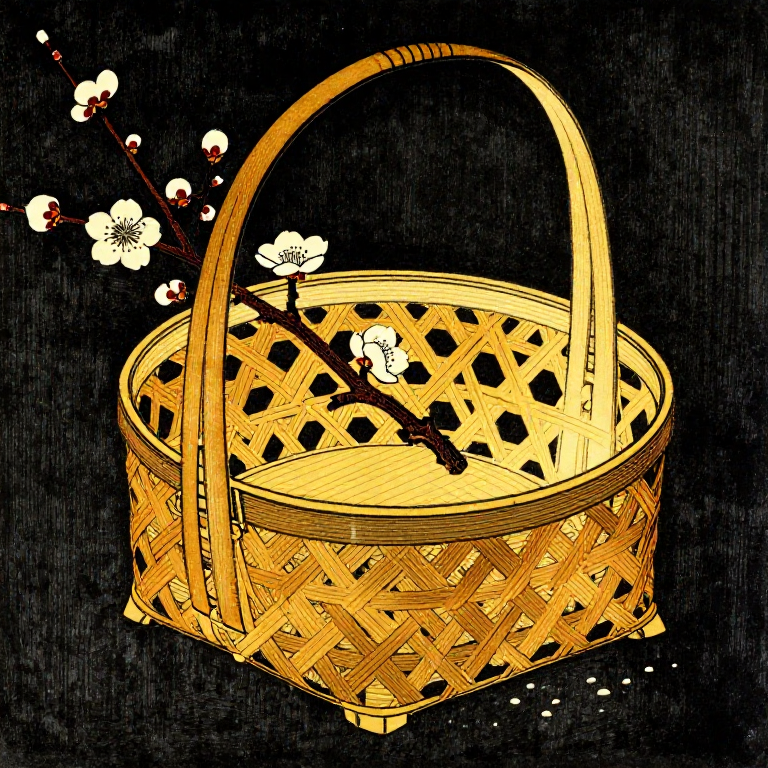

Weaving a Bamboo Flower Basket (Ikebana) — Take-zaiku Basketry
안내
Split the Bamboo into Strips
Split the Bamboo into Strips
Select a bamboo culm that is at least 3 years old (mature bamboo has harder, more flexible fibres than young culms). Remove nodes by sawing through them. Split the culm section in half lengthwise using a heavy knife or nata, working the split evenly by applying pressure alternately to each side. Continue splitting each half into quarters, then eighths, then sixteenths until you have strips approximately 5mm wide. Using a sharp knife, shave each strip to remove the soft inner pith, leaving only the hard outer skin and the first few layers of fibre. The finished strips should be 3-5mm wide and 0.5-1.5mm thick — thin enough to bend easily but thick enough to hold their shape in the weave. Keep the strips damp during work to prevent cracking.
이 단계의 재료:
 여문 대나무 줄기(3~5년)1 culm section, 50-60cm 개여문 대나무 줄기(3~5년)30-50 strips, 3-5mm wide 개여문 대나무 줄기(3~5년)2-3m 미터
필요한 도구:
 손도끼
손도끼 쪼개는 칼
쪼개는 칼 송곳
송곳 분무기
분무기Weave the Base
Weave the Base
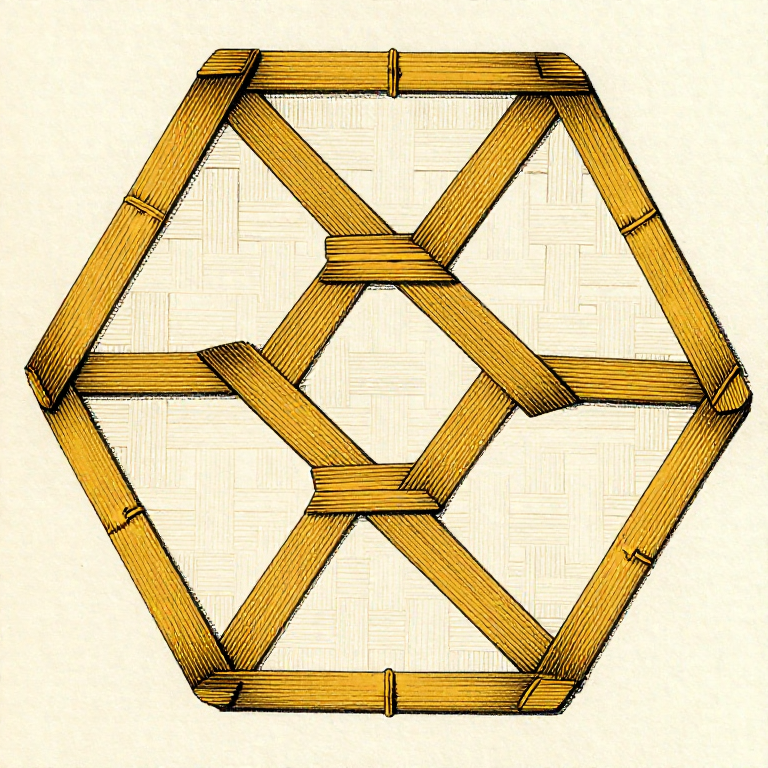
Arrange 6-8 strips in a cross pattern (three or four horizontal strips interwoven with three or four vertical strips) to form a square base approximately 8-10cm across. For a hexagonal weave (mutsume-ami), arrange three sets of parallel strips at 60-degree angles to each other, interlocking in an over-under pattern that creates a regular hexagonal grid. The hexagonal weave is stronger and more visually striking than simple square weave. Ensure all strips are evenly spaced and the weave is tight with no gaps. The base determines the basket's symmetry — if it is lopsided here, the entire basket will be asymmetrical. Pin the base flat with weights or clips while establishing the pattern.
Shape the Walls
Shape the Walls
Bend the base strips upward to form the basket walls. The transition from flat base to vertical wall is the most critical point — bend the strips gently and gradually to avoid cracking. Misting with water helps prevent breakage during bending. Continue the weave pattern up the walls, introducing new weaving strips as needed by tucking their ends behind existing strips (no knots or ties). As the walls rise, the form can be shaped by controlling how tightly you pull the weaving strips: tight pulls reduce the circumference (creating an inward curve), while loose weaving allows the basket to flare outward. A flower basket typically has a slightly bulging profile that narrows at the rim.
Finish the Rim
Finish the Rim
When the walls reach the desired height (typically 15-20cm for an ikebana basket), finish the rim by bending each upright strip over and tucking it behind the adjacent strip on the inside of the basket. This creates a rolled edge that is both decorative and functional, preventing the weave from unraveling. For additional strength and a refined appearance, bind the rim with a thin bamboo strip wrapped continuously around the top edge in a spiral, lashing it to the uprights at each crossing point. Trim any protruding strip ends flush with the surface using a sharp knife. The rim should be even and level — sight across it at eye level to check.
Add the Handle and Finish
Add the Handle and Finish
For a handled basket, select a thick bamboo strip (4-5mm wide, 2-3mm thick) long enough to arch from one side of the rim to the other with a graceful curve. Taper both ends and insert them into the weave on opposite sides of the basket, securing them with lashing. The handle can be further reinforced by wrapping it with thin bamboo strips in a decorative spiral or cross pattern. To finish, trim any loose fibres and apply a light coat of camellia oil to protect the bamboo from drying and cracking. Natural bamboo darkens to a rich honey-brown with age and handling. For ikebana use, place a small bamboo or metal water cup (otoshi) inside the basket to hold water and flower stems.
이 블루프린트로 만드는 것

CC0 퍼블릭 도메인
이 블루프린트는 CC0로 공개되었습니다. 어떤 목적으로든 자유롭게 복사, 수정, 배포 및 사용할 수 있습니다.
제품 구매를 통해 메이커를 지원하세요. 판매자가 설정한 메이커 커미션 을 받거나, 이 블루프린트의 새로운 반복을 만들어 연결로 포함시킬 수 있습니다.