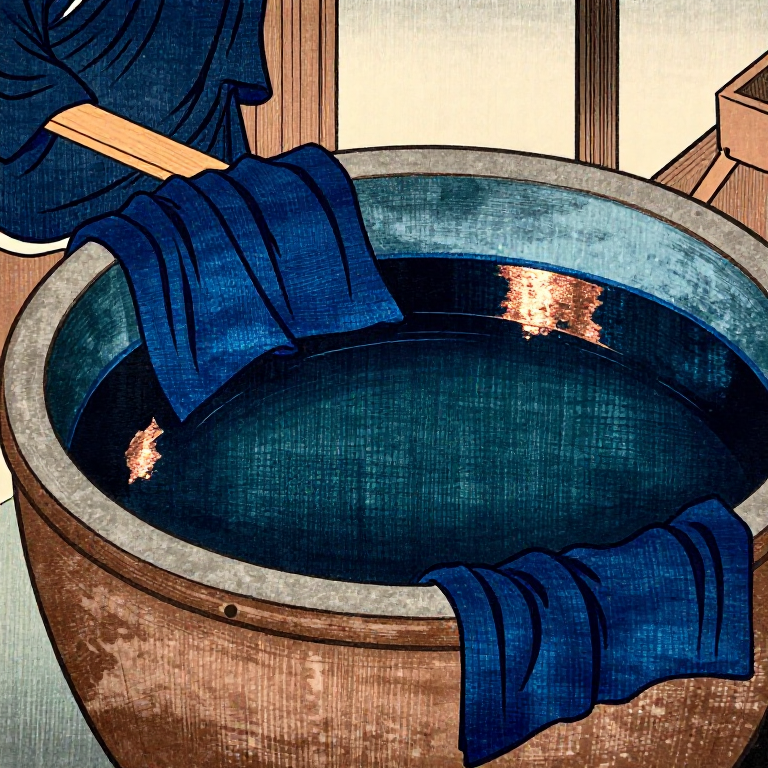


Dyeing Cotton with Fermented Indigo Vat — Aizome Japanese Indigo
안내
Prepare the Lye and Vat Base
Prepare the Lye and Vat Base
Make wood ash lye by pouring boiling water through hardwood ash in a bucket with drainage holes, collecting the alkaline liquid that filters through. Repeat until the lye is strong enough to feel slippery between fingers (pH 11-12). Alternatively, dissolve slaked lime in warm water to achieve the same alkalinity. Fill the vat one-third full with warm lye solution (approximately 25-30 degrees C). The alkaline environment is essential: indigo is insoluble in water, but under alkaline and reducing conditions, bacteria convert it to its soluble leuco-indigo form, which bonds to cellulose fibres and then re-oxidizes to insoluble blue when exposed to air.
이 단계의 재료:
 스쿠모500g-1 kg g
 나뭇재 잿물5-10 litres 개
 밀기울200-300g g
 소석회100-200g g
 무명천as desired 개
필요한 도구:
 도자기
도자기 나무 젓개노
 오븐 온도계
 pH 시험지
Add Sukumo and Nutrients
Add Sukumo and Nutrients
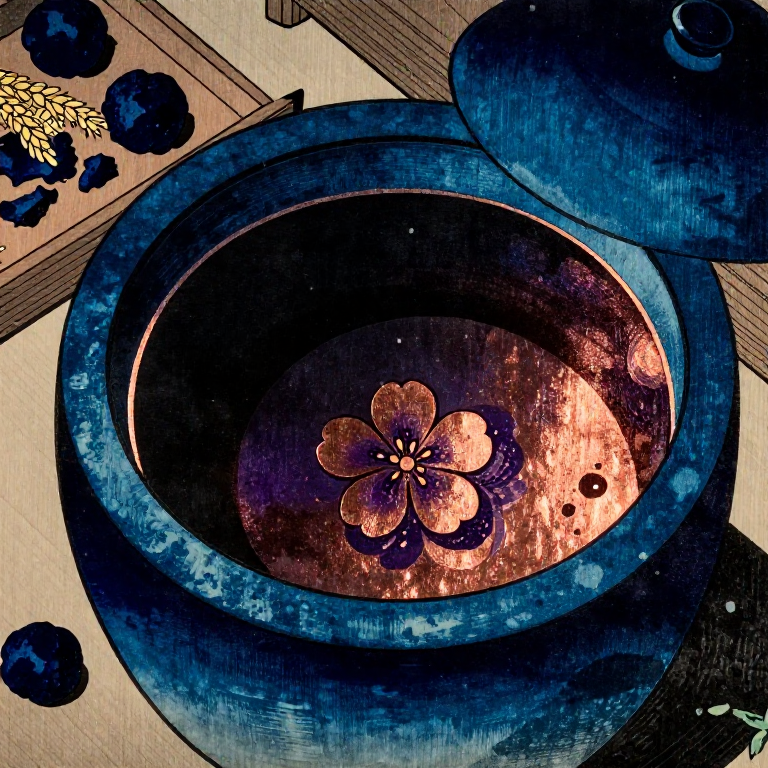
Crumble the sukumo (composted indigo balls) into the warm lye solution and stir thoroughly. Add wheat bran and a splash of sake — these provide sugars and nutrients for the anaerobic bacteria that drive the fermentation reduction process. The wheat bran ferments and produces carbon dioxide, which displaces oxygen from the vat and creates the reducing conditions necessary for indigo to dissolve. Stir the vat vigorously twice daily for 7-14 days, then allow it to settle. The vat is ready when the surface develops a coppery-purple metallic sheen (called the flower or ai-no-hana) and the liquid beneath is yellow-green rather than blue. If the liquid is blue, reduction is incomplete.
Test and Adjust the Vat
Test and Adjust the Vat
Dip a small test strip of cotton into the vat and hold it submerged for 2-3 minutes. When removed, the fabric should appear yellow-green (the colour of leuco-indigo). As it contacts air, the fabric oxidizes to blue over 15-20 minutes. If the test strip comes out blue, the vat is not sufficiently reduced — add more wheat bran and sake, stir, and wait another day. If the colour is weak, the vat needs more sukumo or higher temperature. The ideal vat temperature is 25-30 degrees C. Maintain alkalinity at pH 10-11 by adding small amounts of slaked lime as needed. A healthy vat smells earthy and slightly fermented, not putrid.
Dye the Fabric
Dye the Fabric
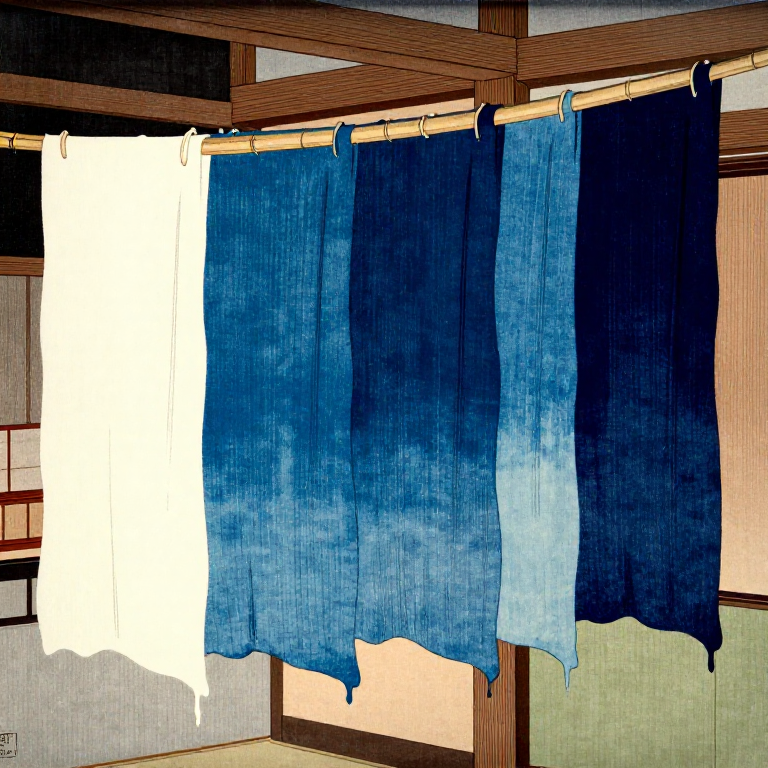
Pre-wet the scoured cotton fabric in warm water and wring it out. Gently lower it into the vat, pushing it beneath the surface without splashing (agitation introduces oxygen and disrupts the reduced state). Keep the fabric submerged for 3-5 minutes, gently squeezing and moving it underwater to ensure even penetration. Remove the fabric and allow it to oxidize in the air for 15-20 minutes — it will transform from yellow-green to blue as the leuco-indigo re-oxidizes and locks into the fibre. Repeat the dip-and-oxidize cycle 5-10 times for progressively deeper blues. Light blue requires 2-3 dips; the deepest navy may require 15-20 dips over several days.
Rinse and Fix the Colour
Rinse and Fix the Colour
After the final dip and oxidation, rinse the dyed fabric in cold running water until the water runs clear, removing any unbound indigo particles that would rub off in use. The colour is now permanently fixed within the cotton fibres through a mechanical bond — indigo molecules are physically trapped in the fibre structure during the oxidation step. No chemical mordant is needed, unlike most natural dyes. Dry the fabric out of direct sunlight to prevent initial fading. Indigo-dyed fabric actually improves with washing and wear: the surface indigo wears away slightly, revealing lighter fibres beneath and creating the characteristic faded patina prized in Japanese workwear and denim traditions.
재료
7- 500g-1 kg g플레이스홀더
- 5-10 litres 개플레이스홀더
- 100-200g g플레이스홀더
- Sake or rice wine (as bacterial nutrient)200ml ml
- as desired 개플레이스홀더
- 200-300g 개플레이스홀더
- 100-200g 개플레이스홀더
이 블루프린트로 만드는 것
CC0 퍼블릭 도메인
이 블루프린트는 CC0로 공개되었습니다. 어떤 목적으로든 자유롭게 복사, 수정, 배포 및 사용할 수 있습니다.
제품 구매를 통해 메이커를 지원하세요. 판매자가 설정한 메이커 커미션 을 받거나, 이 블루프린트의 새로운 반복을 만들어 연결로 포함시킬 수 있습니다.