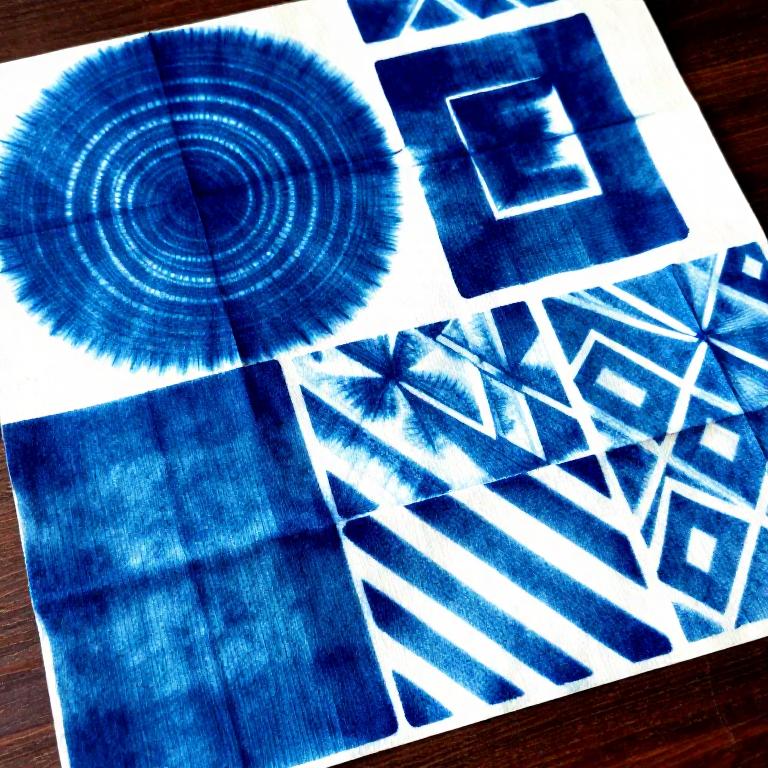


Folding and Binding Shibori Resist Patterns — Japanese Shaped-Resist Dyeing
안내
Prepare the Fabric
Prepare the Fabric
Wash the cotton fabric in hot water with soda ash or washing soda to remove sizing, oils, and any finishes that would prevent dye uptake. This process is called scouring. Rinse thoroughly and wring out the excess water. The fabric should be damp but not dripping when you begin binding — damp fabric folds more crisply and holds its shape better than dry fabric. Iron the damp fabric flat if it has wrinkled, as creases will create unintended resist marks. Cut the fabric into manageable pieces (30cm x 30cm squares work well for practice) or work with a full length for a finished textile.
이 단계의 재료:
 유기농 면직물1-2 metres 개
 면화5-10m m
 쪽 염색통 세트prepared vat 개
 나무 망치2 matching pieces 개
 고무줄10-20 개
필요한 도구:
 박제용 실·바늘 세트
 목재 다월봉
Apply Resist Techniques
Apply Resist Techniques
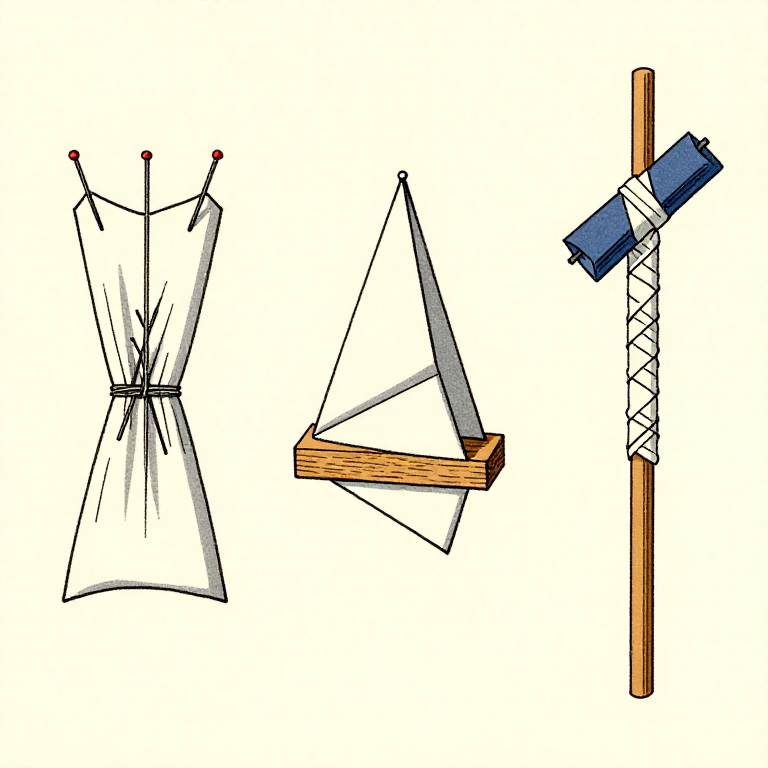
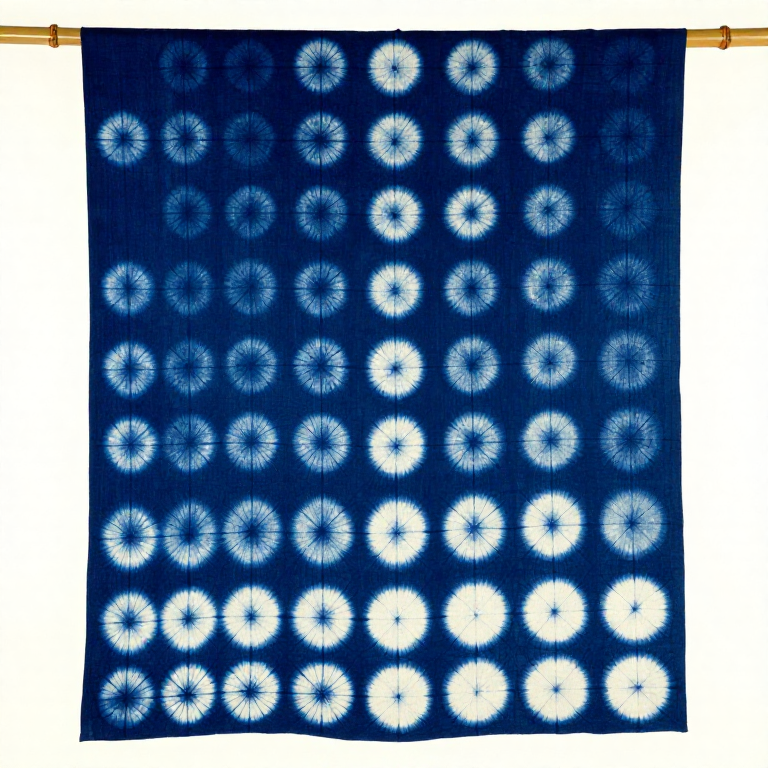
Choose one or more shibori resist techniques. For kumo (spider web) shibori, pinch a point of fabric, pull it into a peak, and bind it tightly with string at intervals down the peak — each bound section creates a concentric ring when opened. For itajime (clamp resist), fold the fabric into a precise accordion then fold again into triangles or squares, and clamp between two identical wooden shapes — the clamped areas remain undyed, creating geometric repeating patterns. For arashi (storm) shibori, wrap the fabric diagonally around a pole, push it into compressed pleats along the pole, and bind it in place — this creates diagonal stripe patterns. Each technique can be combined with others on a single piece of fabric for complex overlapping designs.
Dye the Bound Fabric
Dye the Bound Fabric
Submerge the bound fabric in a prepared indigo vat (or other dye bath). Keep it submerged for 3-5 minutes, gently squeezing to encourage dye penetration into the exposed areas while the bound, clamped, or stitched areas resist absorption. Remove and oxidize in the air for 15-20 minutes. The key to crisp shibori patterns is tight, secure binding — any areas where the binding has loosened will allow dye to seep in, blurring the pattern. Repeat the dip-and-oxidize cycle 3-5 times for medium indigo blue, more for darker shades. With itajime clamping, the clamps can be tightened between dips if they have loosened.
Unbind and Reveal the Pattern
Unbind and Reveal the Pattern
After the final dye dip and oxidation, carefully remove all string, clamps, or stitching while the fabric is still damp. Unclamp itajime pieces gently to avoid tearing wet fabric. Cut and pull stitching threads slowly. The resist areas appear white or very light against the dyed ground, revealing the shibori pattern for the first time. This moment of unfolding is one of the most rewarding aspects of shibori — the pattern is never fully predictable because small variations in folding tension, binding tightness, and dye penetration create unique results even when following the same technique repeatedly.
Rinse and Set the Pattern
Rinse and Set the Pattern
Rinse the unbound fabric in cold running water until the water runs clear. Avoid wringing or twisting, which can distort the still-wet fabric and blur crisp pattern edges. Lay the fabric flat or hang it to dry away from direct sunlight. The pattern is now permanent — indigo bonds mechanically to the cotton fibres and does not wash out. If using dyes other than indigo, follow the specific setting instructions for that dye (heat setting, vinegar rinse, etc.). Once dry, the fabric can be ironed on a medium setting. Traditional Edo-period shibori textiles were used for kimono, noren (door curtains), furoshiki (wrapping cloths), and tenugui (hand towels).
재료
5- 1-2 metres 개플레이스홀더
- 5-10m m플레이스홀더
- prepared vat 개플레이스홀더
- 2 matching pieces 개플레이스홀더
- 10-20 개플레이스홀더
이 블루프린트로 만드는 것
CC0 퍼블릭 도메인
이 블루프린트는 CC0로 공개되었습니다. 어떤 목적으로든 자유롭게 복사, 수정, 배포 및 사용할 수 있습니다.
제품 구매를 통해 메이커를 지원하세요. 판매자가 설정한 메이커 커미션 을 받거나, 이 블루프린트의 새로운 반복을 만들어 연결로 포함시킬 수 있습니다.