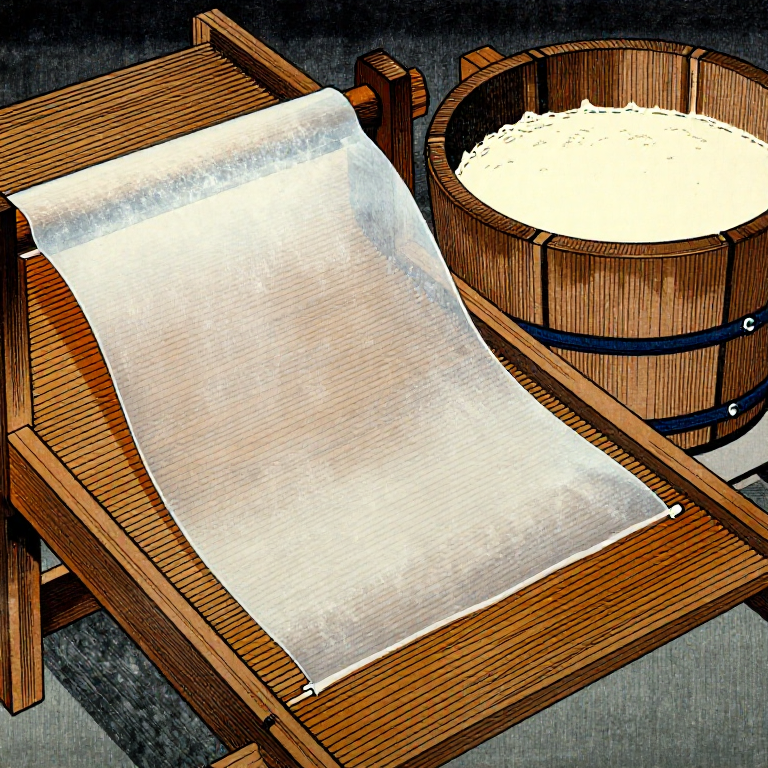


Making Washi Paper from Kozo Bark — Traditional Japanese Papermaking
안내
Cook and Rinse the Kozo Bark
Cook and Rinse the Kozo Bark
Soak dried kozo bark strips in cold water overnight to rehydrate them. Place the swollen bark in a large pot, cover with water, add soda ash (approximately 15-20% of the dry bark weight), and boil gently for 2-3 hours until the fibres are soft and pull apart easily when pinched. The alkaline cooking dissolves the lignin, pectin, and hemicellulose that bind the fibres together, leaving pure cellulose. Rinse the cooked bark thoroughly in running water for 30-60 minutes, kneading and squeezing to flush out dissolved chemicals and dark-coloured extractives. Pick through the fibre by hand, removing any remaining bark fragments, knots, or discoloured spots.
이 단계의 재료:
 물푸레나무 원목 토막50-100g 개
 물large quantity 개
필요한 도구:
 큰 솥
큰 솥Beat the Fibre
Beat the Fibre
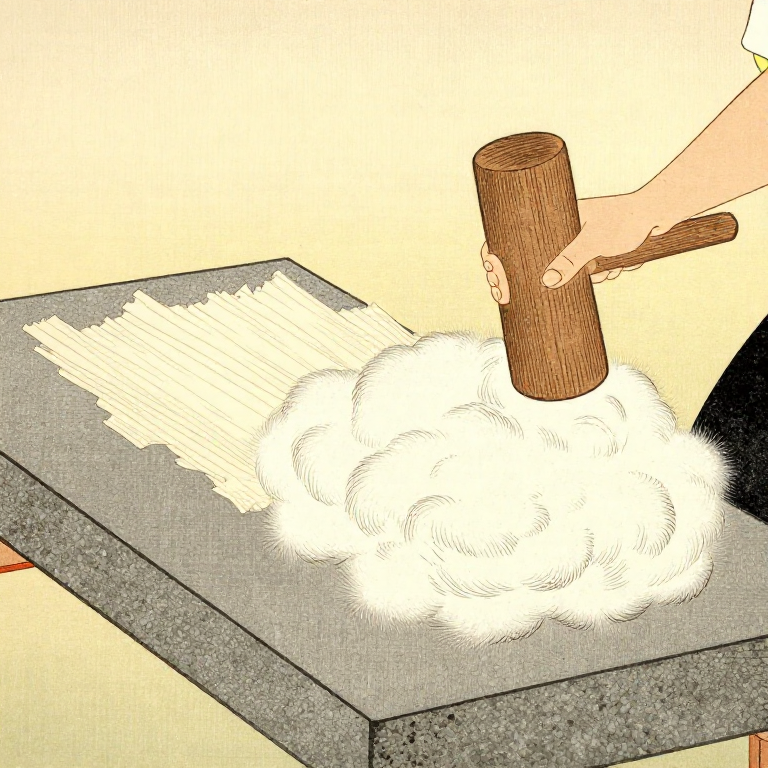
Spread the rinsed fibre on a flat stone or hardwood board and beat it with a wooden bat or mallet. The goal is to separate and fibrillate the individual cellulose fibres without cutting them short. Long fibres produce strong paper — washi's characteristic toughness comes from kozo fibres that average 7-10mm in length, far longer than wood pulp fibres (1-3mm). Beat rhythmically, turning and folding the fibre mass periodically, for 20-40 minutes until it becomes a fluffy, cloud-like pulp with no visible bundles or clumps. Over-beating shortens the fibres and produces weaker, more opaque paper.
필요한 도구:
 고무망치
고무망치Prepare the Vat with Neri
Prepare the Vat with Neri
Fill the papermaking vat with clean water and disperse the beaten fibre pulp into it, stirring thoroughly. Add neri, a viscous mucilage made from crushed tororo-aoi (sunset hibiscus) root soaked in water. Neri is the critical ingredient that distinguishes Japanese nagashi-zuki papermaking from Western tame-zuki: it slows drainage through the screen, keeps fibres suspended evenly in the water, and allows the papermaker to build up layers with multiple scoops rather than forming the entire sheet in one action. Without neri, the fibres clump and drain too quickly for even sheet formation. Stir the vat contents before each sheet to re-suspend settled fibres.
이 단계의 재료:
물vat full 개필요한 도구:
 큰 플라스틱 대야
Form Sheets Using Nagashi-zuki
Form Sheets Using Nagashi-zuki
Hold the sugeta (a hinged frame with a flexible bamboo screen called a su) and dip it into the vat at a slight angle. Scoop fibre slurry onto the screen, then rock the mould back and forth rhythmically, allowing the slurry to flow across the entire screen surface and then draining the excess off the far edge. This scooping-and-draining action is repeated 2-4 times per sheet, building up layers of criss-crossed fibres that interlock for strength. The number of scoops determines the sheet thickness. After the final scoop, tilt the mould to drain completely. Lift the su (screen) from the frame and lay the wet sheet onto a stack of previously formed sheets (called a post), placing each sheet directly on top of the last without any felt or couching cloth between them — the neri prevents them from bonding permanently.
필요한 도구:
 종이 뜨기 키트(발과 발틀)
Press and Dry the Sheets
Press and Dry the Sheets
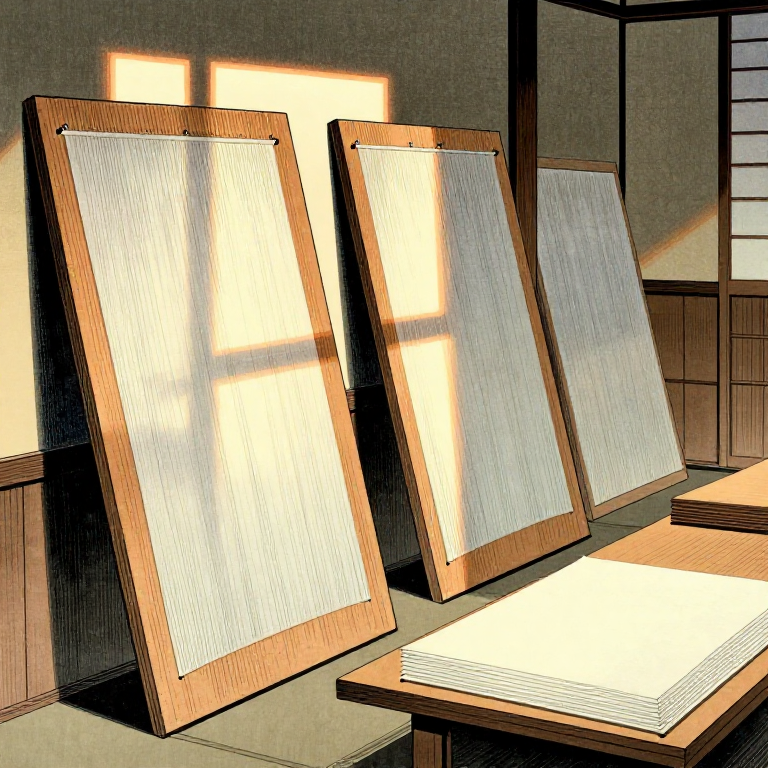
After forming all sheets, press the entire stack (post) overnight under gradually increasing weight to squeeze out excess water. Start with light pressure and increase over several hours — sudden heavy pressure squeezes the wet sheets sideways, causing distortion. After pressing, peel individual sheets from the stack one at a time (they separate cleanly thanks to the neri) and brush each sheet onto a smooth drying board (traditionally made of ginkgo or cypress wood). Use a wide, soft brush to smooth the wet sheet onto the board surface, pressing out air bubbles. Dry the boards in the sun or in a warm, well-ventilated room. The dried sheets peel off the boards with a gentle tug. Finished washi is strong, flexible, slightly translucent, and has a soft, warm surface texture distinct from machine-made paper.
필요한 도구:
 납작한 돌 (흙손 / 성형 도구)
재료
4- 50-100g 개플레이스홀더
- large quantity 개플레이스홀더
- 200-300g for ~10 sheets 개플레이스홀더
- 50-100g root or 1 tablespoon powdered 개플레이스홀더
이 블루프린트로 만드는 것


CC0 퍼블릭 도메인
이 블루프린트는 CC0로 공개되었습니다. 어떤 목적으로든 자유롭게 복사, 수정, 배포 및 사용할 수 있습니다.
제품 구매를 통해 메이커를 지원하세요. 판매자가 설정한 메이커 커미션 을 받거나, 이 블루프린트의 새로운 반복을 만들어 연결로 포함시킬 수 있습니다.