협업
예술
뷰티 및 웰니스
공예
문화 및 역사
엔터테인먼트
환경
음식 및 음료
역공학
과학
스포츠
기술
웨어러블

Electrolytic Hypochlorite Generator
Chlorination and the Residual, already published here, explains why a trace of chlorine left in the water is what keeps it safe all the way to the tap. It assumes you can buy the chlorine.
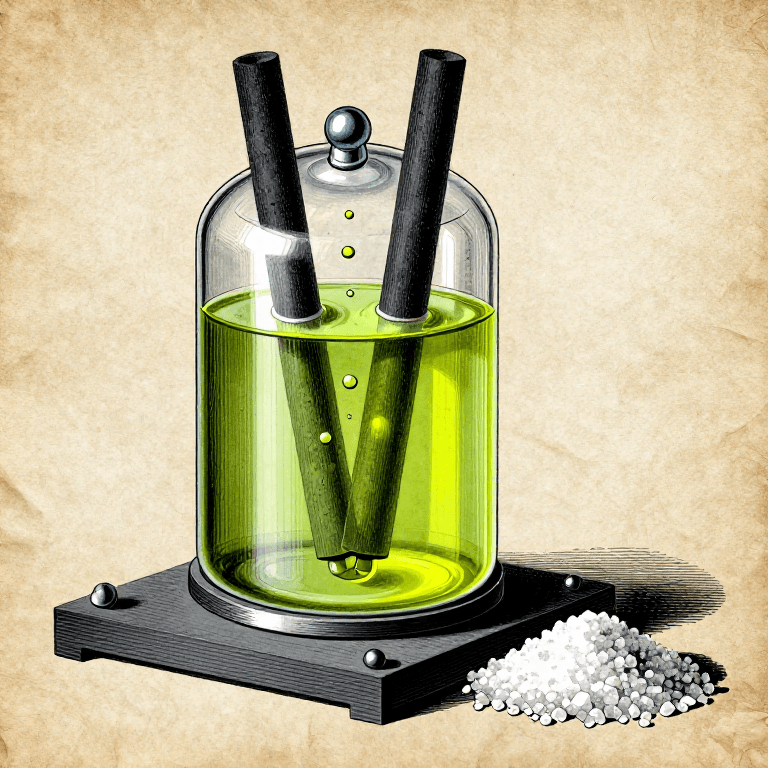
This is how you make it from salt, water and electricity. Pass a current through brine and chlorine forms at one electrode and hydrogen at the other; let the chlorine mix back into the alkaline solution rather than escape, and it becomes sodium hypochlorite — ordinary bleach, the same thing a works dozes into a supply. The method runs everywhere the supply chain does not, from village kiosks to ships.
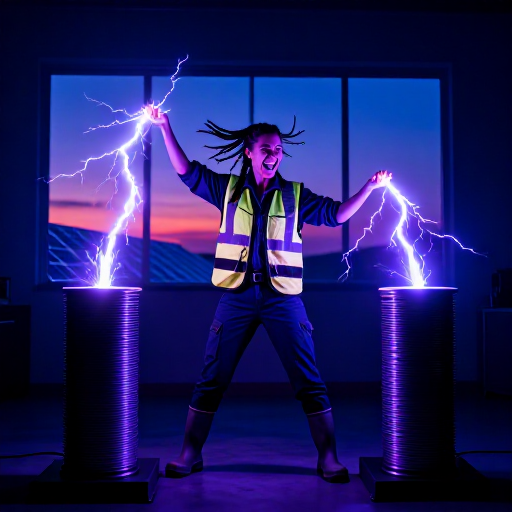
⚠ This blueprint makes chlorine gas and hydrogen gas. Chlorine damages lungs at concentrations you can barely smell, and hydrogen burns explosively in air. Outdoors or in a fume hood, never in a closed room, and never with the two gases allowed to collect.
고급
3 hours
안내
1
1
Set up where the gases can leave
Set up where the gases can leave
Work outdoors, or in a fume hood with the sash down. Wear goggles and gloves. Have a fan moving air away from you, and nothing that sparks or flames anywhere near the cell.
Two gases come off this cell and both matter. Chlorine at the anode is heavier than air, so it pools low and lingers; it is detectable by smell far below the concentration that harms you, which makes the smell a warning and never a measurement. Hydrogen at the cathode is lighter than air and will collect under any lid, shelf or ceiling above the cell — that is the one that turns a chemistry lesson into a bang. Keep the cell open to the sky.
필요한 도구:
 밀폐형 보안경
 니트릴 장갑
2
2
Mix the brine
Mix the brine
Dissolve 30 grams of plain table salt in one litre of water — about 3 per cent, roughly sea strength. Use salt without iodine or anti-caking agents if you can, and soft or distilled water.
Hard water is the practical enemy here: the calcium and magnesium in it plate out as a white scale on the cathode within minutes, the cell's resistance climbs and the output falls away. Commercial units solve this by reversing polarity periodically to shed the scale.
이 단계의 재료:
 식탁용 소금30 g
 증류수1 리터
필요한 도구:
 메스실린더
 유리병
3
3
Two graphite electrodes, not steel
Two graphite electrodes, not steel
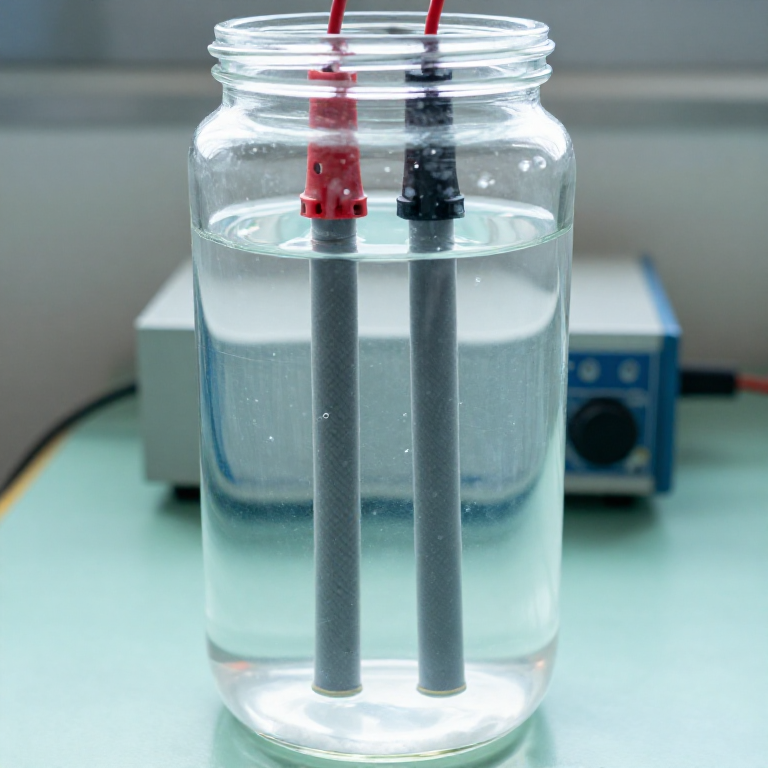
Stand two graphite rods in the brine about 3 cm apart, connected to a DC supply through a meter. Graphite survives the anode; almost nothing cheap else does.
Do not use steel, copper or aluminium as the anode. Chlorine forming on a metal surface dissolves it, and what you get is not bleach but a jar of metal chlorides — orange with iron, blue-green with copper, and useless. The colour change is the experiment telling you the electrode is being consumed instead of the salt.
이 단계의 재료:
 흑연 전극2 개
필요한 도구:
 직류 전원 장치
 멀티미터
4
4
Run it at low voltage and watch both electrodes
Run it at low voltage and watch both electrodes
Set about 5 volts and let the current settle — expect a couple of amps in a jar this size. Note the current; it is your reaction rate.
Fine bubbles should rise from both rods: hydrogen at the negative one, faster, and chlorine at the positive one, slower and with the smell. The solution warms. Stir gently now and then so the chlorine meets the sodium hydroxide building at the cathode — that reaction is what converts the gas into hypochlorite in solution instead of letting it leave as gas.
필요한 도구:
직류 전원 장치멀티미터 스톱워치
 온도계
5
5
How much bleach the current actually made
How much bleach the current actually made
Jupyter 노트북 불러오는 중…
필요한 도구:
멀티미터6
6
Store it dark, and never mix it with acid
Store it dark, and never mix it with acid
Pour the product into an opaque bottle, label it with the strength you measured and the date, and keep it cool. Leave the cap loose for the first hour — dissolved gas will still come out of solution.
The rule that matters for the rest of your life: never mix hypochlorite with an acid, and never with ammonia. Acid drives the chlorine straight back out as gas, and a bottle of bleach plus a bottle of descaler in a small room has killed people. This is not a laboratory caution, it is the most common domestic chemical poisoning there is.
필요한 도구:
유리병7
7
Dose water, then measure the residual
Dose water, then measure the residual
Dose a litre of your filtered water to about 2 mg/l, stir, and wait thirty minutes. Then test for FREE chlorine. You want 0.2 to 0.5 mg/l still present.
The gap between what you put in and what remains is the chlorine demand: everything in the water that reacted — organic matter, iron, and the microbes themselves. A residual means the demand has been satisfied and there is protection left over. No residual means the dose was eaten and you cannot conclude anything about safety. Cloudy water shields microbes from chlorine, which is precisely why every rung before this one exists.
이 단계의 재료:
 탄산수소나트륨1 tsp
필요한 도구:
 pH 시험지메스실린더
이 블루프린트로 만드는 것
관련 블루프린트
이 블루프린트들은 지식을 공유합니다 — 기술, 재료 또는 원리

CC0 퍼블릭 도메인
이 블루프린트는 CC0로 공개되었습니다. 어떤 목적으로든 자유롭게 복사, 수정, 배포 및 사용할 수 있습니다.
제품 구매를 통해 메이커를 지원하세요. 판매자가 설정한 메이커 커미션 을 받거나, 이 블루프린트의 새로운 반복을 만들어 연결로 포함시킬 수 있습니다.