예술
뷰티 및 웰니스
공예
문화 및 역사
엔터테인먼트
환경
음식 및 음료
역공학
과학
스포츠
기술
웨어러블
위험


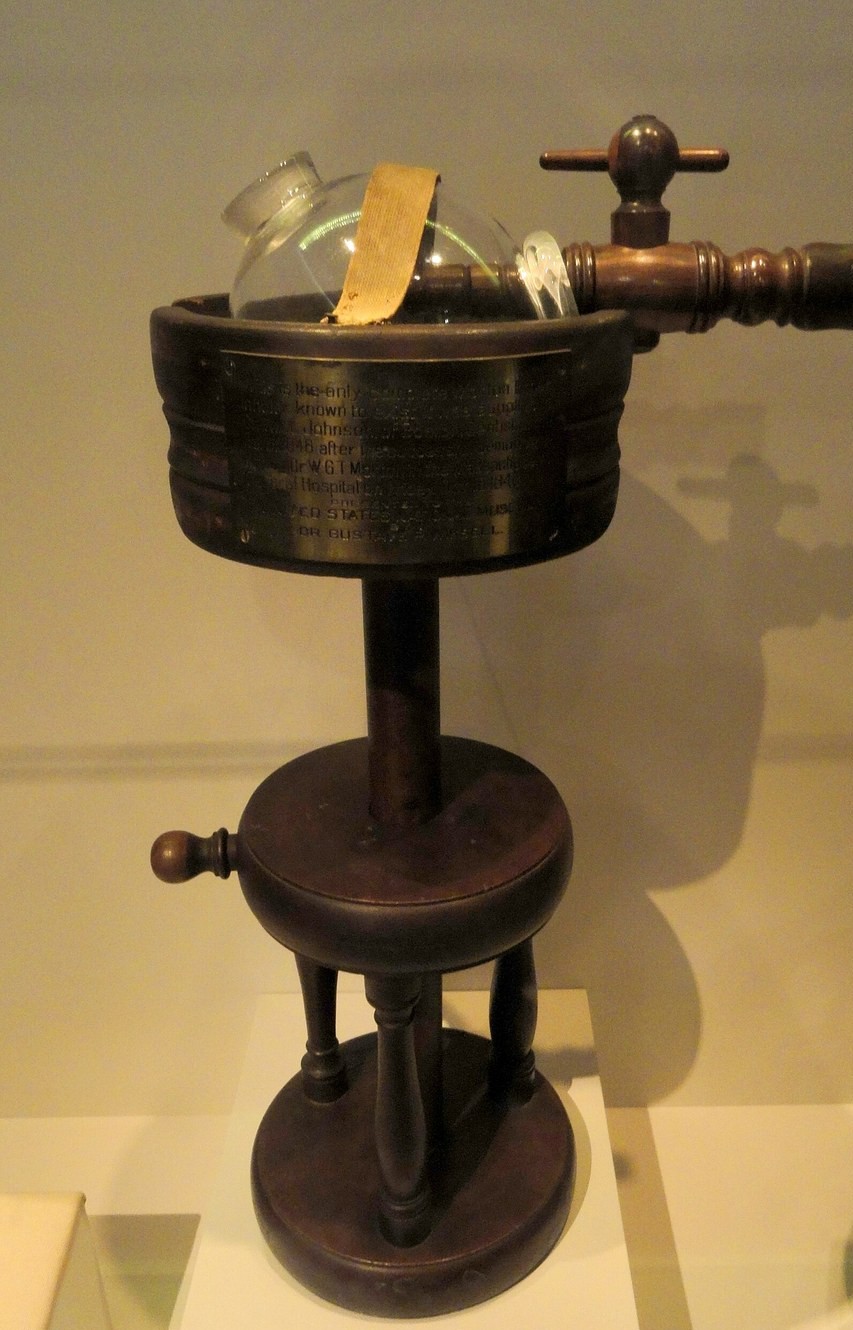
The Ether Inhaler
Before 16 October 1846 surgery was speed. A surgeon's reputation rested on how few seconds an amputation took, because the patient was awake and held down. On that morning at Massachusetts General Hospital a glass globe with a sponge in it ended that era in about five minutes.
The device looks trivial and is not. Diethyl ether boils at 34.6 degrees Celsius, which means at room temperature the air above it is already saturated with roughly 58 percent ether vapour. The concentration that produces surgical anaesthesia is around 2 percent. So the inhaler is not a vaporiser at all — the ether vaporises perfectly well on its own. The inhaler is a DILUTER, and every part of it exists to stop the patient receiving thirty times the dose they need.
That inversion is the whole engineering lesson, and it is why this blueprint is a fluid-mechanics build rather than a chemistry one. You will build the glass draw-over vaporiser and characterise it — with a safe surrogate, never with ether. Ether itself is here as the subject, described honestly, behind the hazard gate: it is extremely flammable with an explosive range in air from about 1.9 to 36 percent, it autoignites near 160 degrees Celsius, and on storage in light and air it forms shock-sensitive peroxides. The clinical boundary is absolute — this is a bench instrument for understanding a vapour circuit. It is not an anaesthetic machine and must never be connected to a person.
고급
6 hours
관련 블루프린트
이 블루프린트들은 지식을 공유합니다 — 기술, 재료 또는 원리


CC0 퍼블릭 도메인
이 블루프린트는 CC0로 공개되었습니다. 어떤 목적으로든 자유롭게 복사, 수정, 배포 및 사용할 수 있습니다.
제품 구매를 통해 메이커를 지원하세요. 판매자가 설정한 메이커 커미션 을 받거나, 이 블루프린트의 새로운 반복을 만들어 연결로 포함시킬 수 있습니다.