예술
뷰티 및 웰니스
공예
문화 및 역사
엔터테인먼트
환경
음식 및 음료
역공학
과학
스포츠
기술
웨어러블
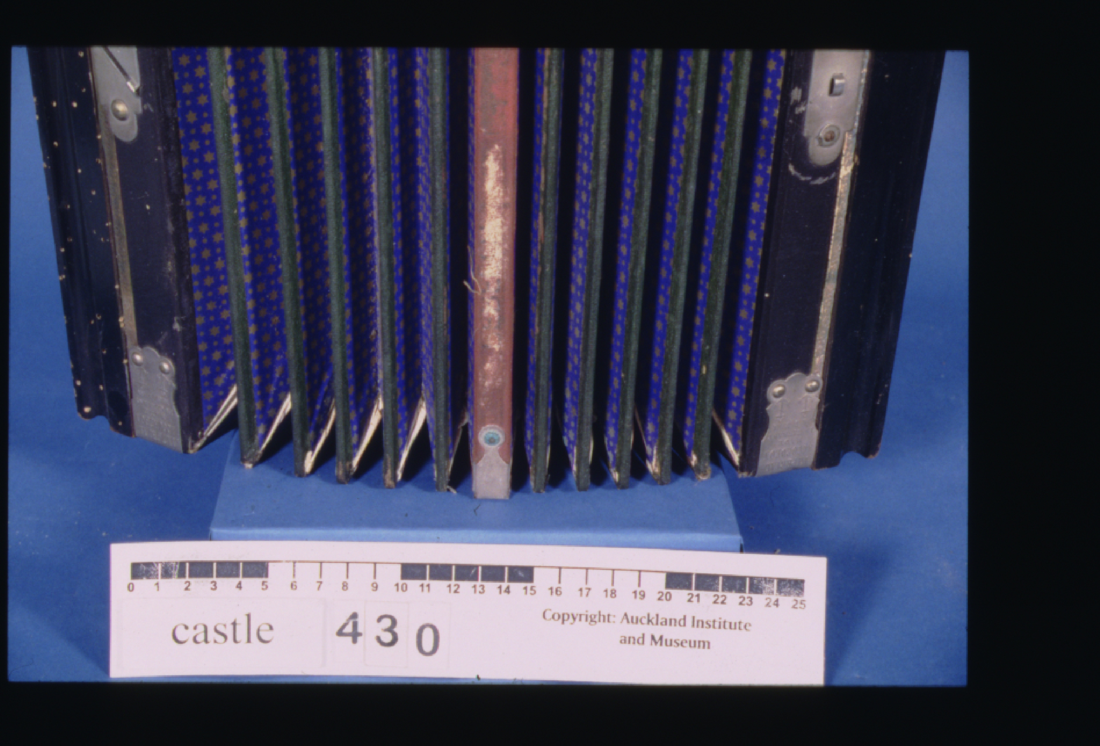
Auckland Museum / Kalbe's (Wikimedia Commons) · CC BY 4.0


Building a Free-Reed Accordion — Bellows, Reeds and Buttons
Build a simple accordion: cut and tune springy metal free reeds, mount them in reed blocks with leather valves, and pump air past them with a pleated bellows squeezed between two button boxes. A serious maker build in the free reed and the bellows — the European instrument born from the Chinese sheng, that carries its own wind supply.
고급
Many hours over several sessions
안내
1
1
A box of reeds you pump
A box of reeds you pump
An accordion is a bellows with metal reeds. Squeeze or pull the bellows and air is forced past thin metal tongues, each of which flutters and sings. Buttons open the path to different reeds so you choose the notes — and the instrument carries its own wind, so it never needs a breath.
2
2
Cut the free reeds
Cut the free reeds
For each note, cut a matching slot in a small metal plate and rivet a thin springy tongue over it, sized so the tongue swings freely DOWN THROUGH the slot with only a hair's gap. This 'free reed' — a tongue that passes through its frame — is the whole secret. Longer tongues sound lower.
이 단계의 재료:
 황동판1 개
필요한 도구:
 금속용 줄
금속용 줄3
3
Tune the reeds
Tune the reeds
Tune each tongue by filing: scrape the TIP thinner to raise its pitch, or scrape near the RIVETED base to lower it — exactly how an mbira key is tuned. Make one reed for pushing air and one for pulling on each note if you want it to sound both ways.
4
4
Build the reed blocks
Build the reed blocks
Mount the reed plates over air channels in a wooden block. Glue a small leather flap (a valve) over the idle reed of each pair, so air only ever drives the reed meant to sound and does not waste out through its partner.
이 단계의 재료:
 마른 침엽수 판재1 개
 크롬 무두질 가죽1 개
필요한 도구:
 슬로이드 조각칼
5
5
Build the two ends and buttons
Build the two ends and buttons
Build a small box at each end. Over each reed sits a hole kept shut by a leather-faced pad; a button on a lever lifts the pad to let air reach that reed. Fit a row of buttons on one end, the bass end on the other.
이 단계의 재료:
 발트 자작나무 합판1 개
 목재 다월봉1 개
 PVA 목공용 접착제1 개
필요한 도구:
 송곳
송곳6
6
Make the bellows
Make the bellows
Between the two ends build a pleated bellows — stiff card folded into a concertina zig-zag, its corners sealed with leather so it is airtight. Screw and glue the bellows to both end boxes. This is the lung that supplies the wind.
이 단계의 재료:
 #8 × 1인치 나무 나사12 개
7
7
Play — push and pull
Play — push and pull
Hold an end in each hand, press buttons, and pump the bellows in and out. Every push and pull drives air past the open reeds and they sing. Keep the bellows moving — steady air gives a steady tone; pumping harder makes it louder.
8
8
Compendium — the free reed and its bellows
Compendium — the free reed and its bellows
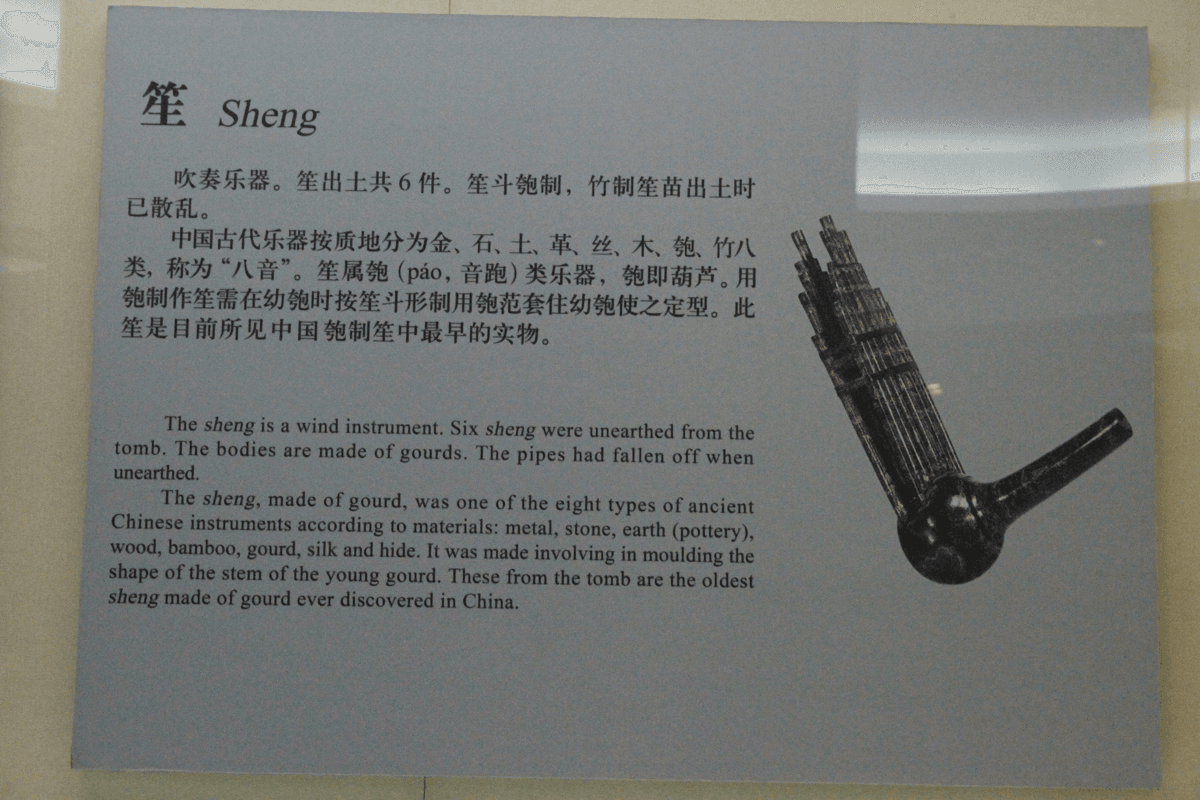
The accordion runs on the FREE reed: a thin metal tongue fixed at one end and free at the other, mounted over a slot it can swing right through. Push air at it and the tongue is bent into the slot, springs back past it, is pushed in again — flapping back and forth many times a second and chopping the airflow into a buzzing note. Its pitch is set purely by the tongue itself — its length, thickness and stiffness — NOT by any pipe or air column, which is why an accordion needs no long tubes and can pack a whole orchestra of notes into a small box, and why you tune it by filing the tongue (tip thinner = higher, base thinner = lower) just like an mbira key. This is the exact same free reed as the Chinese sheng and the Lao khaen — and that is no coincidence: the free reed reached Europe from China around 1800, and within a couple of decades makers in Berlin and Vienna had wrapped it in a bellows to create the accordion, concertina and harmonica. The accordion's own invention is the BELLOWS as a built-in, tireless wind supply: where the sheng and khaen need the player's lungs and the pipe organ needs a pump, the accordion's pleated bellows lets the player push OR pull air at will, so (with a reed for each direction) the sound never stops for a breath. Add leather valves so air only drives the intended reed, and pad-and-button levers to choose notes, and you have a portable, self-powered reed organ — the instrument that carried folk and dance music across nineteenth-century Europe and the Americas.
재료
7- 1 개플레이스홀더
- 1 개플레이스홀더
- 1 개플레이스홀더
- 1 개플레이스홀더
- 1 개플레이스홀더
- 1 개플레이스홀더
- 12 개플레이스홀더
이 블루프린트로 만드는 것
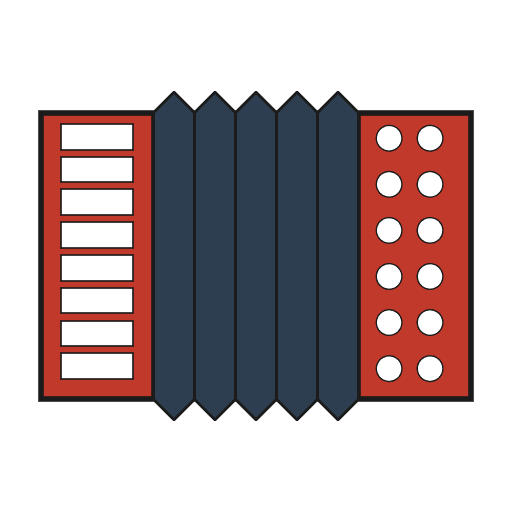
관련 블루프린트
이 블루프린트들은 지식을 공유합니다 — 기술, 재료 또는 원리
CC0 퍼블릭 도메인
이 블루프린트는 CC0로 공개되었습니다. 어떤 목적으로든 자유롭게 복사, 수정, 배포 및 사용할 수 있습니다.
제품 구매를 통해 메이커를 지원하세요. 판매자가 설정한 메이커 커미션 을 받거나, 이 블루프린트의 새로운 반복을 만들어 연결로 포함시킬 수 있습니다.