
Extracting Antimony from Stibnite — The Ancient Cosmetic Turned Metal
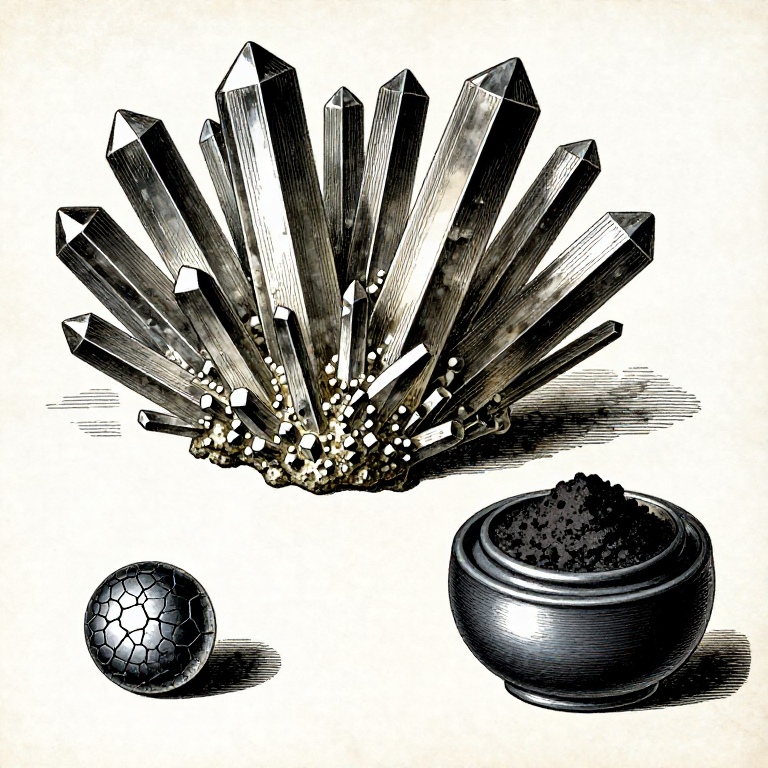
Antimony (Sb, element 51, from Latin stibium) has one of the longest histories of any element. Stibnite (antimony trisulfide, Sb₂S₃) — a lustrous, steel-grey mineral — was ground into powder and used as kohl eye cosmetic in ancient Egypt from at least 3100 BCE. The Ebers Papyrus (c. 1550 BCE) mentions it as a medicine. Yet metallic antimony was not reliably produced until the 16th century CE, when Vannoccio Biringuccio described its smelting in De la pirotechnia (1540).
Stibnite is the principal ore of antimony, containing 71.7% antimony by mass. The extraction involves two stages: first, stibnite is roasted in air to convert Sb₂S₃ to antimony trioxide (Sb₂O₃), releasing sulfur dioxide. Then the oxide is reduced with carbon at approximately 700–800 °C to yield metallic antimony. Alternatively, stibnite can be reduced directly using metallic iron in a precipitation reaction — the iron displaces antimony from the sulfide because iron has a greater affinity for sulfur.
HAZARD: Antimony and its compounds are toxic. Antimony trioxide is classified as a possible carcinogen (IARC Group 2B). Chronic exposure causes antimoniosis — a pneumoconiosis affecting the lungs. Stibine gas (SbH₃), while not produced in this process, is extremely toxic. Work outdoors with respiratory protection. Wash hands thoroughly after handling antimony or its ores.
이 블루프린트로 만드는 것
CC0 퍼블릭 도메인
이 블루프린트는 CC0로 공개되었습니다. 어떤 목적으로든 자유롭게 복사, 수정, 배포 및 사용할 수 있습니다.
제품 구매를 통해 메이커를 지원하세요. 판매자가 설정한 메이커 커미션 을 받거나, 이 블루프린트의 새로운 반복을 만들어 연결로 포함시킬 수 있습니다.