
Extracting Cobalt from Cobaltite — The Goblin Metal That Colors Glass Blue
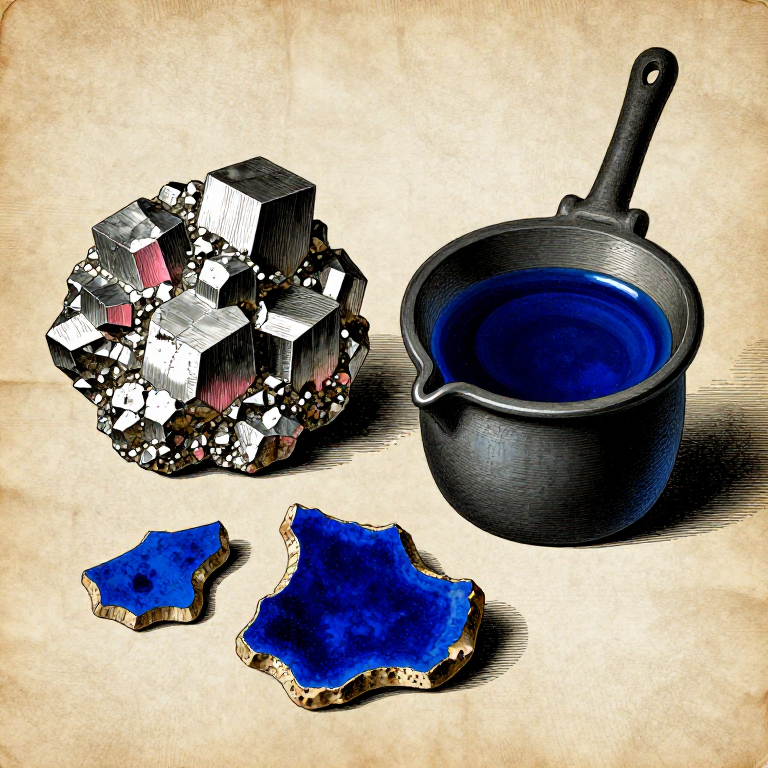
Cobalt (Co, element 27) gets its name from the German Kobold ('goblin' or 'evil spirit'). Medieval Saxonian silver miners cursed the cobalt-bearing ores they encountered: these minerals looked like silver ore but yielded no silver, and when smelted they released poisonous arsenic fumes that sickened the miners. They blamed goblins living underground. The blue color that cobalt imparts to glass, however, has been exploited since at least 2600 BCE — Egyptian and Mesopotamian craftsmen used cobalt-colored glass without knowing the element responsible.
Swedish chemist Georg Brandt first isolated metallic cobalt around 1735, making it the first metal to be discovered that had no ancient or medieval precedent. He demonstrated that the blue coloring agent in smalt (cobalt-colored glass used as a pigment) was a distinct metal, not a compound of bismuth or copper as previously believed.
The primary cobalt ore is cobaltite (CoAsS, cobalt arsenic sulfide), containing approximately 35% cobalt by mass. The extraction involves roasting to remove arsenic and sulfur, then reducing the resulting cobalt oxide with carbon to produce metallic cobalt.
HAZARD: Cobaltite contains arsenic. Roasting releases toxic arsenic trioxide (As₂O₃) and sulfur dioxide (SO₂) fumes. This process must be performed outdoors with full respiratory protection (ABEK/P3 filters minimum). Cobalt dust and compounds are classified as possibly carcinogenic (IARC Group 2B). Handle all materials with gloves.
CC0 퍼블릭 도메인
이 블루프린트는 CC0로 공개되었습니다. 어떤 목적으로든 자유롭게 복사, 수정, 배포 및 사용할 수 있습니다.
제품 구매를 통해 메이커를 지원하세요. 판매자가 설정한 메이커 커미션 을 받거나, 이 블루프린트의 새로운 반복을 만들어 연결로 포함시킬 수 있습니다.