예술
뷰티 및 웰니스
공예
문화 및 역사
엔터테인먼트
환경
음식 및 음료
역공학
과학
스포츠
기술
웨어러블
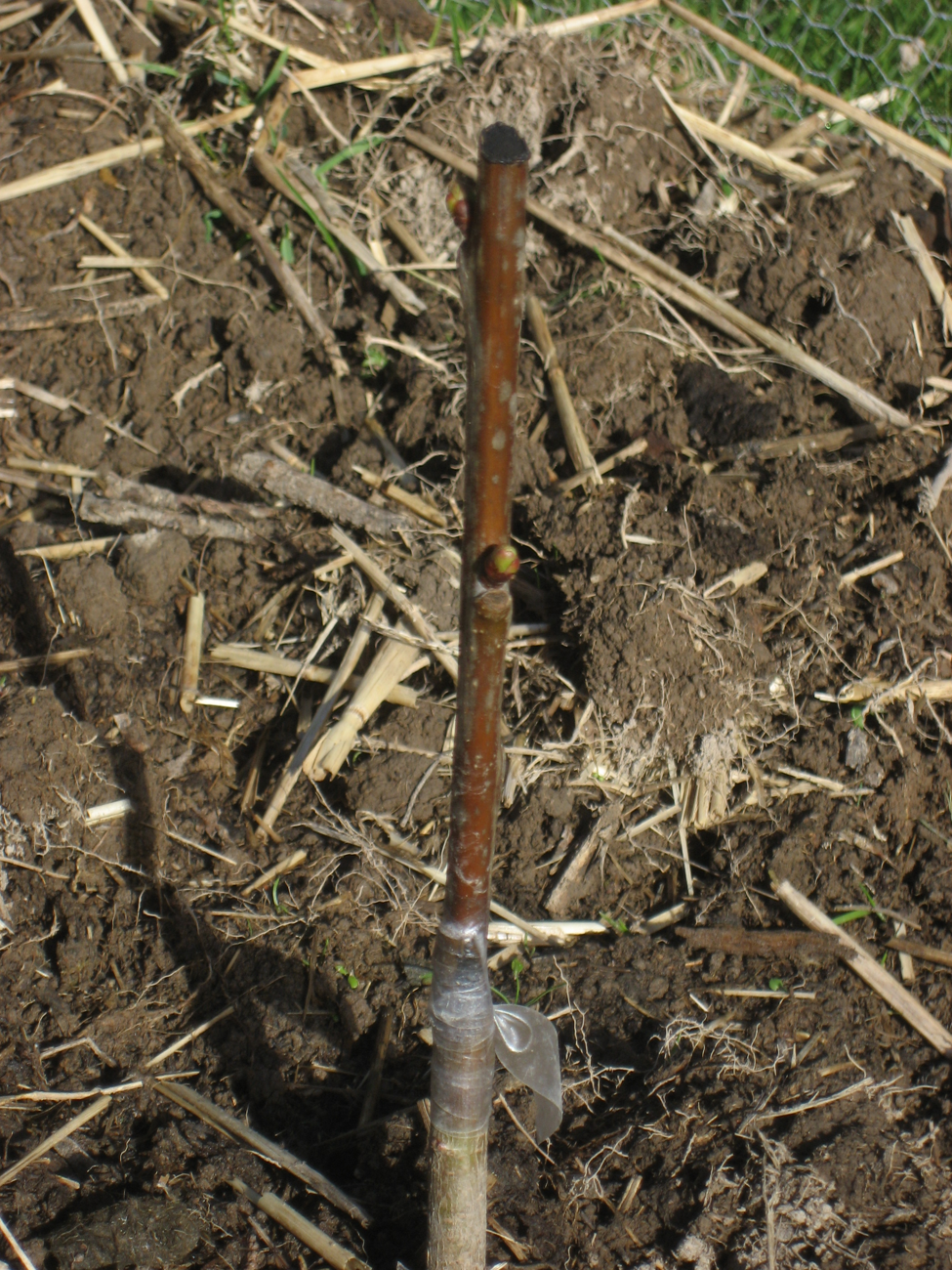
Wikimedia Commons contributor · Public Domain


Grafting — Joining a Scion onto a Rootstock
Fuse two plants into one: a shoot of the variety you want (the scion) joined onto another plant's roots (the rootstock), growing on as a single tree. The whole craft is lining up the thin living cambium layer of both so they knit together. Cut, match, bind, seal, and grow. A serious maker build in the graft union — how nearly every fruit tree is really made.
고급
An hour to graft, a season to take
안내
1
1
Two plants, grown into one
Two plants, grown into one
A graft joins the TOP of one plant to the ROOTS of another. The scion — a shoot of the variety you want — becomes the branches and fruit; the rootstock becomes the roots. They knit together at the join and grow on as one tree. It is how almost every apple, pear, cherry and citrus tree is made.
2
2
Choose scion and rootstock
Choose scion and rootstock
Take a dormant, pencil-thick length of last year's wood with a few buds as the SCION (the variety you want to copy), and a compatible rootstock of similar thickness — apple onto apple, pear onto pear or quince. This is essential because fruit trees do NOT come true from seed, and the rootstock also sets the tree's final size and toughness.
이 단계의 재료:
 사과나무 묘목1 개
3
3
Make the matching cuts
Make the matching cuts
For a whip-and-tongue graft, cut a long matching slant on the end of both scion and rootstock, then cut a small interlocking 'tongue' into each so they hook together. Use a razor-sharp grafting knife for clean, flat faces — ragged cuts won't knit.
필요한 도구:
 접붙임 칼
접붙임 칼4
4
Line up the cambium
Line up the cambium
Slot the two together so their CAMBIUM lines up — the thin green living layer just under the bark. This is the make-or-break of grafting: only where the two cambiums touch can they grow together. If scion and stock differ in size, push them to one side so at least ONE edge of cambium matches perfectly.
5
5
Bind and seal
Bind and seal
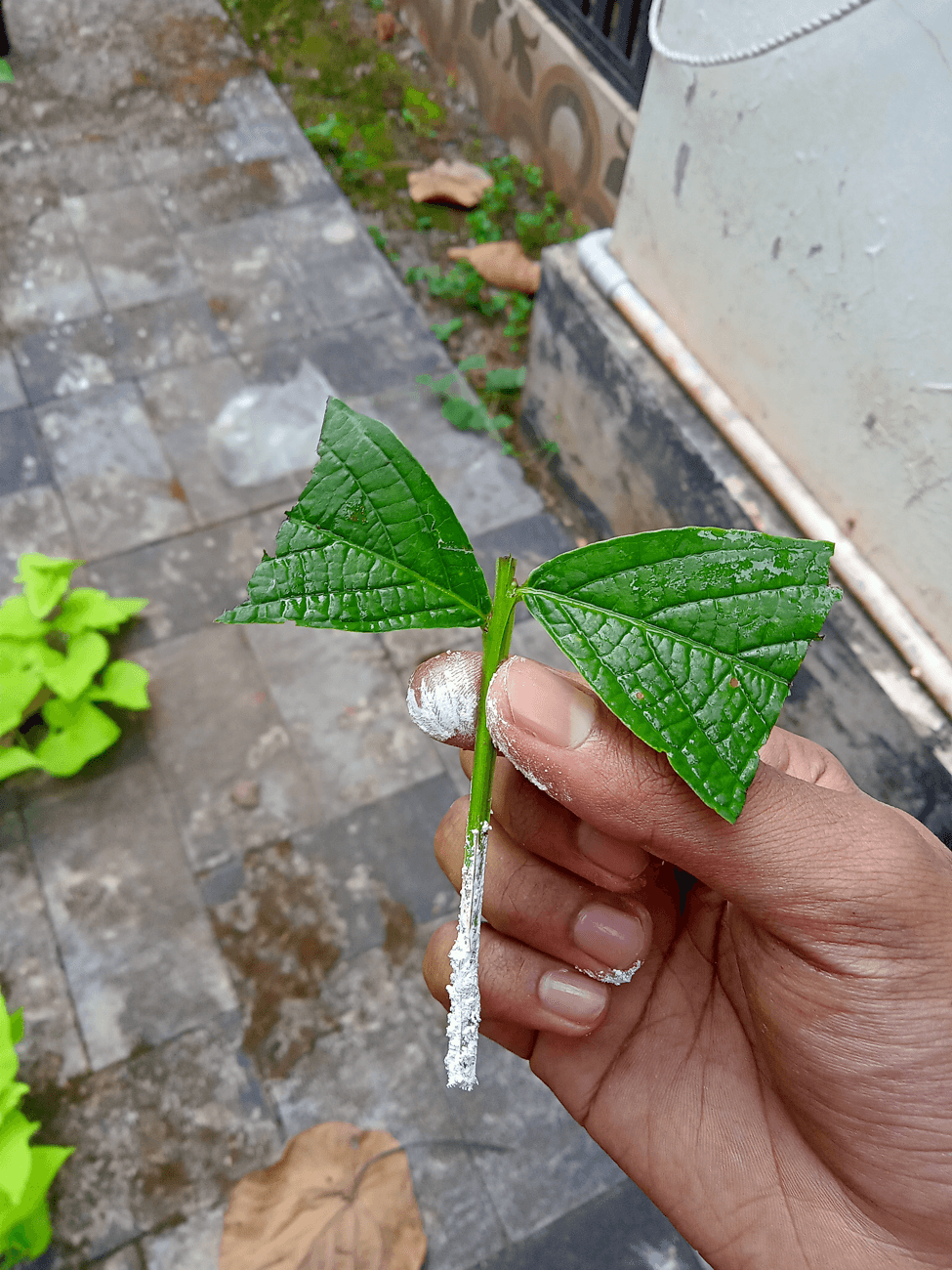
Bind the join firmly with grafting tape or twine so the two can't shift, then seal every cut surface with grafting wax (beeswax-based) to lock in moisture. A graft that dries out before it knits will die, so seal it airtight.
이 단계의 재료:
 원예용 끈1 롤
 밀랍 펠릿1 개
6
6
Grow it on and remove suckers
Grow it on and remove suckers
Keep the graft union above soil level and protected. As it grows, rub off any shoots (suckers) that sprout from the rootstock BELOW the join — those are the rootstock's own variety, not your scion, and will steal its strength. Label the variety and date.
이 단계의 재료:
 접착 라벨1 장
7
7
Watch it take
Watch it take
Over the coming weeks the two form a bridge of callus and then shared plumbing. When the scion's buds swell and push out into leaf and shoot, the graft has taken — the water and food are now flowing across the union. Loosen the binding before it bites into the swelling stem.
8
8
Compendium — the cambium and the graft union
Compendium — the cambium and the graft union
Grafting turns on one tissue: the CAMBIUM, a whisker-thin sleeve of living, dividing cells sandwiched between the bark and the wood, which is the only part of a stem that can grow new tissue outward. When two freshly-cut cambiums are pressed tightly together, each throws out a mass of undifferentiated CALLUS cells; the two masses meet, fuse, and then organise themselves into continuous new plumbing — xylem to carry water up, phloem to carry food down — so the two separate plants become one connected vascular system. That is why lining up the cambium is everything, and why the join must be bound tight (no movement) and sealed (no drying) while it happens. Like a cutting, a graft is VEGETATIVE propagation — the scion growing above is a genetic CLONE of the tree it came from, so the fruit is exactly the parent variety — but grafting adds a second plant underneath, making the tree a deliberate two-part chimera: a chosen top on chosen roots. Why bother instead of a cutting? Because the rootstock is a tool. A dwarfing rootstock keeps an apple tree small and quick to fruit; another gives disease resistance, cold-hardiness or tolerance of heavy soil; and many prized trees (and most fruit) simply won't root from cuttings at all, yet graft readily. You can even graft several varieties onto one 'family tree'. The one rule is COMPATIBILITY — only closely related plants will knit (apple takes apple, not oak). Beyond whip-and-tongue there is the CLEFT graft (wedged scions into a split stump, for topworking a big tree) and BUDDING (slipping a single bud under the bark in summer, the nurseryman's fast method). Practised in China and the Roman world over two thousand years ago, grafting is the ancient key that lets a single perfect fruit tree be copied, sized and toughened at will — the backbone of every orchard.
관련 블루프린트
이 블루프린트들은 지식을 공유합니다 — 기술, 재료 또는 원리
CC0 퍼블릭 도메인
이 블루프린트는 CC0로 공개되었습니다. 어떤 목적으로든 자유롭게 복사, 수정, 배포 및 사용할 수 있습니다.
제품 구매를 통해 메이커를 지원하세요. 판매자가 설정한 메이커 커미션 을 받거나, 이 블루프린트의 새로운 반복을 만들어 연결로 포함시킬 수 있습니다.