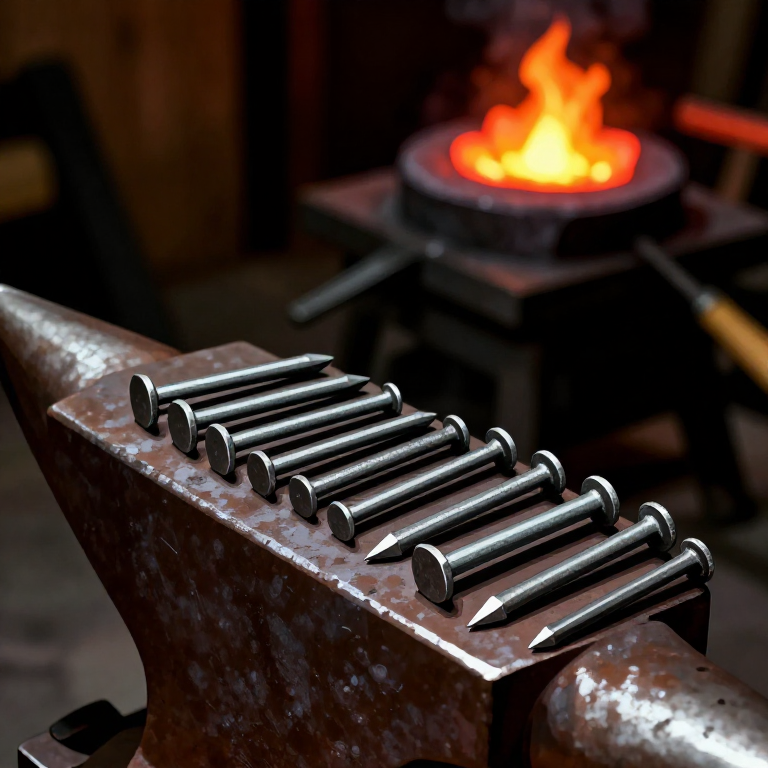
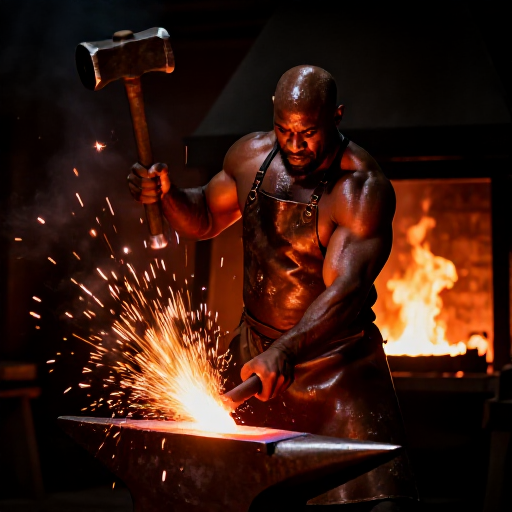

Greek Iron Nail — Forging Wrought Iron Nails
안내
Heat the Iron Rod in the Forge
Heat the Iron Rod in the Forge
Place the end of a wrought iron or mild steel rod into the forge and heat it to a bright yellow-orange color, approximately 900-1050 degrees Celsius. At this temperature, iron becomes highly plastic and can be shaped with relatively light hammer blows. Iron must be worked hot — unlike bronze, which can be cold-hammered and annealed, iron at room temperature is too hard and brittle for efficient shaping. The Greek adoption of iron technology (beginning circa 1050-900 BCE) represented a major technological shift, as iron ore is far more abundant than copper and tin but requires higher furnace temperatures and more sophisticated smelting techniques. Early Greek iron was produced in small bloomery furnaces that yielded spongy masses of wrought iron mixed with slag.
이 단계의 재료:
 연강 판50-60 cm cm
 숯 (부순 것)3-5 kg kg
필요한 도구:
 단조 화덕
단조 화덕 모루
모루 단조 망치
단조 망치 대장간 집게
 못머리 받침판
 하디-바인베르크 집단유전학 실습
Draw Out and Taper the Nail Shank
Draw Out and Taper the Nail Shank
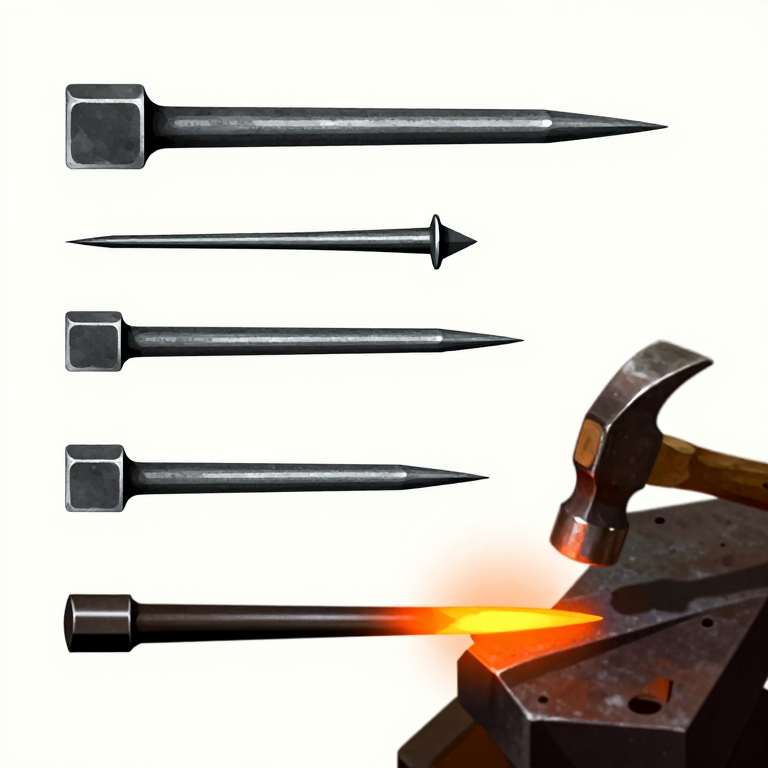
Remove the glowing rod from the forge with tongs and place it on the anvil. Hammer the heated section to draw it out (lengthen it) while tapering it to a point. Work on two opposing faces first, then rotate 90 degrees and taper the other two faces, creating a square-section taper. The finished nail shank should taper evenly from approximately 6 mm square at the head end to a sharp point over a length of 4-8 cm, depending on the desired nail size. Work quickly while the iron is hot — you have approximately 30-60 seconds of working time before the metal cools below forging temperature and must be reheated. Return the rod to the forge as needed.
Cut the Nail from the Rod
Cut the Nail from the Rod
Reheat the iron and position the rod over the hardy (a cutting tool set into the anvil's hardy hole) at the point where you want to separate the nail from the parent rod — leaving approximately 5-8 mm of extra material above the cut for forming the head. Strike the rod against the hardy edge to cut approximately three-quarters through, then break the nail free by bending. Alternatively, use a hot-cut chisel held against the rod while an assistant strikes. The cut should be clean and positioned so the remaining stub above the shank is sufficient to upset (spread) into a nail head.
Form the Nail Head
Form the Nail Head
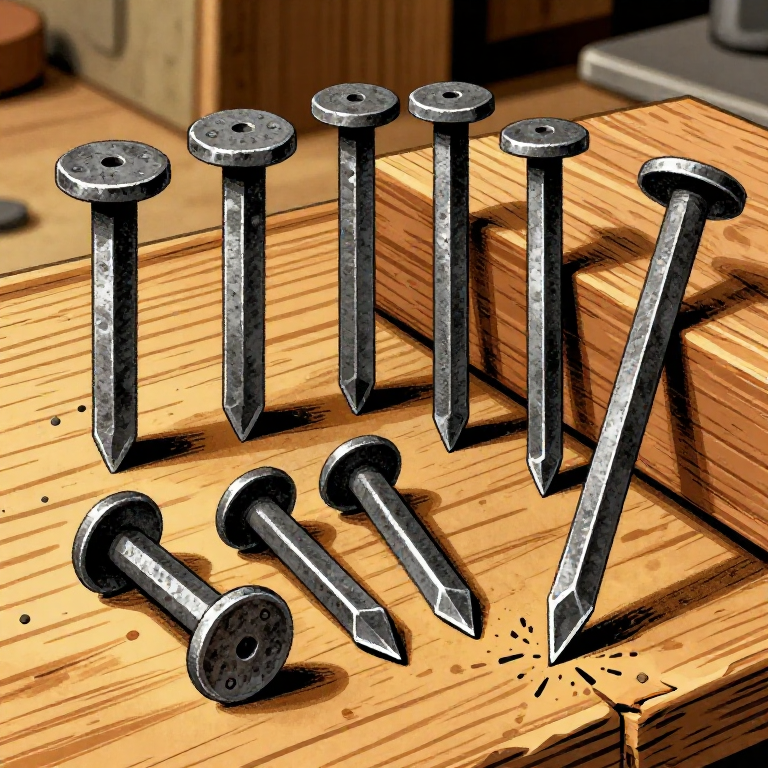
Reheat just the head end of the nail to yellow heat. Insert the nail point-first through the tapered hole in a nail header (a thick metal plate with a countersunk hole that supports the nail while the head is formed). The shank should protrude through the hole with only the head material visible above. Strike the protruding stub firmly with the flat face of the hammer to upset (spread) it outward, forming a flat, round or square head. This is called heading. Two or three heats may be required to form a well-shaped head. The head should be wider than the shank by at least 3-4 mm on all sides to provide holding power when driven into wood. Rose-head nails (with a slightly domed, faceted head) were the most common historical form.
Quench and Test the Finished Nail
Quench and Test the Finished Nail
Once the head is formed, quench the nail in water to cool it. Wrought iron nails do not need to be heat-treated like steel tools — the low carbon content of wrought iron means it does not harden significantly when quenched. The finished nail should have a straight, evenly tapered shank with a sharp point and a flat, well-formed head. Test by driving it into a piece of softwood — it should enter straight without bending, and the head should sit flush with or slightly below the wood surface. A skilled smith can produce 200-400 nails per day. Hand-forged nails were a critical commodity in the ancient world — shipbuilding alone consumed enormous quantities. The Athenian trireme (warship) required thousands of bronze and iron nails and bolts to fasten its hull planking, and naval arsenals maintained large stockpiles of nails as strategic materials.
CC0 퍼블릭 도메인
이 블루프린트는 CC0로 공개되었습니다. 어떤 목적으로든 자유롭게 복사, 수정, 배포 및 사용할 수 있습니다.
제품 구매를 통해 메이커를 지원하세요. 판매자가 설정한 메이커 커미션 을 받거나, 이 블루프린트의 새로운 반복을 만들어 연결로 포함시킬 수 있습니다.