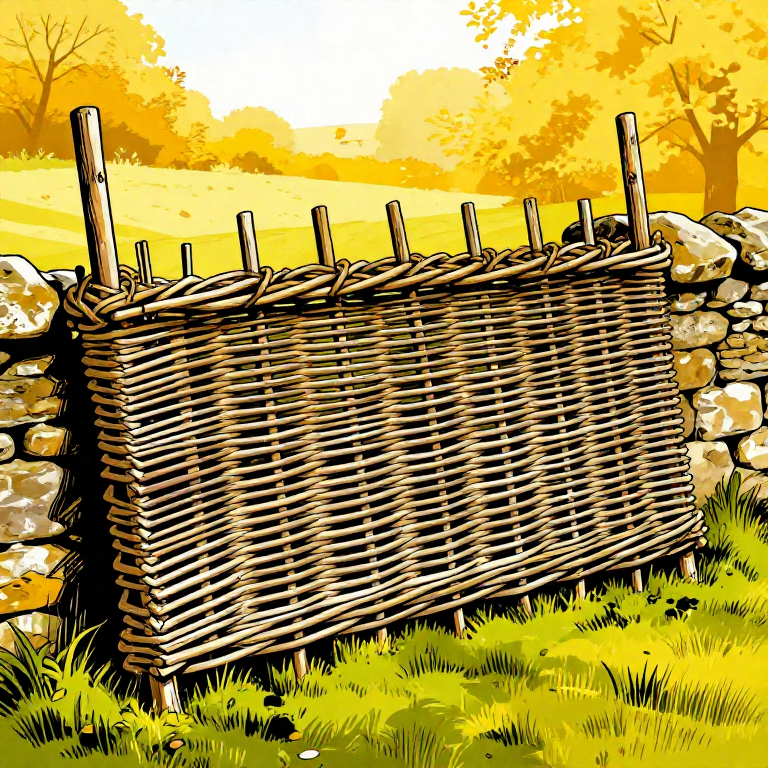


Weaving a Hazel Wattle Hurdle — Living Fence Panels from Coppiced Wood
안내
Harvest Hazel from a Coppice
Harvest Hazel from a Coppice
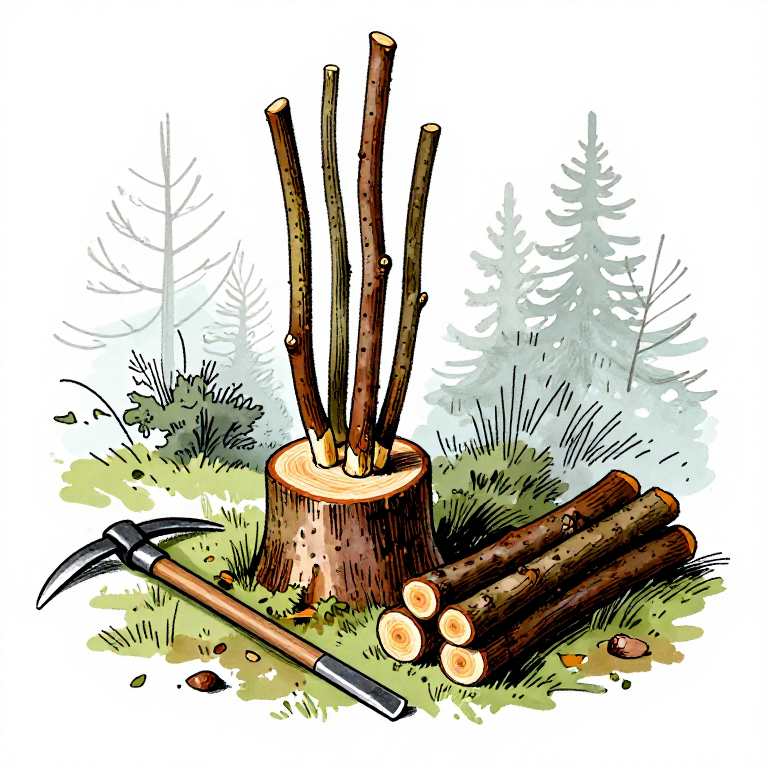
Wattle hurdle-making depends entirely on coppiced hazel — hazel trees that are cut to ground level on a 7-8 year rotation. The stumps ("stools") regrow multiple straight, flexible rods that are ideal for weaving. Unmanaged hazel grows into a twisted, multi-stemmed bush — useless for wattle.
Harvest in winter (November-February) when the sap is down and the rods are dormant. Cut cleanly at the base with a billhook — leave a clean, slightly angled cut to shed water and prevent rot at the stool.
Sort your harvest: straight rods 1.5-2m long and 1-3cm diameter are weavers (called "withies" or "rods"). Thicker straight pieces (3-5cm) become the uprights ("sails" or "zales"). You need about 30-40 weavers and 8-10 uprights per standard panel (1.8m × 1.2m).
이 단계의 재료:
 맹아 갱신한 개암나무 가지
Set the Uprights
Set the Uprights
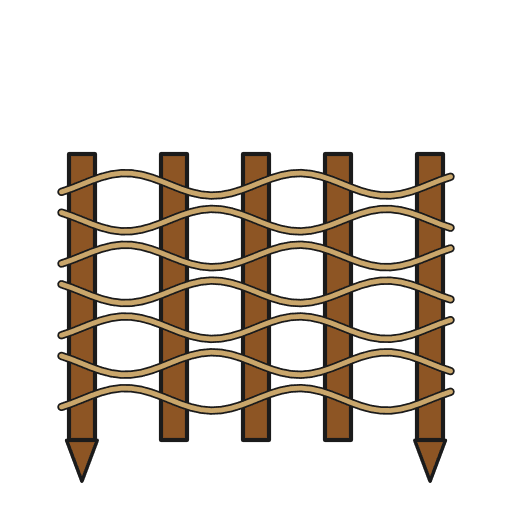
Sharpen the bottom ends of your uprights to a point. Drive them into the ground (or into a "hurdle mould" — a heavy log with pre-drilled holes) spaced 20-25cm apart in a straight line. A standard 1.8m panel uses 8-10 uprights.
The uprights should be firmly set and vertical. If working on a hurdle mould (which lets you make panels anywhere, then carry them to site), drill holes at a slight angle alternating left and right — this helps lock the weavers in place.
The end uprights are the most important — they take the most stress. Use your thickest, straightest pieces for the ends.
필요한 도구:
 울타리 엮는 틀
 빌훅
빌훅Weave the Panel
Weave the Panel
Starting at the bottom, take a hazel rod and weave it horizontally in front of the first upright, behind the second, in front of the third, and so on — simple over-under basket weave. Push each rod down firmly as you go.
When you reach the end of a rod, tuck the thin end behind an upright and start the next rod from the opposite side, overlapping by one upright. Alternate starting sides to build even thickness.
After every 4-5 rows, push the woven rows down tightly with your hands or a wooden block. Tight packing makes a strong, wind-resistant panel. Leave no large gaps.
The critical technique: maintain even tension. Too tight and the uprights bend inward; too loose and the panel is floppy. Consistent, firm pressure creates a panel that is rigid, strong, and beautiful.
Finish the Top and Trim
Finish the Top and Trim
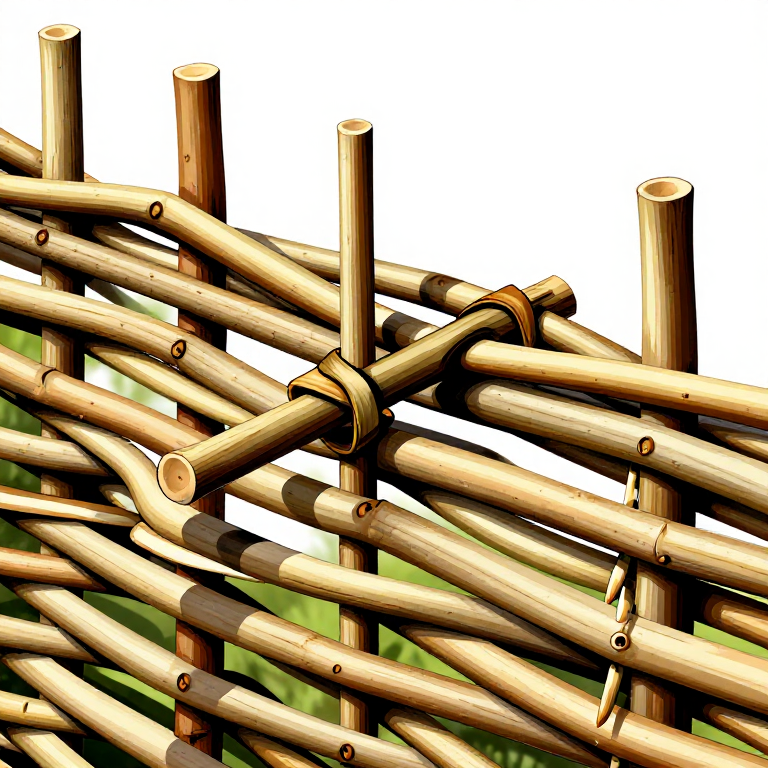
When you reach the desired panel height (typically 1-1.2m), finish by twisting the last few rods around the top uprights in a figure-eight pattern to lock everything in place. This twisted top edge is both structural and decorative.
Trim any protruding rod ends with a billhook or knife. The ends should be flush with the outside of the panel to prevent snagging on clothing or livestock fleece.
A finished panel should be rigid enough to stand upright when leaned against a support. Shake it — it should flex slightly but not rattle or feel loose.
Install and Use
Install and Use
Wattle hurdles are designed to be portable. Drive sharpened stakes into the ground at panel-width intervals and wire or tie the hurdles to them. Panels can be rearranged as needed — this made them invaluable for managing livestock.
Common uses in the Viking and medieval world: sheep pens (moveable over pasture for rotational grazing), garden wind breaks, building walls (daub with a mix of clay, straw, and dung to create "wattle and daub" construction), and fish traps in rivers.
Hazel coppicing is a sustainable cycle — the same stools can be harvested every 7-8 years for hundreds of years. Some coppice stools in England are estimated at over 1,000 years old. This makes wattle hurdle-making one of the most genuinely renewable construction techniques ever developed.
A skilled hurdle-maker can produce 8-10 panels per day. In medieval England, it was a full-time profession — "hurdler" appears as an occupation in the Domesday Book (1086).
이 블루프린트로 만드는 것
CC0 퍼블릭 도메인
이 블루프린트는 CC0로 공개되었습니다. 어떤 목적으로든 자유롭게 복사, 수정, 배포 및 사용할 수 있습니다.
제품 구매를 통해 메이커를 지원하세요. 판매자가 설정한 메이커 커미션 을 받거나, 이 블루프린트의 새로운 반복을 만들어 연결로 포함시킬 수 있습니다.