
Japanning
안내
Prepare the metal
Prepare the metal
The finish is only as good as its grip on the surface.
- Clean the metal thoroughly to remove all grease.
- Abrade it lightly to give a key.
- Wipe with spirit and let it flash off; handle by the edges from now on.
이 단계의 재료:
 스틸울1 pad
Mix the black
Mix the black
Resin, solvent, pigment. Thin — much thinner than you expect.
- Dissolve shellac in alcohol to a light, watery consistency.
- Stir in a small amount of lampblack until evenly black.
- Strain through cloth to remove lumps.
이 단계의 재료:
 셸락1 container
 유연묵 안료20 g
Coat and stove, repeatedly
Coat and stove, repeatedly
Build the film in layers, with gentle heat between each.
- Apply a thin, even coat.
- Warm the piece gently — a low oven — until the coat is hard.
- Cut back very lightly with fine abrasive, dust off, and repeat.
이 단계의 재료:
 즉시 판독 온도계1 개
Polish, and test honestly
Polish, and test honestly
Finish it, then find out what it will and will not take.
- Polish the final coat to a gloss with a fine abrasive and oil.
- Test a hidden corner with water, with alcohol, and with a fingernail.
이 단계의 재료:
 끓인 아마인유100 ml
History and context
History and context
Lacquered goods reaching Europe from Japan and China in the seventeenth century were enormously fashionable and enormously expensive. European workshops set out to imitate them, and John Stalker and George Parker's Treatise of Japanning and Varnishing (1688) put the recipes in print for anyone to follow. The name simply records what was being imitated.
It is genuinely not the same material. Urushi is sap from Toxicodendron vernicifluum — a relative of poison ivy, and raw urushi causes severe dermatitis in the unaccustomed. It cures by enzyme action requiring warmth AND high humidity, which is why urushi is dried in a damp cabinet, the opposite of every other finish. The result is a polymer that resists water, alcohol and acid. Japanning is resin dissolved in solvent, hardened by heat, and it is beaten by alcohol.
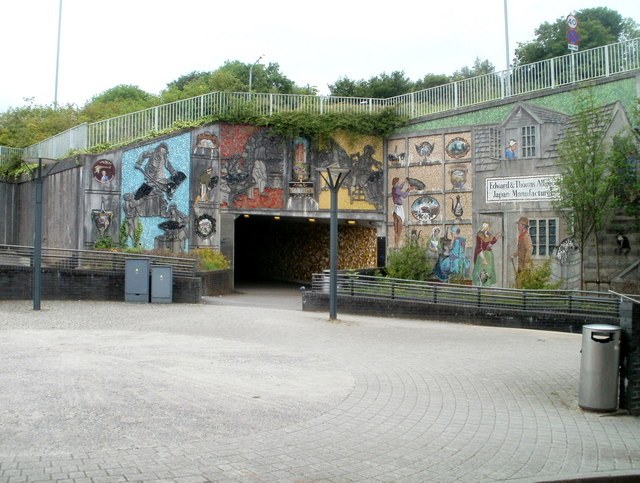
Where it went industrially: Pontypool in Wales and later Bilston and Wolverhampton built substantial trades in japanned tinware — trays, caddies, boxes. In the nineteenth century black japan became the standard protective finish for cast iron: sewing machines, machine tools, bicycle frames and stove parts were all japanned, and asphalt-based black japan was cheap and tough.
What replaced it: baked enamels and then powder coating, which do the same job — a hard stoved film on metal — with better chemistry. The vocabulary lingers in gunsmithing and antique restoration, and any old machine tool with a deep glossy black finish is wearing this process.
CC0 퍼블릭 도메인
이 블루프린트는 CC0로 공개되었습니다. 어떤 목적으로든 자유롭게 복사, 수정, 배포 및 사용할 수 있습니다.
제품 구매를 통해 메이커를 지원하세요. 판매자가 설정한 메이커 커미션 을 받거나, 이 블루프린트의 새로운 반복을 만들어 연결로 포함시킬 수 있습니다.