
کھیوڑا نمک کان سے گلابی نمک نکالنا — پاکستان کا قدرتی پہاڑی نمک
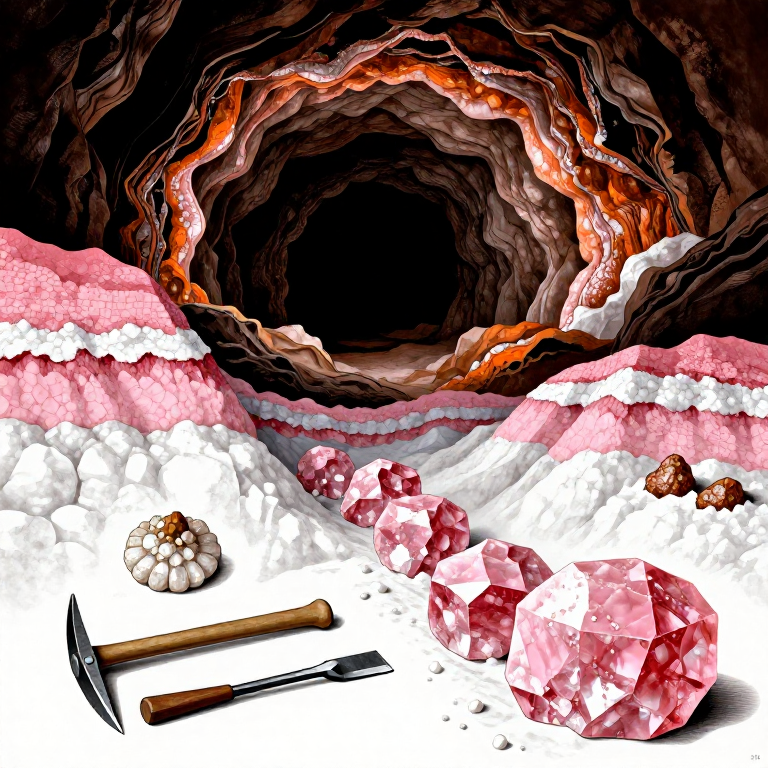
پاکستان کے صوبہ پنجاب میں واقع کھیوڑا نمک کان دنیا کی دوسری سب سے بڑی نمک کان ہے۔ یہ بلیو پرنٹ قدرتی گلابی پہاڑی نمک نکالنے کا مکمل طریقہ بیان کرتا ہے۔ یہ نمک تقریباً 600 ملین سال پہلے ایک قدیم اندرونی سمندر کے بخارات بننے سے بنا تھا۔
اس رہنما کتابچے میں نمک کی رگوں کی شناخت، ہاتھ سے کدال سے نکالنا، مشینی ڈرلنگ، بلاک نکالنا، رنگ کے مطابق چھانٹی، توڑنا، دھونا، درجہ بندی، اور ذخیرہ اندوزی تک تمام مراحل شامل ہیں۔ کھیوڑا کان میں "روم اینڈ پلر" طریقہ کار استعمال ہوتا ہے جس میں 50 فیصد نمک ستونوں کی شکل میں ساختی مدد کے لیے چھوڑ دیا جاتا ہے۔ گلابی رنگ آئرن آکسائیڈ (Fe₂O₃) کی معمولی مقدار کی وجہ سے ہوتا ہے۔
안내
کھیوڑا نمک کان کی ارضیات سمجھنا
کھیوڑا نمک کان کی ارضیات سمجھنا
کھیوڑا نمک کان ضلع جہلم، پنجاب، پاکستان میں نمک کوہ پہاڑی سلسلے (Salt Range) میں واقع ہے۔ یہاں کے نمک کے ذخائر تقریباً 600 ملین سال پہلے پری کیمبرین/ایڈیاکیرن دور میں ایک قدیم اندرونی سمندر کے بخارات بننے سے تشکیل پائے۔ کان میں 11 سطحیں ہیں (6 زیرِ زمین) اور سرنگیں پہاڑ کے اندر تقریباً 730 میٹر تک پھیلی ہوئی ہیں۔ روایت کے مطابق اسکندرِ اعظم کے سپاہیوں نے 326 قبل مسیح میں اس کی دریافت کی تھی جب ان کے گھوڑے نمک کی چٹانیں چاٹ رہے تھے۔
حفاظتی تیاری
حفاظتی تیاری
زیرِ زمین کان کنی خطرناک کام ہے۔ کان میں داخل ہونے سے پہلے مکمل حفاظتی سامان پہننا ضروری ہے: سخت ہیلمٹ (ہیڈ لیمپ کے ساتھ)، حفاظتی عینک، دستانے، حفاظتی جوتے (سٹیل ٹو)، اور گرد سے بچاؤ کا ماسک۔ کان میں ہوا کی گردش کا نظام چیک کریں۔ سرنگ کی ساختی سالمیت کا جائزہ لیں۔ ہنگامی راستے اور اوزار جان لیں۔ اکیلے کبھی کان میں نہ جائیں۔
이 단계의 재료:
 방진 마스크1 개
 두꺼운 작업 장갑1 pair
필요한 도구:
 헤드램프 달린 안전모
 밀폐형 보안경
 안전화 (강철 선심)
نمک کی رگوں کی شناخت
نمک کی رگوں کی شناخت
کھیوڑا کان میں نمک مختلف رنگوں میں پایا جاتا ہے: سفید، گلابی، سرخ، اور شفاف۔ گلابی رنگ آئرن آکسائیڈ (Fe₂O₃) کی معمولی مقدار کی وجہ سے ہوتا ہے۔ نمک میں 96-98 فیصد سوڈیم کلورائیڈ (NaCl) ہوتا ہے، اور باقی میں کیلشیم، میگنیشیم، پوٹاشیم، اور آئرن جیسے معدنیات شامل ہیں۔ بہترین رگیں وہ ہیں جہاں نمک صاف، یکساں رنگ کا ہو اور مٹی یا دیگر آلودگی کم ہو۔ تجربہ کار کان کن رگ کی موٹائی، سمت، اور معیار کا اندازہ لگاتے ہیں۔
필요한 도구:
 지질 망치
지질 망치ہاتھ سے کدال سے نمک نکالنا
ہاتھ سے کدال سے نمک نکالنا
روایتی طریقے میں کان کن بھاری کدال (pick) اور چھینی (chisel) استعمال کرتے ہیں۔ پہلے نمک کی رگ میں دراڑیں اور قدرتی جوڑ تلاش کریں۔ کدال سے نمک کی چٹان پر ضربیں لگائیں تاکہ بڑے بلاک آزاد ہوں۔ ضربیں قدرتی دراڑوں کے ساتھ لگائیں، نہ کہ ان کے خلاف۔ اس طریقے سے بڑے، غیر ٹوٹے ہوئے بلاک حاصل ہوتے ہیں جو زیادہ قیمتی ہیں۔ روایتی ہاتھ کی کان کنی آج بھی جدید طریقوں کے ساتھ ساتھ استعمال ہوتی ہے۔
필요한 도구:
 광산 곡괭이(중작업용)
 강 끌
강 끌 큰 망치
큰 망치مشینی ڈرلنگ
مشینی ڈرلنگ
جدید نکالنے کے طریقوں میں مشینی ڈرل استعمال ہوتی ہے۔ نمک کی دیوار میں مخصوص نمونے کے مطابق سوراخ کیے جاتے ہیں۔ ڈرل بٹ خاص طور پر نمک کی چٹان کے لیے ڈیزائن کیے گئے ہوتے ہیں۔ سوراخوں کی گہرائی اور فاصلہ نمک کی رگ کی موٹائی پر منحصر ہوتا ہے۔ بعض اوقات دھماکہ خیز مواد کا محدود استعمال بڑے حصے آزاد کرنے کے لیے کیا جاتا ہے — لیکن یہ کام صرف تربیت یافتہ بلاسٹرز کرتے ہیں۔ "روم اینڈ پلر" طریقے میں 50 فیصد نمک ستونوں کی شکل میں چھوڑنا لازمی ہے تاکہ چھت سہارا رہے۔
필요한 도구:
 공압 착암기
نمک کے بلاک نکالنا
نمک کے بلاک نکالنا
ڈرلنگ یا کدال سے آزاد کیے گئے نمک کے بلاک لیور (lever bars) اور ویج (wedges) کی مدد سے مکمل طور پر الگ کیے جاتے ہیں۔ بڑے بلاک کا وزن 50-200 کلوگرام تک ہو سکتا ہے۔ انہیں محتاط طریقے سے گرایا جاتا ہے تاکہ ٹوٹنے سے بچیں — سالم بلاک کی قیمت زیادہ ہوتی ہے۔ چھوٹے ٹکڑے بھی اکٹھے کیے جاتے ہیں۔ بلاکوں کو ہاتھ سے ٹھیلے (mine cart) میں رکھ کر سرنگ سے باہر لے جایا جاتا ہے۔
필요한 도구:
 강 지렛대
강 지렛대 강철 쐐기
강철 쐐기 광차
광차رنگ کے مطابق ابتدائی چھانٹی
رنگ کے مطابق ابتدائی چھانٹی
کان سے نکالے گئے نمک کو فوری طور پر رنگ کے مطابق الگ کیا جاتا ہے: سفید (سب سے خالص، 98%+ NaCl)، ہلکا گلابی (سب سے مقبول)، گہرا گلابی، سرخ (سب سے زیادہ آئرن)، اور شفاف (نایاب)۔ ہر رنگ کی قیمت مختلف ہوتی ہے۔ گلابی نمک بین الاقوامی بازار میں سب سے زیادہ مانگ میں ہے۔ مٹی یا دیگر آلودگی والے ٹکڑے الگ کیے جاتے ہیں۔
필요한 도구:
 선별 작업대
نمک توڑنا
نمک توڑنا
بڑے بلاکوں کو مطلوبہ سائز میں توڑا جاتا ہے۔ صنعتی پیمانے پر جبڑا توڑنے والی مشین (jaw crusher) استعمال ہوتی ہے۔ چھوٹے پیمانے پر ہتھوڑے اور چھینی سے ہاتھ سے توڑا جاتا ہے۔ مختلف مقاصد کے لیے مختلف سائز: بڑے ٹکڑے (لیمپ بنانے کے لیے)، درمیانے ٹکڑے (کھانا پکانے کے لیے)، باریک دانے (ٹیبل سالٹ)۔ توڑنے کے دوران دھول سے بچاؤ کا ماسک پہنیں۔
필요한 도구:
큰 망치강 끌دھونا
دھونا
کھیوڑا کا نمک کم سے کم دھویا جاتا ہے — یہ اس کی سب سے بڑی خوبی ہے کیونکہ غیر صاف شدہ (unrefined) نمک میں قدرتی معدنیات برقرار رہتی ہیں۔ صرف مٹی، پتھر کے ذرات، اور دیگر غیر نمکین آلودگی دور کرنے کے لیے مختصر دھلائی کی جاتی ہے۔ نمک کو نمکین پانی (brine) میں دھویا جاتا ہے، تازہ پانی میں نہیں — تازہ پانی نمک کو تحلیل کر دے گا۔ دھونے کے بعد فوری طور پر خشک کریں۔
이 단계의 재료:
 포화 소금물20 리터
필요한 도구:
 큰 세척 대야
درجہ بندی
درجہ بندی
دھونے اور خشک کرنے کے بعد نمک کی درجہ بندی کی جاتی ہے۔ خوراکی درجے کا نمک (food grade): صاف، خالص رنگ، مٹی سے پاک۔ صنعتی درجے کا نمک: رنگ اور خوراکی معیار سے کم خالص۔ سجاوٹی درجے کا نمک: بڑے، خوبصورت ٹکڑے جو لیمپ اور سجاوٹ کے لیے ہیں۔ کھیوڑا کان سالانہ تقریباً 385,000 ٹن نمک پیدا کرتی ہے، جبکہ اندازے کے مطابق کل ذخائر 6.687 ارب ٹن ہیں۔
필요한 도구:
선별 작업대 디지털 주방 저울
پیکنگ
پیکنگ
درجہ بندی شدہ نمک کو پیکنگ کے لیے تیار کریں۔ خوراکی نمک کو صاف، خشک، خوراکی معیار کے تھیلوں میں بھریں۔ بڑے بلاک (لیمپ یا سجاوٹ کے لیے) انفرادی طور پر نرم کاغذ میں لپیٹیں تاکہ نقل و حمل میں نہ ٹوٹیں۔ ہر تھیلے پر وزن، درجہ، اور تاریخ لکھیں۔ تجارتی ترسیل کے لیے بوری (jute sack) یا بڑے تھیلے استعمال ہوتے ہیں۔
이 단계의 재료:
 식품용 포장 봉투10 개
 부드러운 포장지5 장
 종이 라벨10 개
필요한 도구:
디지털 주방 저울ذخیرہ اندوزی
ذخیرہ اندوزی
نمک کو خشک، ٹھنڈی جگہ پر ذخیرہ کریں۔ نمک نمی جذب کرتا ہے (hygroscopic)، اس لیے نمی سے بچاؤ بہت اہم ہے۔ رشتہ دار نمی 60 فیصد سے کم ہونی چاہیے۔ نمک کو زمین سے اوپر پیلٹ (pallet) پر رکھیں تاکہ فرش سے نمی نہ آئے۔ ہوا بند ڈبوں (airtight containers) میں رکھنے سے نمک سالوں تک محفوظ رہتا ہے۔ نمک کی کوئی میعاد (expiry) نہیں ہوتی — یہ لاکھوں سال پرانا معدنی ذخیرہ ہے — لیکن مناسب ذخیرہ اندوزی اس کی خشکی اور صفائی برقرار رکھتی ہے۔
이 단계의 재료:
 밀폐 보관 용기1 개
 나무 팔레트1 개
재료
8- 1 개플레이스홀더
- 1 pair플레이스홀더
- 20 리터플레이스홀더
- 10 개플레이스홀더
- 5 장플레이스홀더
- 10 개플레이스홀더
- 1 개플레이스홀더
- 1 개플레이스홀더
이 블루프린트로 만드는 것
CC0 퍼블릭 도메인
이 블루프린트는 CC0로 공개되었습니다. 어떤 목적으로든 자유롭게 복사, 수정, 배포 및 사용할 수 있습니다.
제품 구매를 통해 메이커를 지원하세요. 판매자가 설정한 메이커 커미션 을 받거나, 이 블루프린트의 새로운 반복을 만들어 연결로 포함시킬 수 있습니다.