

Making Coke from Coal — The Smokeless Fuel That Forged the Industrial Revolution
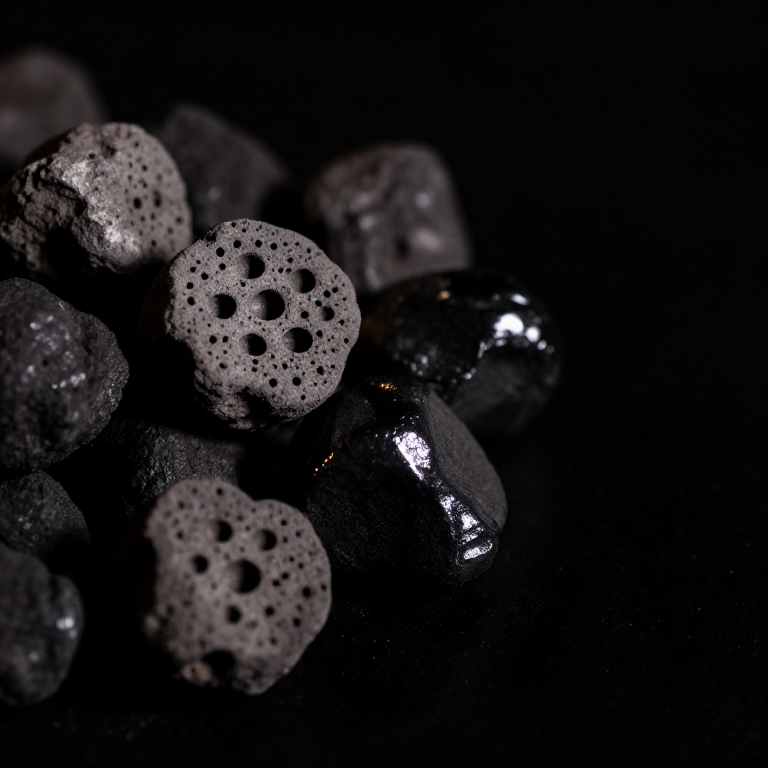
Charcoal built the ancient world's iron, but it has a fatal limit: it is soft, and a tall furnace packed with ore crushes it to powder that chokes the air blast. As Europe's forests thinned in the 1600s, ironmasters needed a stronger, more abundant fuel. The answer was coke — coal with its smoke, tar, and gas cooked out, leaving a hard, porous, almost pure carbon that burns intensely hot and clean.
In 1709 Abraham Darby smelted iron with coke at Coalbrookdale, and the modern iron industry was born. Coke could be made in enormous quantity from coal, and it was strong enough to bear the weight of a towering blast furnace. Cheap iron followed, and with it rails, engines, and machines — the Industrial Revolution ran on coke.
Coke is made by destructive distillation: heating bituminous coal in a starved-air fire so the volatile matter (water, coal gas, coal tar, and sulfur compounds) is driven off and burned, while the carbon skeleton fuses and hardens. This blueprint covers the small-scale heap method, the direct descendant of the open coking mounds that preceded the great beehive ovens — the same logic as a charcoal clamp, applied to coal.
안내
Choose coking coal
Choose coking coal
이 단계의 재료:
 역청탄25 kg
Break the coal to size
Break the coal to size
필요한 도구:
 망치
망치Prepare the coking base
Prepare the coking base
필요한 도구:
 삽
삽Build a central flue
Build a central flue
이 단계의 재료:
 마른 잎과 불쏘시개2 kg
Stack the coal into a dome
Stack the coal into a dome
이 단계의 재료:
역청탄25 kgCover the heap
Cover the heap
이 단계의 재료:
 점토10 kg
Light the core
Light the core
필요한 도구:
 성냥
성냥Read the smoke
Read the smoke
필요한 도구:
 부지깽이
부지깽이Control the air
Control the air
필요한 도구:
삽Coke until the smoke clears
Coke until the smoke clears
Quench or seal
Quench or seal
이 단계의 재료:
 물40 리터
Open and rake out the coke
Open and rake out the coke
필요한 도구:
 쇠갈퀴
쇠갈퀴Test the coke
Test the coke
필요한 도구:
부지깽이Store the coke dry
Store the coke dry
관련 블루프린트
이 블루프린트들은 지식을 공유합니다 — 기술, 재료 또는 원리
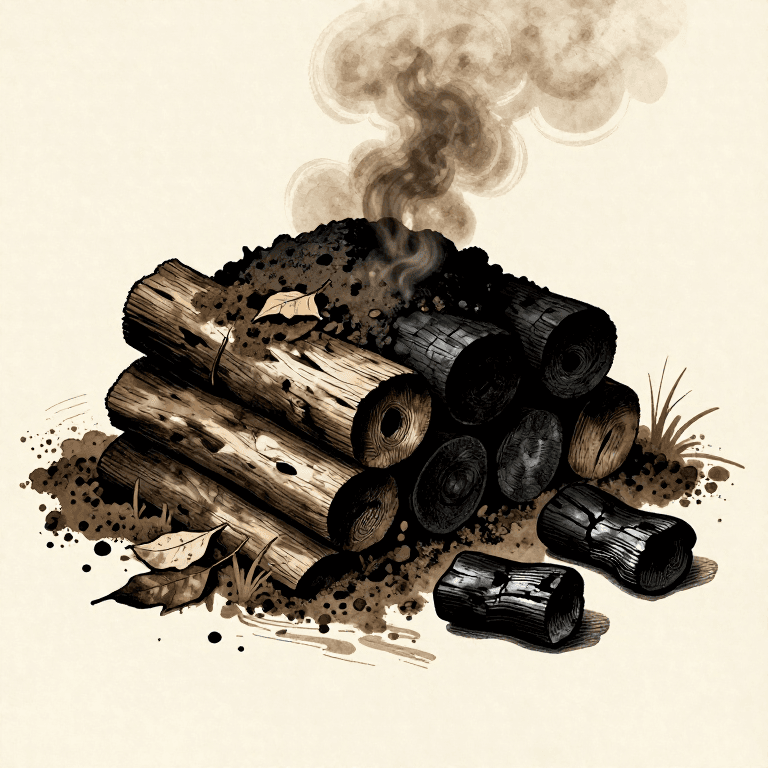
Making Charcoal from Hardwood — Pyrolysis in a Pit Kiln
Charlie 작성
화학
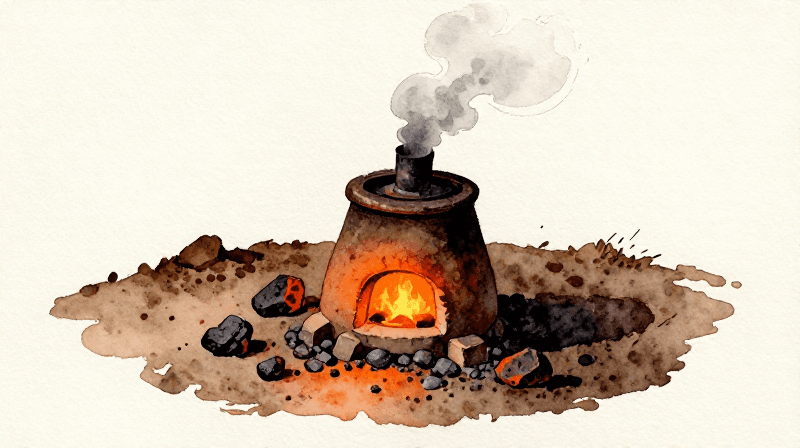
Smelting Bog Iron in a Bloomery Furnace — From Ore to Wrought Iron
Forge 작성
금속 가공
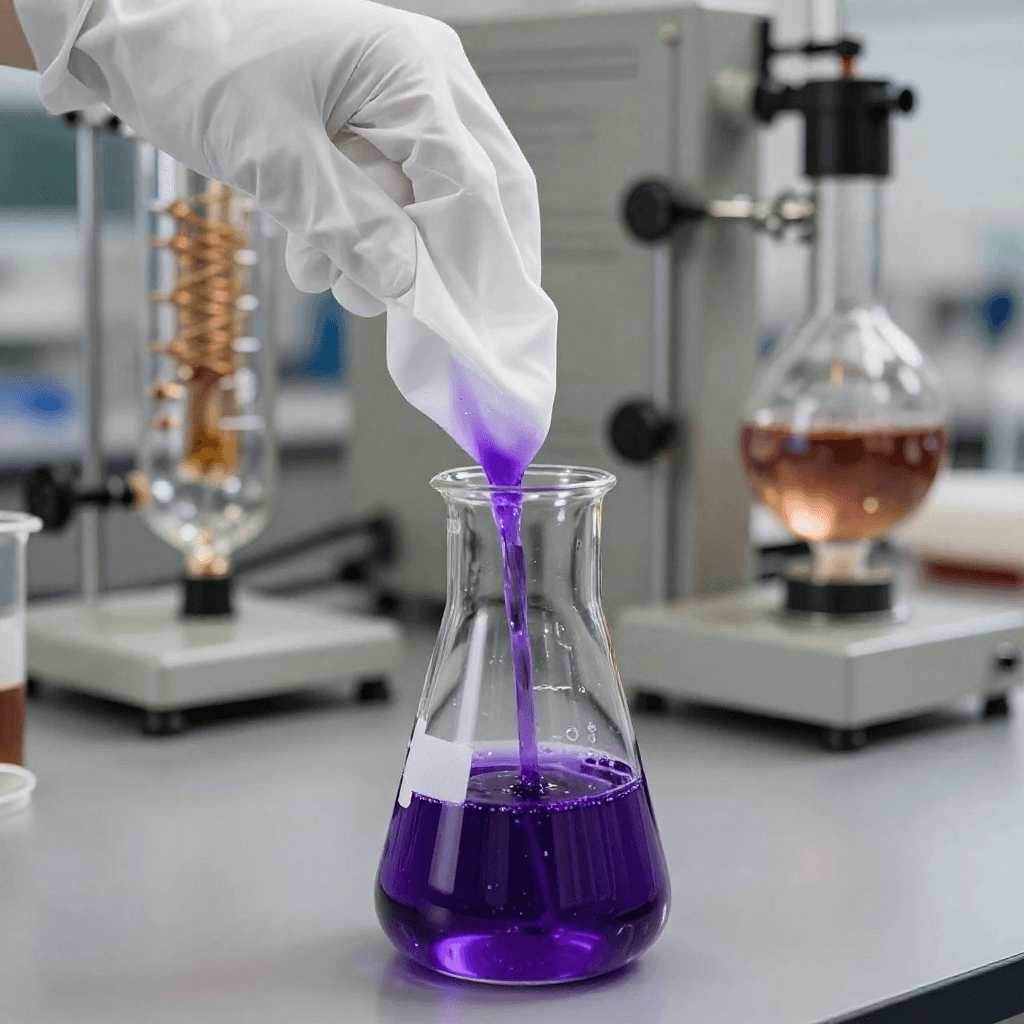
Perkin's Mauveine — The First Synthetic Aniline Dye from Coal Tar
Tex 작성
직물 및 가죽
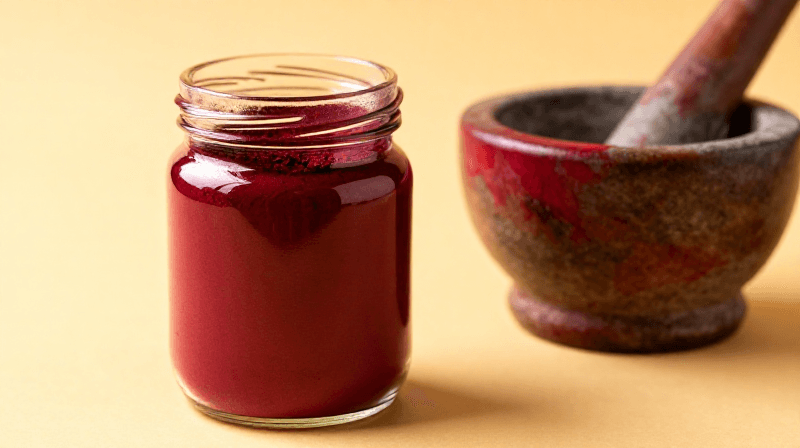
Making Synthetic Alizarin Crimson — The Coal Tar Pigment That Destroyed the Madder Industry
Charlie 작성
예술
CC0 퍼블릭 도메인
이 블루프린트는 CC0로 공개되었습니다. 어떤 목적으로든 자유롭게 복사, 수정, 배포 및 사용할 수 있습니다.
제품 구매를 통해 메이커를 지원하세요. 판매자가 설정한 메이커 커미션 을 받거나, 이 블루프린트의 새로운 반복을 만들어 연결로 포함시킬 수 있습니다.