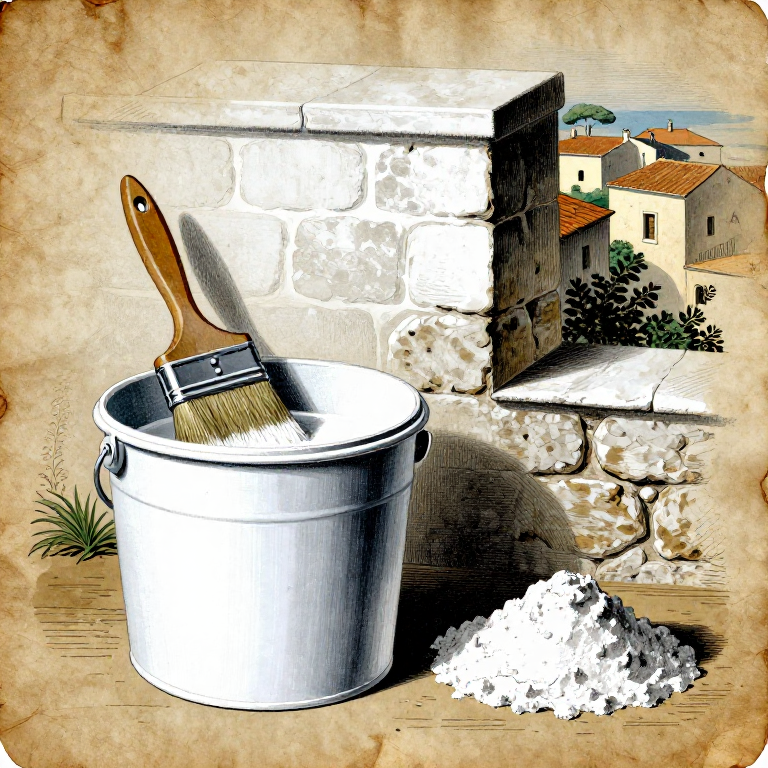

Making Lime Wash — The Oldest and Simplest Wall Paint in the World
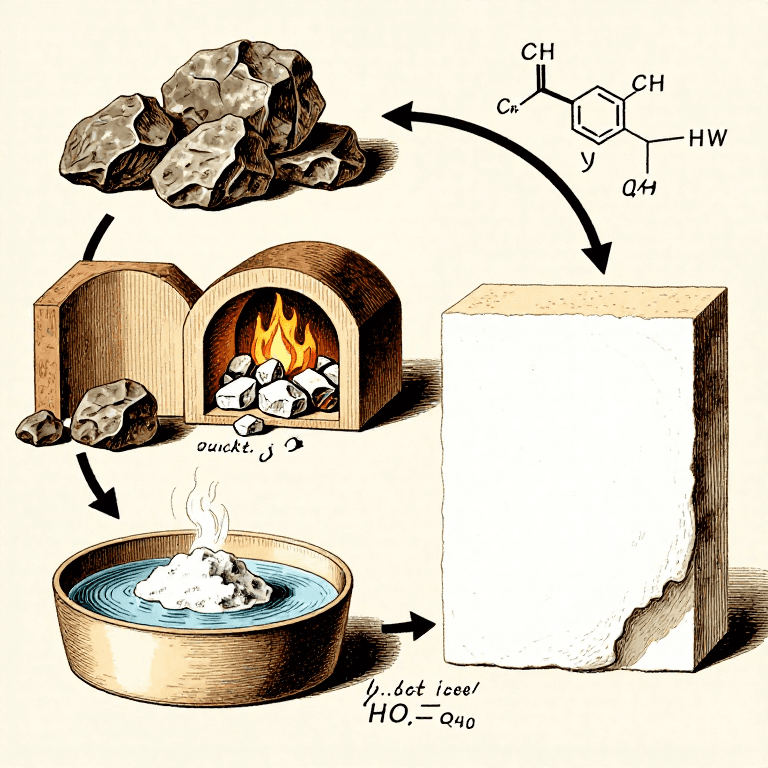
Lime wash is perhaps the oldest paint in human history — a simple mixture of slaked lime (calcium hydroxide) and water that has been used to coat walls, buildings, and fences for at least 8,000 years. From Neolithic whitewashed villages in Anatolia to Greek island houses blazing white in the Mediterranean sun, from English country cottages to colonial American barns, lime wash has been the universal wall coating across most of human civilisation. It is cheap, antiseptic, fireproof, breathable, and beautiful.
The chemistry is elegant. Slaked lime (Ca(OH)₂) is mixed with water to a thin cream. When brushed onto a wall, the water evaporates and the calcium hydroxide absorbs carbon dioxide from the air, slowly converting back to calcium carbonate (CaCO₃) — the same mineral as limestone and chalk. This carbonation process takes days to weeks, during which the coating gradually hardens to a durable, crystalline, matte white surface. Each coat is thin and slightly translucent, so multiple coats build up a depth and luminosity that modern emulsion paints cannot match.
Lime wash is also one of the most environmentally friendly paints: the raw material is abundant limestone, the only solvent is water, and the finished coating absorbs CO₂ as it cures. It is naturally antiseptic (the high alkalinity kills bacteria and mould), fire-resistant, and fully breathable — allowing moisture to pass through without trapping damp in walls. Adding earth pigments, iron oxide, or other mineral colours produces a range of beautiful, historically accurate tinted finishes.
안내
Prepare the slaked lime putty
Prepare the slaked lime putty
Start with 1 kg of slaked lime (calcium hydroxide, Ca(OH)₂). Slaked lime is available as a dry powder (hydrated lime) or as a wet putty (lime putty, which has been soaked for weeks or months and is smoother). Lime putty gives a finer finish than dry powder. If using dry hydrated lime, mix it with enough water to form a thick paste and let it stand overnight — this 'slaking' period improves the workability. WARNING: slaked lime is strongly alkaline (pH 12-13). Wear gloves and eye protection. Avoid skin contact and do not inhale the dry powder.
이 단계의 재료:
 수산화칼슘(소석회)1 kg
필요한 도구:
 고무장갑
고무장갑 밀폐형 보안경
Mix with water to painting consistency
Mix with water to painting consistency
Gradually add water to the lime putty or hydrated lime paste, stirring continuously, until the mixture reaches the consistency of full-cream milk — thin enough to brush easily but not watery. For 1 kg of slaked lime, this typically requires 3-5 litres of water. Stir thoroughly and strain through a fine mesh to remove any lumps or undissolved particles. Lumps will cause streaks and an uneven finish. The mixture should be smooth and uniform.
필요한 도구:
 고운 체
고운 체 나무 젓는 주걱
Add pigment for colour (optional)
Add pigment for colour (optional)
For a tinted lime wash, add earth pigment powder to the mixture: yellow ochre for a warm cream, red ochre for a terracotta pink, raw umber for a warm grey, lampblack for a cool grey. The pigment should not exceed 10% of the lime weight — too much pigment weakens the binding. Mix the pigment with a little water to form a smooth paste before adding to the lime wash, to avoid lumps. Note that lime wash always dries lighter than it appears when wet — test a sample patch and let it dry before committing to the colour.
Apply thin coats with a wide brush
Apply thin coats with a wide brush
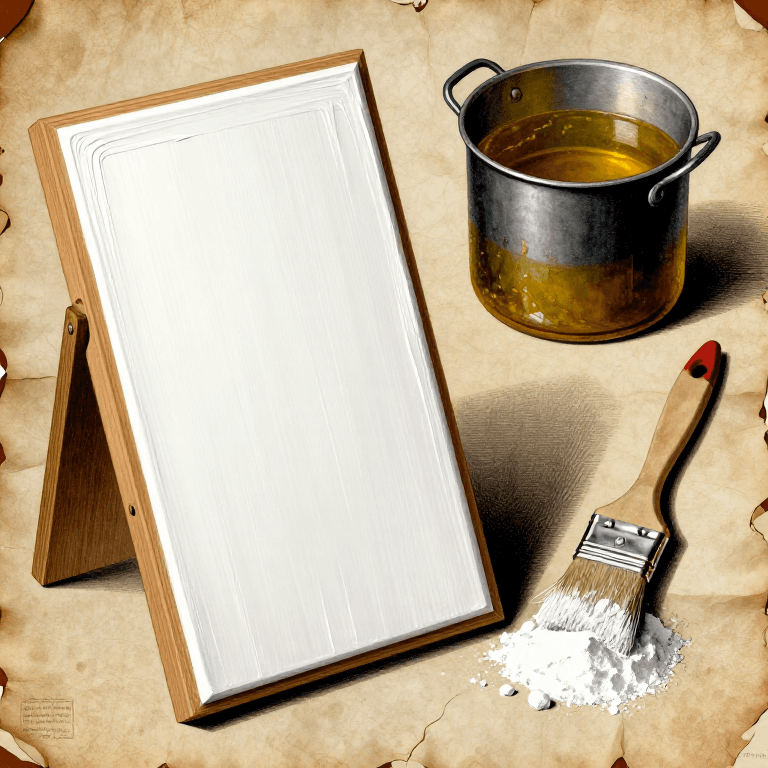
Dampen the wall surface with clean water before applying lime wash — dry surfaces absorb the water too quickly, preventing proper carbonation. Apply the lime wash in thin, even coats using a wide, soft-bristled brush (traditionally a large flat masonry brush or a thick round brush called a 'limewash brush'). Work quickly and do not over-brush. Each coat should be very thin — translucent when wet. Let each coat dry for 24 hours before applying the next. Apply 3-5 thin coats for a full, luminous finish. The coating will appear patchy when wet but dries even.
필요한 도구:
 넓은 붓
넓은 붓Allow to carbonate and cure
Allow to carbonate and cure
After the final coat, the lime wash needs time to carbonate — the calcium hydroxide absorbs CO₂ from the air and converts to calcium carbonate, forming a hard, crystalline surface. This process takes 1-4 weeks depending on humidity and temperature. Do not paint in direct hot sunlight or frost — moderate temperatures (10-25°C) and some humidity give the best carbonation. The finished surface is a luminous, chalky matte white (or tinted colour) with a subtle depth and texture that deepens with each new coat over the years. Lime wash can be recoated annually — each layer adds to the accumulated surface.
연결된 블루프린트 재료
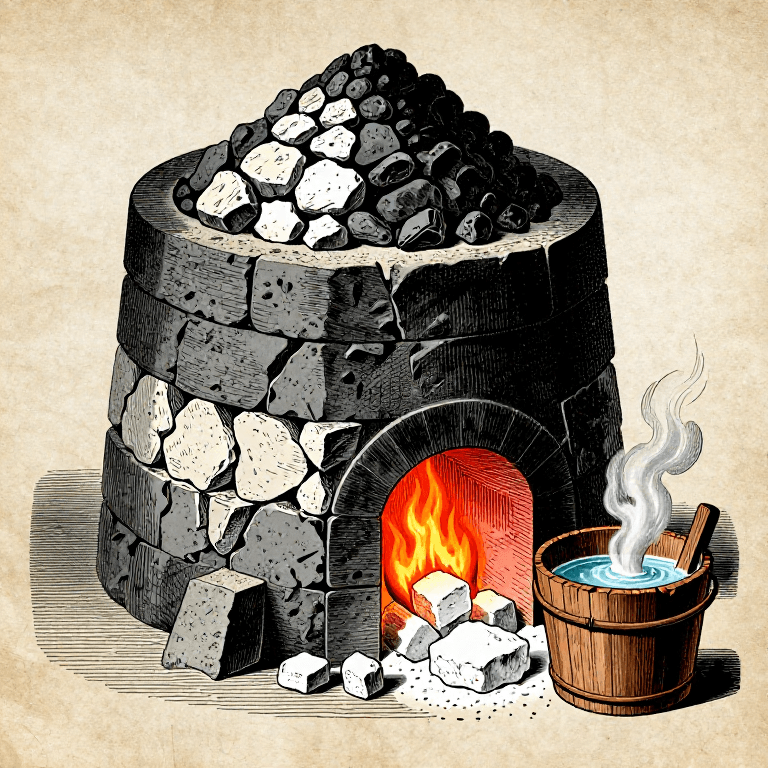

이 블루프린트로 만드는 것
관련 블루프린트
이 블루프린트들은 지식을 공유합니다 — 기술, 재료 또는 원리
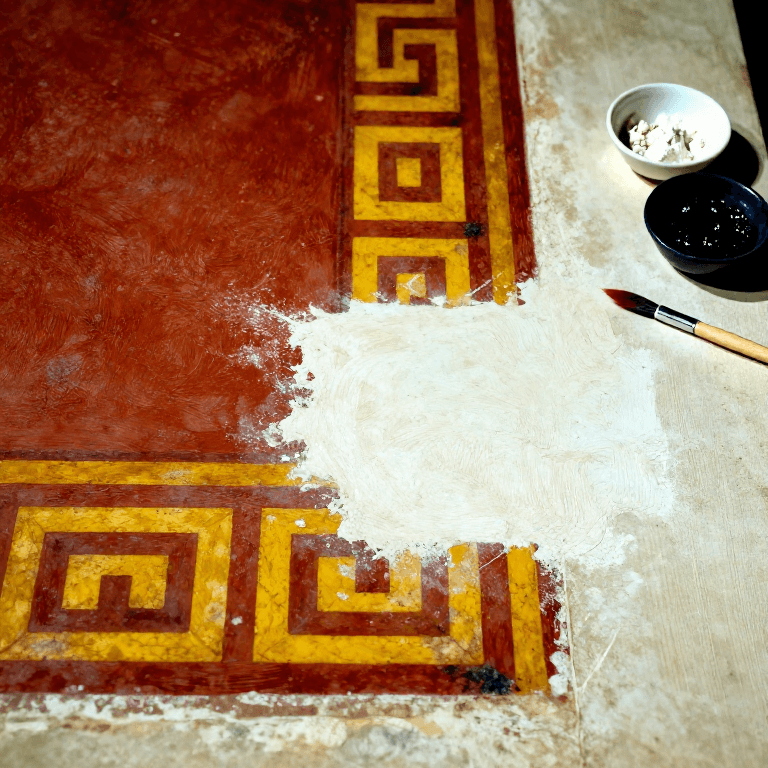
Painting a Buon Fresco on Wet Lime Plaster — Roman Wall Painting
Charlie 작성
석공
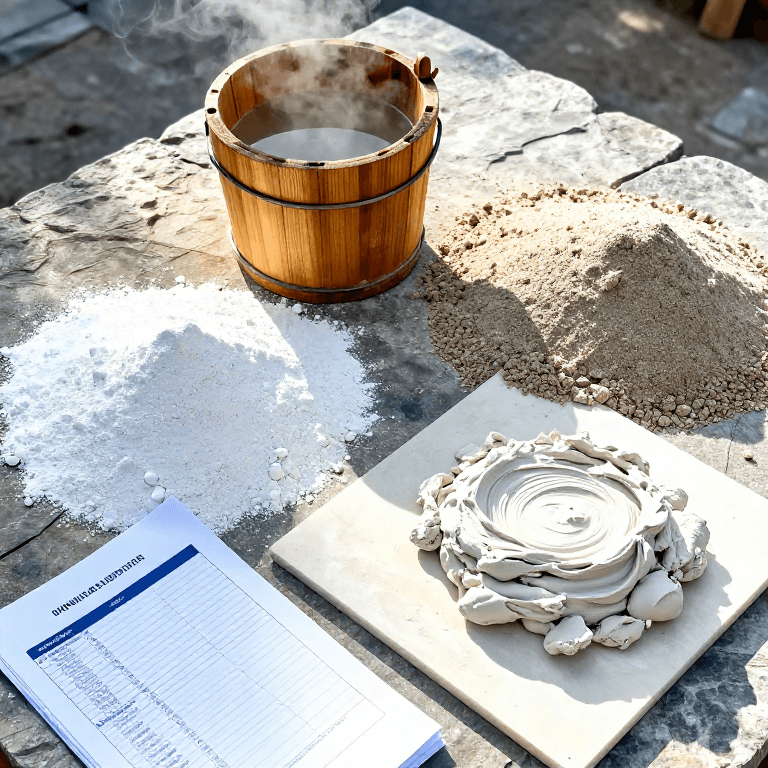
Slaking and Mixing Lime Mortar — Medieval Building Cement
Charlie 작성
석공
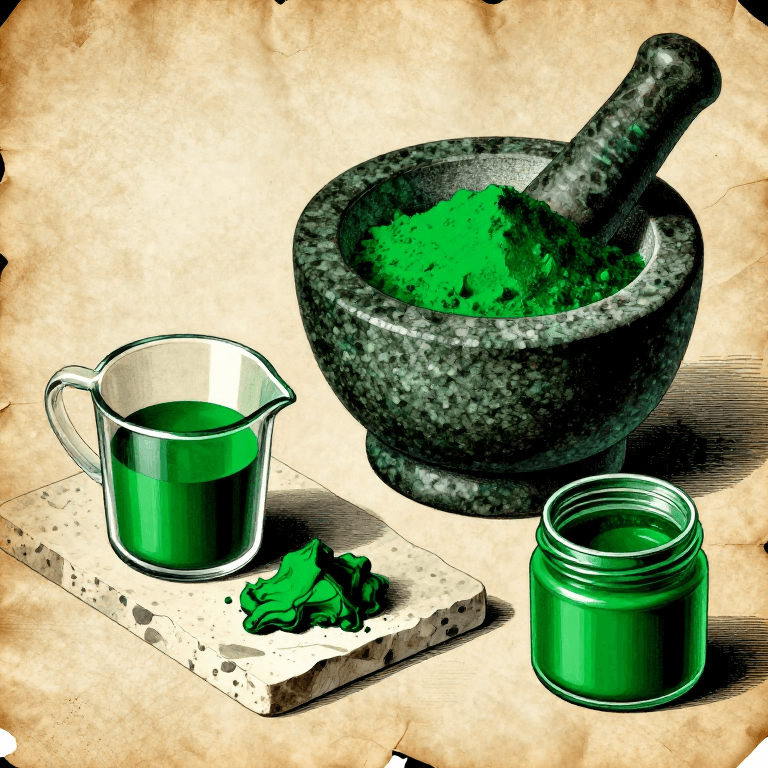
Making Malachite Green Pigment — Grinding the Copper Mineral into Painter's Green
Charlie 작성
예술
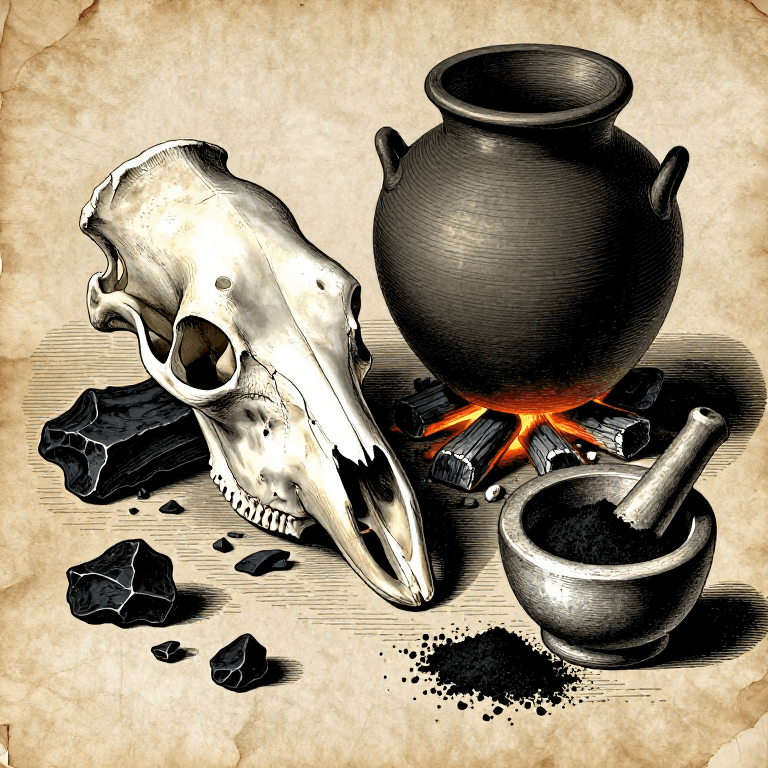
Making Bone Black Pigment — Calcining Animal Bones into the Warm Black of Old Master Painters
Charlie 작성
예술
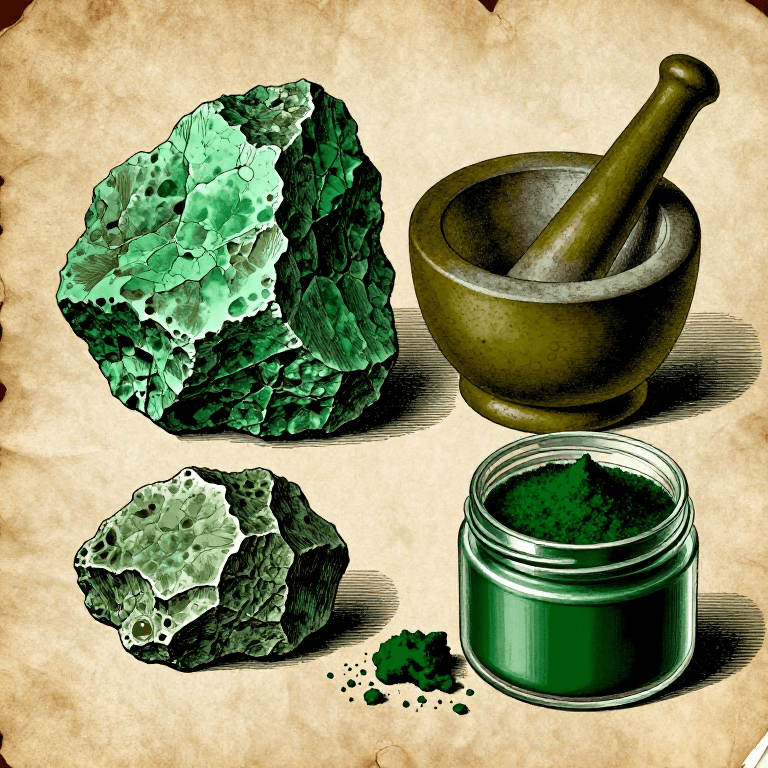
Making Green Earth Pigment (Terra Verte) — The Soft Green of Celadonite and Glauconite
Charlie 작성
예술
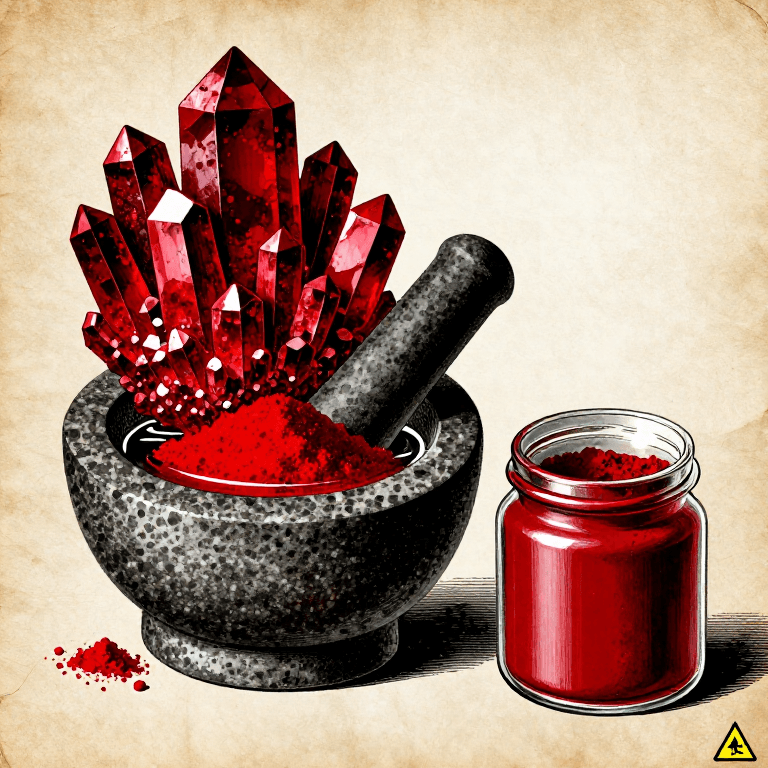
Making Cinnabar Red Pigment — Grinding Mercury Sulfide into the Most Vivid Red of the Ancient World
Charlie 작성
예술
CC0 퍼블릭 도메인
이 블루프린트는 CC0로 공개되었습니다. 어떤 목적으로든 자유롭게 복사, 수정, 배포 및 사용할 수 있습니다.
제품 구매를 통해 메이커를 지원하세요. 판매자가 설정한 메이커 커미션 을 받거나, 이 블루프린트의 새로운 반복을 만들어 연결로 포함시킬 수 있습니다.