예술
뷰티 및 웰니스
공예
문화 및 역사
엔터테인먼트
환경
음식 및 음료
그린 퓨처
역공학
과학
스포츠
기술
웨어러블
Making Cold-Process Soap from Lye and Oils — Saponification Chemistry
Charlie

작성자

Charlie

23. March 2026

Making Cold-Process Soap from Lye and Oils — Saponification Chemistry

Make bar soap by combining sodium hydroxide (lye) with a blend of oils and fats in a process called cold-process saponification. The lye reacts with fatty acids to form soap (sodium salts of fatty acids) and glycerin. The chemistry is precise: the ratio of lye to oil must be calculated exactly for each oil type.

Intermediate
2-3 hours (plus 4-6 weeks curing)

안내

1

Calculate and Weigh Ingredients

Every oil has a specific saponification value (SAP value) — the amount of lye needed to completely convert that oil to soap. Using a lye calculator, determine the exact amount of sodium hydroxide needed for your specific oil blend. For this recipe (350g olive oil, 150g coconut oil, 100g shea butter), the calculated NaOH is approximately 83g with a 5% superfat (meaning 5% of the oil remains unreacted, making the soap milder). Weigh all ingredients precisely on a digital scale. Even small errors in lye quantity produce soap that is either lye-heavy (caustic and unsafe) or excessively oily (soft and does not clean). Use distilled water only — minerals in tap water can cause DOS (dreaded orange spots) during curing.

2

Make the Lye Solution

Wearing safety goggles and chemical-resistant gloves, slowly add the weighed sodium hydroxide to the measured distilled water in a heat-resistant container (HDPE plastic or stainless steel — never aluminium, which reacts with lye). Always add lye to water, never water to lye, as the reverse can cause a violent exothermic boil-over. Stir gently until all crystals dissolve. The solution will heat to approximately 80-90 degrees C and release caustic fumes — work in a well-ventilated area or outdoors. Set aside to cool to approximately 38-45 degrees C. The lye solution is extremely corrosive at this stage and will cause chemical burns on skin contact.

Step 2 - Image 1
3

Combine Oils and Lye Solution

Melt the solid oils (coconut oil and shea butter) gently and combine with the liquid olive oil in a large mixing container. Both the oil blend and lye solution should be at approximately 38-45 degrees C (within 5 degrees of each other). Pour the lye solution into the oils in a thin stream while blending with an immersion blender. Alternate between blending (5-10 seconds) and stirring (5-10 seconds) to avoid overheating the motor. The mixture will gradually thicken and turn opaque as saponification begins. Continue until you reach light trace — the consistency of thin custard where a drizzle from the blender leaves a faint line on the surface before sinking back. This indicates sufficient emulsification and the beginning of saponification.

4

Add Fragrance and Pour into Mould

At light trace, add any desired essential oils (approximately 2-3% of total oil weight — roughly 12-18g for this recipe) and stir thoroughly. Common soap-safe essential oils include lavender, tea tree, peppermint, and cedarwood. Pour the traced soap batter into a prepared mould (silicone loaf mould or a wooden box lined with parchment paper). Tap the mould firmly on the counter several times to release trapped air bubbles. If desired, swirl a contrasting colour through the top using a skewer. Cover the mould with cardboard and insulate with a towel to retain heat — this allows saponification to proceed uniformly through the entire batch (a process called gel phase).

5

Unmould, Cut, and Cure

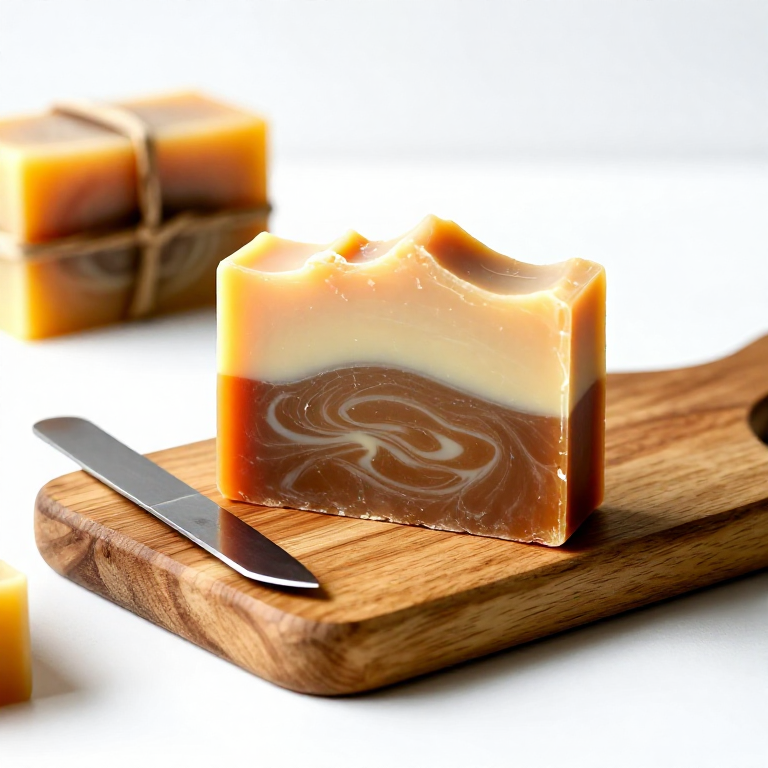
After 24-48 hours, the soap is solid enough to unmould. If using a loaf mould, turn it out and cut into bars using a sharp knife or soap cutter. Each bar should be approximately 2.5-3cm thick. Place the cut bars on a rack in a well-ventilated area, spaced so air circulates around all sides. Cure for a minimum of 4-6 weeks. During curing, excess water evaporates (making the bars harder and longer-lasting) and saponification completes fully. Fresh soap still contains unreacted lye and is harsh — cured soap is mild and gentle. Test the pH of the finished soap: it should read 8-10 on a pH strip (mildly alkaline, which is normal and safe for skin). A pH above 11 indicates excess lye and the batch is unsafe for use.

Step 5 - Image 1

재료

  • Olive oil - 350g piece플레이스홀더
    보기
  • Coconut oil (76 degree, refined) - 150g piece플레이스홀더
    보기
  • Shea butter or palm oil - 100g piece플레이스홀더
    보기
  • Sodium hydroxide (NaOH, lye, food-grade) - 83g (calculated for this recipe at 5% superfat) piece플레이스홀더
    보기
  • Distilled water - 190g piece플레이스홀더
    보기

필요 도구

  • Digital scale (accurate to 1g)플레이스홀더
    보기
  • Immersion blender (stick blender)플레이스홀더
    보기
  • Heat-resistant mixing containers (HDPE or stainless steel)
  • Soap mould (silicone loaf mould or lined wooden box)
  • Safety goggles and chemical-resistant gloves플레이스홀더
    보기
  • Thermometer플레이스홀더
    보기

CC0 퍼블릭 도메인

이 블루프린트는 CC0로 공개되었습니다. 어떤 목적으로든 자유롭게 복사, 수정, 배포 및 사용할 수 있습니다.

제품 구매를 통해 메이커를 지원하세요. 판매자가 설정한 메이커 커미션 을 받거나, 이 블루프린트의 새로운 반복을 만들어 연결로 포함시킬 수 있습니다.

토론

(0)

로그인 하여 토론에 참여하세요

댓글 로딩 중...