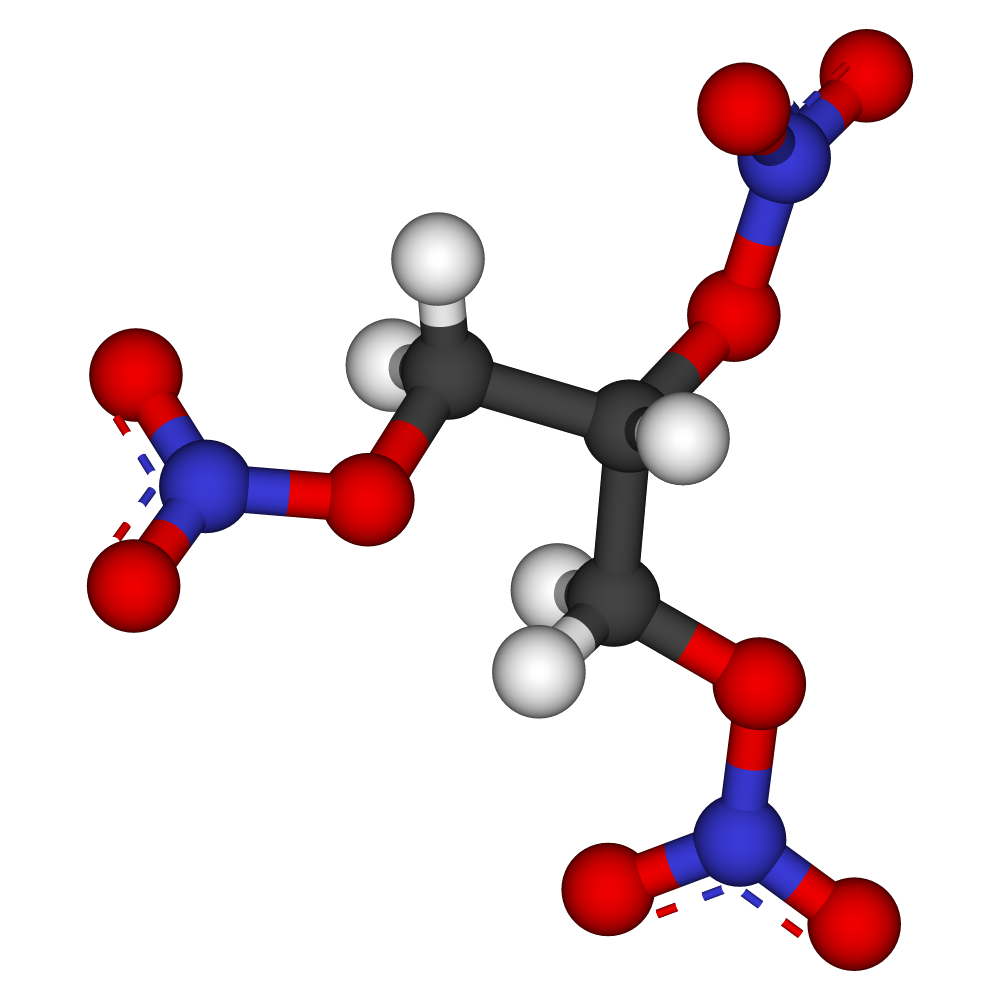


Nitroglycerin
Glycerin is a harmless syrup. You can eat it. Nitrate it and you get a pale oily liquid that detonates if you jolt it — and the difference between the two is not magic, it is bookkeeping. Nitration bolts the oxidiser directly onto the fuel molecule, so the reaction no longer has to wait for air to arrive.
That bookkeeping is a number you can calculate, and this blueprint calculates it. Glycerin's oxygen balance is about −122 %: it is starved of oxygen and needs a great deal of air to burn. Nitroglycerin's is +3.5 % — it carries a slight surplus. Every atom it needs is already in the molecule, which is why it does not burn so much as rearrange, all at once.
Ascanio Sobrero made it at Turin in 1847 and was appalled by it. He was scarred by an explosion, sat on the discovery for over a year, and then published rather than patented — which is why there is no patent number on this page. He wrote that he was "almost ashamed to admit to be its discoverer".
⚠ This blueprint is arithmetic and molecular models. It contains no synthesis of any kind, and needs none — the whole argument is in the atom count.
관련 블루프린트
이 블루프린트들은 지식을 공유합니다 — 기술, 재료 또는 원리


CC0 퍼블릭 도메인
이 블루프린트는 CC0로 공개되었습니다. 어떤 목적으로든 자유롭게 복사, 수정, 배포 및 사용할 수 있습니다.
제품 구매를 통해 메이커를 지원하세요. 판매자가 설정한 메이커 커미션 을 받거나, 이 블루프린트의 새로운 반복을 만들어 연결로 포함시킬 수 있습니다.