협업
예술
뷰티 및 웰니스
공예
문화 및 역사
엔터테인먼트
환경
음식 및 음료
역공학
과학
스포츠
기술
웨어러블
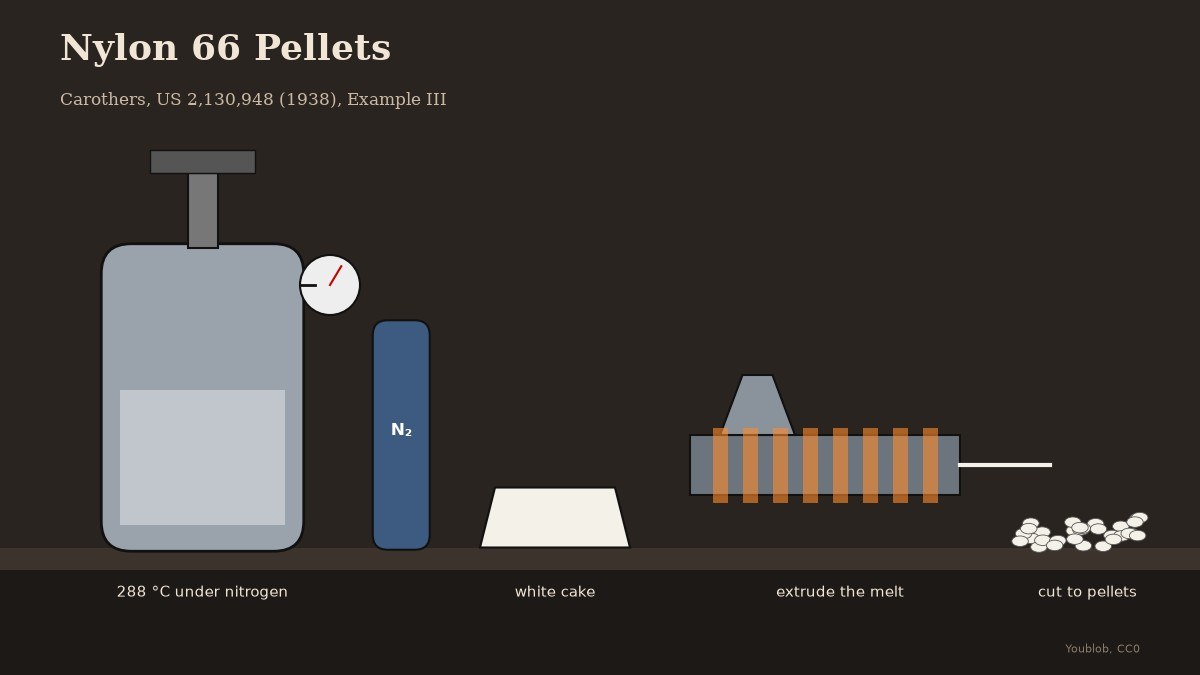

Nylon 66 Pellets: Nylon Salt Polymerised in an Autoclave, Carothers 1938
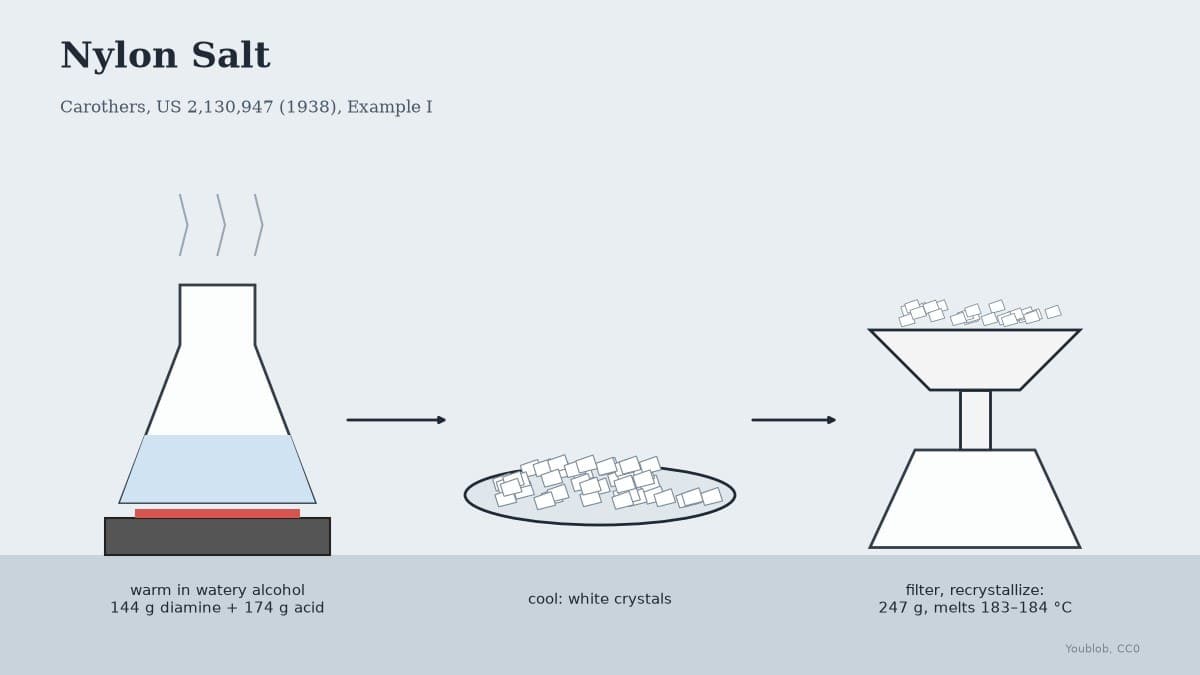
Nylon salt heated to 288 °C under oxygen-free nitrogen gives off water and joins into long chains of nylon 66 (Carothers, du Pont, US 2,130,948, 1938: two moles of salt in a silver-lined autoclave). A pinch of extra adipic acid keeps the melt's viscosity steady. The polymer is then extruded and cut into pellets.
The picture: our drawing of the autoclave and the pellet line.
고급
A day
안내
1
1
Charge the autoclave
Charge the autoclave
Put two moles of nylon salt (525 g) and 0.02 mole of adipic acid (2.9 g) in a two-litre silver-lined autoclave with a stainless stirrer and a reflux condenser leading to a receiver.
이 단계의 재료:
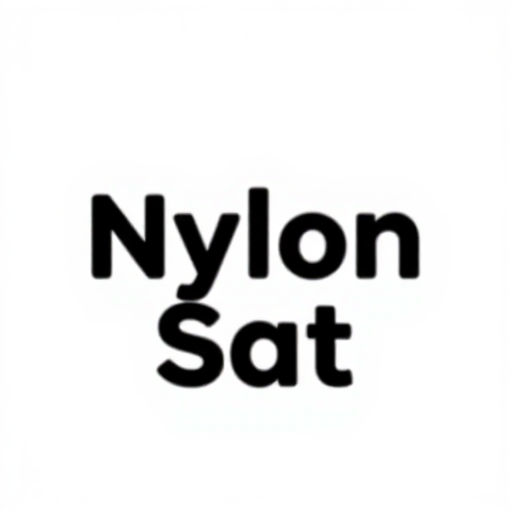 나일론 염525 g
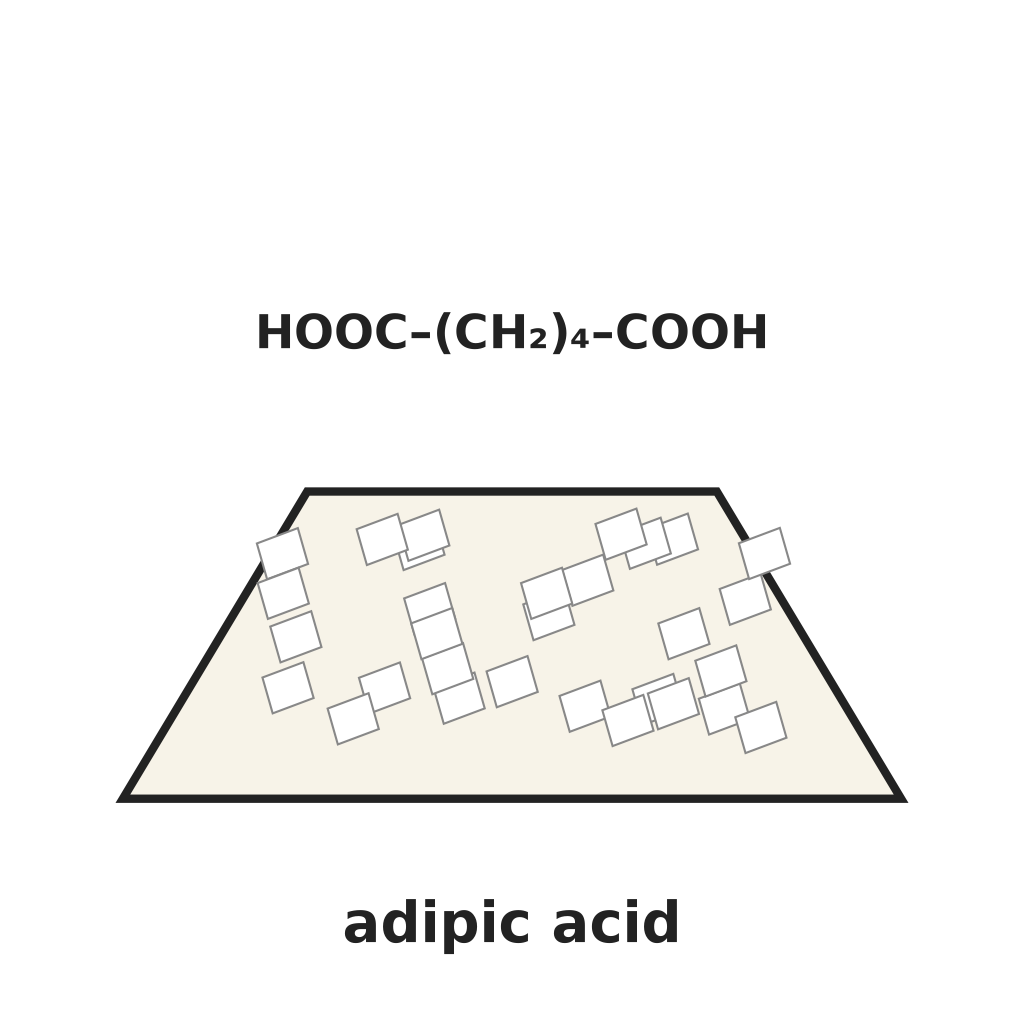 아디프산2.9 g
필요한 도구:
 가압 반응기
 응축기 코일
 디지털 주방 저울
2
2
Drive out the air
Drive out the air
Evacuate, fill with nitrogen, evacuate again, then apply 80 lb/in² of nitrogen. Use nitrogen free of oxygen; oxygen spoils the polymer.
필요한 도구:
 진공 펌프
 질소
 압력계
3
3
Heat to 288 °C
Heat to 288 °C
Start the stirrer and heat to 288 °C over 1.5 hours.
필요한 도구:
가압 반응기 표시기 달린 열전대
4
4
Let the water off
Let the water off
Bring the pressure down to atmospheric over half an hour and keep heating and stirring 2.5 hours. Then pull to 200 mm absolute for a few minutes.
필요한 도구:
가압 반응기진공 펌프압력계표시기 달린 열전대5
5
Cool and take out
Cool and take out
Cool. The polymer comes out as a white solid cake that melts at about 263 °C.
필요한 도구:
가압 반응기6
6
Pelletise
Pelletise
Break up the cake (our step), melt it in the extruder, draw the strand and cut it into pellets.
필요한 도구:
 플라스틱 압출기
 압출 다이
7
7
Grams and pressures
Grams and pressures
Jupyter 노트북 불러오는 중…
이 블루프린트로 만드는 것
관련 블루프린트
이 블루프린트들은 지식을 공유합니다 — 기술, 재료 또는 원리


CC0 퍼블릭 도메인
이 블루프린트는 CC0로 공개되었습니다. 어떤 목적으로든 자유롭게 복사, 수정, 배포 및 사용할 수 있습니다.
제품 구매를 통해 메이커를 지원하세요. 판매자가 설정한 메이커 커미션 을 받거나, 이 블루프린트의 새로운 반복을 만들어 연결로 포함시킬 수 있습니다.