예술
뷰티 및 웰니스
공예
문화 및 역사
엔터테인먼트
환경
음식 및 음료
역공학
과학
스포츠
기술
웨어러블
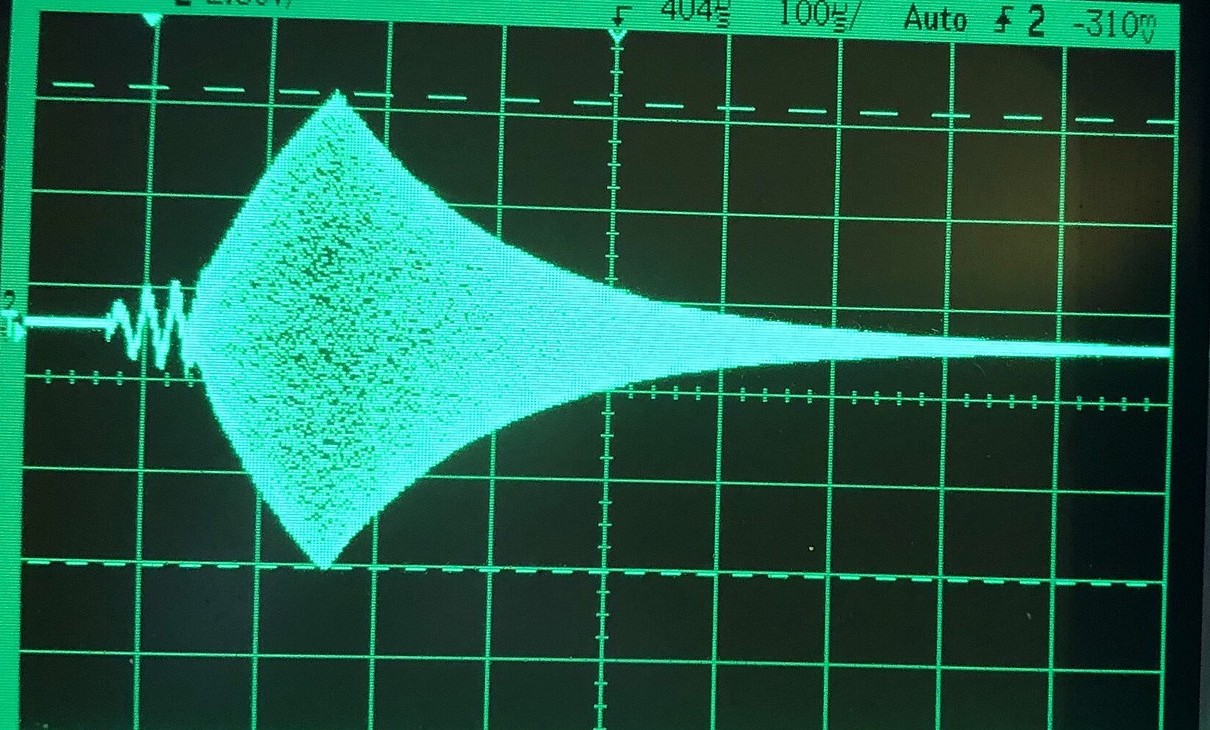


Nyquist's Stability Criterion
Black's feedback amplifiers worked, and some of them sang. Adding more feedback made every measurable property better right up to the point where the amplifier turned into an oscillator, and nobody could say in advance which side of that line a new design was on.
Maxwell's method cannot help. It needs the coefficients of the differential equation, and a Bell Labs repeater full of hand-wound transformers, valves and stray capacitance does not come with coefficients - you would have to guess them, and the guess is exactly what is in question.
Harry Nyquist's paper of January 1932 asks a question you can answer with a signal generator instead. Send a sine wave once around the OPEN loop and look at what comes back. If at some frequency it returns the same size and exactly upside down, then joining the loop lets it sustain that sine wave with no input at all, which is what singing is. Plot what comes back over the whole frequency range and the test becomes a count: how many times does the curve go around the point minus one?
Two numbers fall straight out and are still how amplifiers are specified. Gain margin is how much more gain the loop would take before it sang; phase margin is how much more lag. Both are read off a measurement of a machine you never modelled.
The criterion also handles the case Maxwell's cannot touch at all: a pure time delay. A microphone a few metres from its own loudspeaker has no polynomial to write down, and Nyquist predicts the pitch of the howl and how it changes when you move the microphone.
고급
3 hours
안내
1
1
Make a loop howl, on purpose
Make a loop howl, on purpose
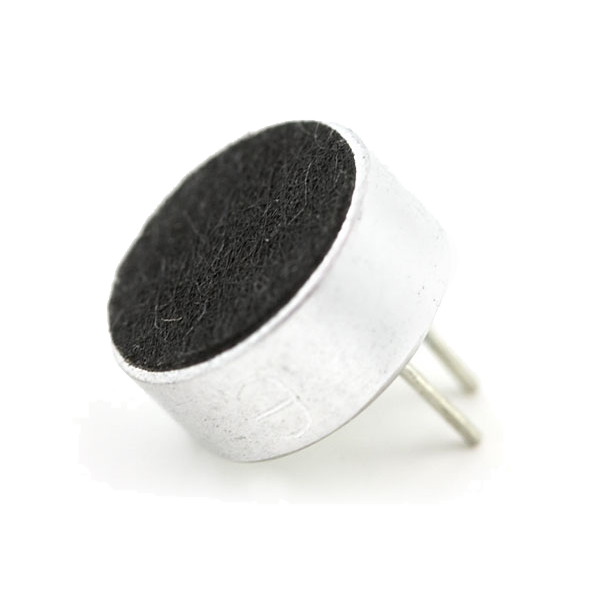
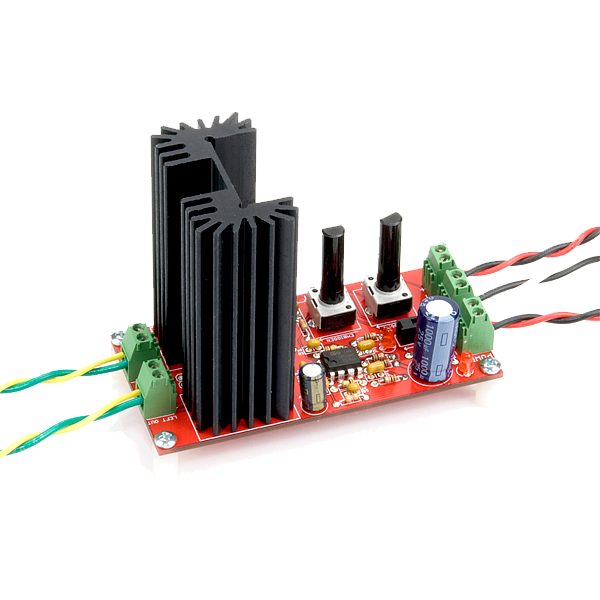
Point a microphone at a loudspeaker two metres away with an amplifier between them, and raise the volume until it howls. Record it and read the pitch off the spectrum.
Now halve the distance and do it again. The pitch rises, and it rises in the way the notebook predicts from the flight time of sound alone.
이 단계의 재료:
 마스킹 테이프1 롤
필요한 도구:
 스피커 (실험용)
 Electret Microphone
 Audio Amplifier Kit - STA540
 줄자
줄자 데스크톱 컴퓨터
2
2
Measure a loop instead of modelling it
Measure a loop instead of modelling it
Break the feedback loop of the amplifier from the previous blueprint, drive the input from the generator and measure amplitude and phase at the far end, decade by decade.
Find the frequency where the phase reaches minus 180 degrees and read the gain there. That one number is the gain margin, and you obtained it without writing down a single differential equation. Plot amplitude against phase on the graph paper as you go: that curve IS the Nyquist diagram, and you can see how close it passes to minus one.
이 단계의 재료:
 모눈종이4 장
필요한 도구:
 DDS 신호 발생기
 디지털 오실로스코프
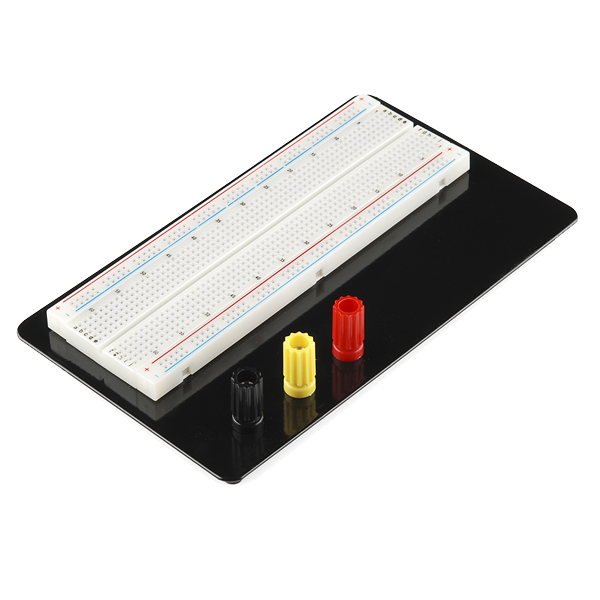 Breadboard - Classic
 흑연 연필 세트
3
3
Margins, encirclements, and four ways to ask the question
Margins, encirclements, and four ways to ask the question
Jupyter 노트북 불러오는 중…
필요한 도구:
데스크톱 컴퓨터4
4
Compendium: conditional stability, and why the curve is a circle
Compendium: conditional stability, and why the curve is a circle
The count is of encirclements, not of crossings, and the distinction matters because a loop can be stable with high gain and UNSTABLE with low gain. Wind the volume down on such a system and it starts oscillating - which is exactly backwards from everybody's intuition, and it is why the criterion is stated as a winding number rather than as a rule about crossing the negative axis. Conditionally stable loops are common wherever a designer has shaped the response to get more feedback than the plain rule allows, and they are dangerous for a reason that has nothing to do with mathematics: the gain is low during start-up, during a fault, and while an operator is turning the knob.
The full statement counts open-loop unstable poles too. Nyquist's theorem says the closed loop is stable when the number of clockwise encirclements of minus one equals minus the number of poles the open loop already has in the right half plane, which is why the criterion works on systems that are unstable to begin with - a rocket balancing on its thrust, an inverted pendulum, a modern aircraft deliberately built unstable for manoeuvrability. For everything in this batch that number is zero and the rule reduces to the simple form: no encirclements, no singing.
관련 블루프린트
이 블루프린트들은 지식을 공유합니다 — 기술, 재료 또는 원리


CC0 퍼블릭 도메인
이 블루프린트는 CC0로 공개되었습니다. 어떤 목적으로든 자유롭게 복사, 수정, 배포 및 사용할 수 있습니다.
제품 구매를 통해 메이커를 지원하세요. 판매자가 설정한 메이커 커미션 을 받거나, 이 블루프린트의 새로운 반복을 만들어 연결로 포함시킬 수 있습니다.