
Pag-aani at Paghahanda ng Hibla ng Abaka — Pinakamalakas na Likas na Hibla sa Mundo
안내
Kilalanin ang halaman ng abaka
Kilalanin ang halaman ng abaka
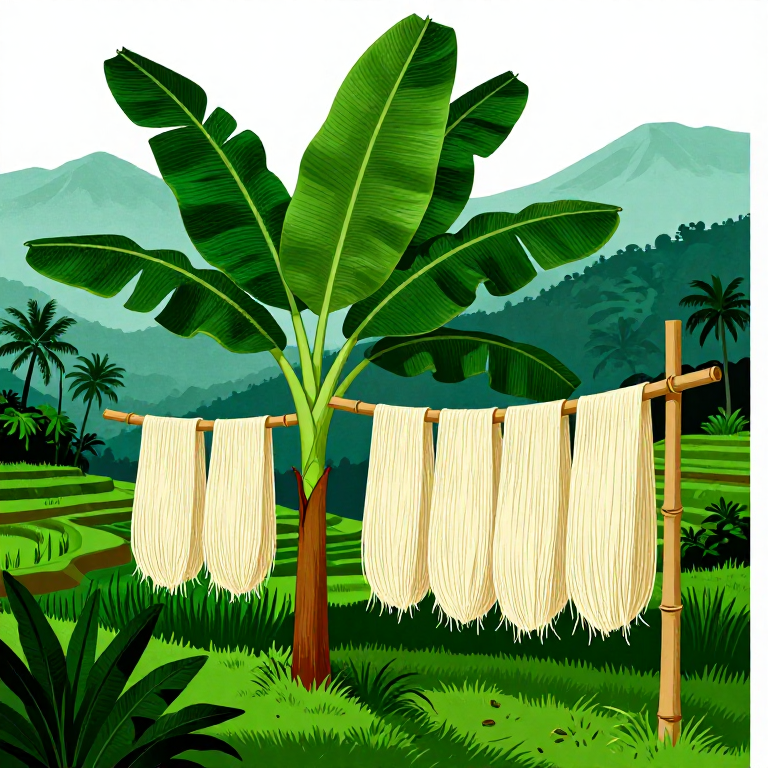
Ang abaka (Musa textilis) ay isang uri ng saging na katutubo sa Pilipinas. Hindi katulad ng karaniwang saging, ang abaka ay itinatanim para sa hibla, hindi sa bunga. Ang puno ay lumalaki ng 3 hanggang 8 metro ang taas. Ang tangkay (pseudostem) ay binubuo ng nagsasalansan na balat ng dahon (leaf sheaths) na naglalaman ng mahalagang hibla. Ang bawat halaman ay nagpo-produce ng 12 hanggang 25 balat ng dahon.
Tukuyin ang tamang panahon ng pag-aani
Tukuyin ang tamang panahon ng pag-aani
Ang abaka ay handa nang anihin pagkatapos ng 18 hanggang 24 buwan mula sa pagtatanim. Ang tanda ng maturity: ang unang bulaklak (inflorescence) ay lumitaw na, o ang ilang panlabas na dahon ay nagsimula nang matuyo at maging dilaw. Huwag anihin nang masyadong maaga — ang hibla ng batang halaman ay mahina at manipis. Huwag rin maghintay nang masyadong matagal — ang sobrang mature na hibla ay naging magaspang at brittle.
Ihanda ang mga kagamitan
Ihanda ang mga kagamitan
Kailangan ang isang matalas na gulok o bolo para sa pagputol ng tangkay at paghiwa ng balat. Maghanda rin ng stripping knife (kutsilyo ng tuxying) — isang matalas na talim na nakakabit sa isang kahoy na patungan na ginagamit para hilahin ang hibla mula sa balat. Kailangan din ng tali para sa pagbibigkis ng mga hibla at mga kawayan o alambre para sa sampayan ng pagpapatuyo.
필요한 도구:
 볼로
볼로 턱싱 칼(껍질 벗김 날)
 묶는 노끈
묶는 노끈 대나무 건조용 장대
Putulin ang tangkay ng abaka
Putulin ang tangkay ng abaka
Putulin ang tangkay ng abaka sa may ugat, mga 5 hanggang 10 cm mula sa lupa, gamit ang isang matalas na bolo. Ang putol ay dapat malinis at pahalang. Pagkatapos putulin, itumba ang buong tangkay sa isang malinis na lugar. Ang pagputol ay dapat gawin sa umaga kapag ang halaman ay puno pa ng moisture — ito ay nagpapadali sa pag-strip ng hibla.
이 단계의 재료:
 여문 아바카 줄기(18-24개월)1 줄기
필요한 도구:
볼로Hiwain ang tangkay sa mga tuxies
Hiwain ang tangkay sa mga tuxies
Hiwain ang bawat balat ng dahon (leaf sheath) mula sa tangkay, magsimula sa pinaka-labas. Ang bawat balat ay humigit-kumulang 5 hanggang 8 cm ang lapad. Hiwain ang bawat balat sa manipis na mga strips na tinatawag na tuxies — mga 5 hanggang 7 cm ang lapad at kasinghaba ng buong tangkay (2 hanggang 3 metro). Ang panlabas na mga balat ay may mas magaspang na hibla, ang panloob na mga balat ay may pinakamahusay na hibla.
필요한 도구:
볼로Isagawa ang tuxying (hand-stripping)
Isagawa ang tuxying (hand-stripping)
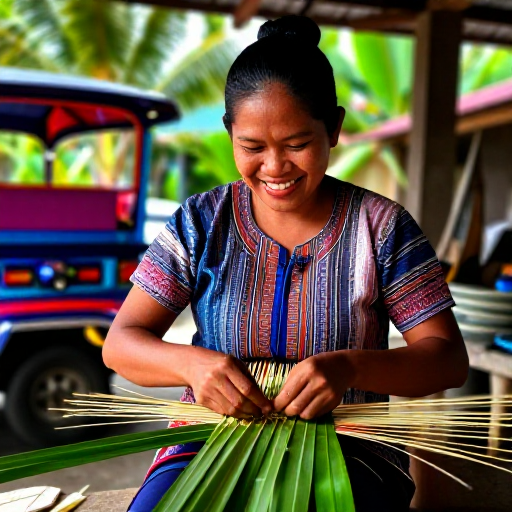
Ang tuxying ang pangunahing proseso ng pagkuha ng hibla. Ilagay ang isang dulo ng tuxy sa ilalim ng tuxying knife blade, na nakakapit sa isang tabla o kahoy na patungan. Pigilan ang talim pababa gamit ang isang kamay o paa. Gamit ang kabilang kamay, hilahin ang tuxy palabas nang mabilis at malakas. Ang talim ay nag-scrape ng lamang laman (pulp) at nag-iiwan ng malinis na hibla. Ulitin sa magkabilang panig ng tuxy.
필요한 도구:
턱싱 칼(껍질 벗김 날) 껍질 벗김 목침
Hugasan ang mga hibla
Hugasan ang mga hibla
Hugasan ang mga bagong strip na hibla sa malinis na tubig para alisin ang natitirang pulp, dagta, at iba pang laman. Ilubog sa tubig ng 5 hanggang 10 minuto pagkatapos ay pigain. Huwag gumamit ng sabon o kemikal — ang likas na hibla ng abaka ay hindi nangangailangan ng chemical processing. Ang malinis na hibla ay dapat makinis at walang natitirang malagkit na pulp.
이 단계의 재료:
 증류수20 리터
필요한 도구:
 세척용 대야
Patuyuin ang mga hibla
Patuyuin ang mga hibla
Isampay ang mga hugasang hibla sa mga kawayan o alambre sa direktang sikat ng araw. Panatilihin ang mga hibla na nakalatag at hindi nagsasalansan para sa pantay na pagpapatuyo. Ang pagpapatuyo ay tumatagal ng 4 hanggang 8 oras sa mainit na araw (30 hanggang 35 degrees Celsius). Ang maayos na natuyo na hibla ay puti hanggang mapusyaw na ginto ang kulay, magaan, at nababaluktot nang hindi nababali.
필요한 도구:
대나무 건조용 장대 건조장 (직사광선)
Suriin ang kalidad ng pagkatuyo
Suriin ang kalidad ng pagkatuyo
Ang tuyong hibla ng abaka ay dapat na 10 hanggang 12% lamang ang moisture content. Upang suriin: balutin ang isang hibla sa daliri — dapat flexible at hindi nababali. Kung nababali, sobrang tuyo na. Kung malambot pa o malagkit, kailangan pang patuyuin. Ang kulay ay magpapakita ng kalidad: puti o mapusyaw na ginto = pinakamahusay, medium brown = katamtaman, madilim na brown = mababang kalidad.
I-grade ang mga hibla
I-grade ang mga hibla
Ang abaka fiber ay ini-grade sa Pilipinas gamit ang sistema ng Philippine Fiber Inspection Service (FIS). Ang mga pangunahing grado: S2 at S3 (pinakamahusay — puti, malinis, malakas) para sa espesyal na papel at banknotes. I2 at I3 (katamtaman — mapusyaw hanggang light tan) para sa lubid at twine. G at H (mababang grado — madilim na brown) para sa packaging. Paghiwalayin ang mga hibla ayon sa kulay, lakas, at kalinisan.
필요한 도구:
 선별 작업대
Bigkisin ang mga hibla
Bigkisin ang mga hibla
Pagkatapos ng pag-grade, bigkisin ang mga hibla ng parehong grado sa mga bundle na tinatawag na hanks. Ang bawat hank ay karaniwang 1 hanggang 2 kilogramo. Gamitin ang abaka twine mismo para itali ang bawat hank sa dalawang punto — sa gitna at malapit sa dulo. Huwag itali nang masyadong masikip dahil mag-iwan ito ng marks sa hibla na makaka-apekto sa kalidad.
이 단계의 재료:
 아바카 노끈5 미터
Wastong pag-iimbak ng hibla
Wastong pag-iimbak ng hibla
Itabi ang mga hank ng abaka sa tuyo, maaliwalas na bodega na may maayos na bentilasyon. Ilagay ang mga hank sa mga elevated na kahoy na rack — huwag ilagay sa sahig dahil maaaring maabsorb ang moisture. Ang humidity ng storage area ay dapat na mas mababa sa 65%. Protektahan mula sa ulan, direktang sikat ng araw, at mga peste tulad ng daga na maaaring ngumuyain ng hibla.
필요한 도구:
 나무 보관 선반
 마르고 바람이 통하는 저장 공간
Pag-unawa sa mga gamit ng abaka
Pag-unawa sa mga gamit ng abaka
Ang abaka fiber ay may tensile strength na 70 hanggang 80 MPa — tatlong beses na mas malakas kaysa sa cotton at dalawang beses na mas malakas kaysa sa sisal. Hindi ito nabubulok sa dagat-asin kaya ginagamit sa mga ship rope at fishing net. Ginagamit din sa paggawa ng banknotes (kasama ang Japanese yen at Euro), mga tea bags, specialty paper, at automotive composites. Ang pinakamataas na grado (S2) ay ginagamit para sa banknote paper.
Itala ang produksyon at idokumento
Itala ang produksyon at idokumento
Itala ang bilang ng tangkay na na-harvest, bigat ng tuyong hibla na nakuha, grado ng bawat hank, at petsa ng pag-aani. Ang karaniwang yield ay 1 hanggang 3% ng bigat ng buong tangkay — ibig sabihin, mula sa 100 kg na tangkay, makakakuha ng 1 hanggang 3 kg na tuyong hibla. Ang mga tala na ito ay mahalaga para sa pagpapabuti ng proseso at pagtatantya ng kita sa susunod na ani.
필요한 도구:
 야장(현장 수첩)
 계량 저울
계량 저울이 블루프린트로 만드는 것
CC0 퍼블릭 도메인
이 블루프린트는 CC0로 공개되었습니다. 어떤 목적으로든 자유롭게 복사, 수정, 배포 및 사용할 수 있습니다.
제품 구매를 통해 메이커를 지원하세요. 판매자가 설정한 메이커 커미션 을 받거나, 이 블루프린트의 새로운 반복을 만들어 연결로 포함시킬 수 있습니다.