예술
뷰티 및 웰니스
공예
문화 및 역사
엔터테인먼트
환경
음식 및 음료
역공학
과학
스포츠
기술
웨어러블
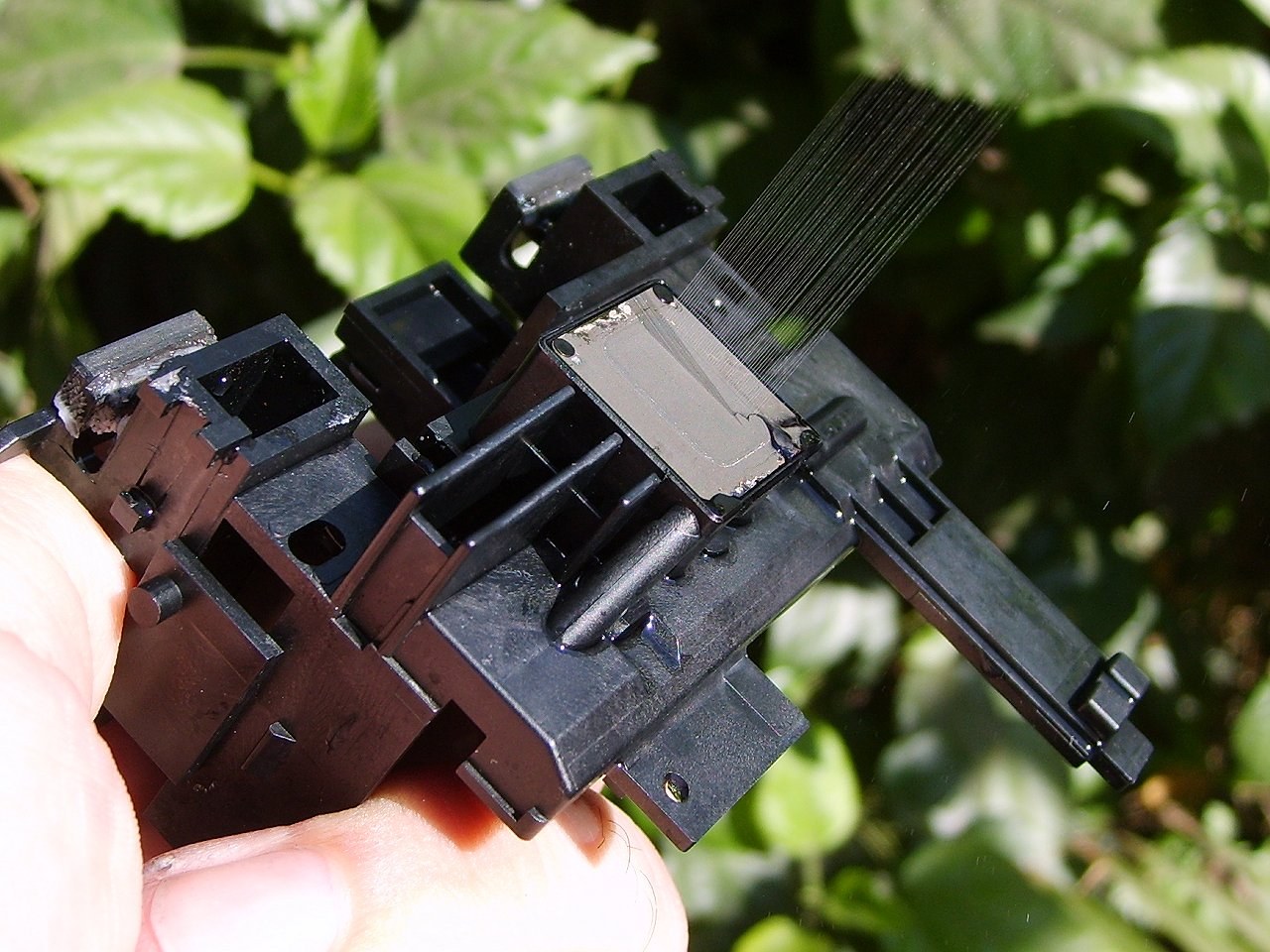

Piezoelectric Drop-on-Demand Inkjet
A continuous inkjet is always firing and throws away the drops it does not want. It buys reliability with a gutter, a pump, a filter and a solvent that evaporates. Drop-on-demand asks the opposite question: can a nozzle sit still and produce exactly one drop when told to?
Steven Zoltan at Clevite and Kyser and Sears at Silonics both answered yes in 1972, with the same component in two arrangements. Zoltan wrapped a tube of piezoelectric ceramic around a glass capillary so it squeezed inward; Kyser and Sears put a piezo diaphragm on the wall of a small chamber so it flexed. Either way, applying a voltage changes the chamber's volume slightly and a drop leaves the nozzle.
Slightly is the word. Work backwards from a thirty-picolitre drop and a one-square-millimetre diaphragm has to move about ninety nanometres - which at four hundred picometres per volt is a couple of hundred volts - which is what the 1972 machines ran on - or a tenth of that once you bond the ceramic to a passive plate so it curls instead of stretching. The whole drive voltage of every piezo head ever built falls out of that one sum.
What is not obvious is that the chamber rings. A pressure wave runs to the far end and back in a few microseconds, so if the next pulse arrives while the ink is still sloshing the drop leaves at the wrong speed and the wrong size. The drive is therefore never a pulse - it is a pull, a push and a damping segment, each timed against that acoustic round trip. Tuning those three numbers is most of what a print head manufacturer actually sells.
And because nothing in the chamber gets hot, the ink only has to flow. UV-curable monomer, solvent, hot wax, conductive silver, live cells in buffer - all of it goes through a piezo head, and none of it through a thermal one.
고급
4 hours
안내
1
1
Make a squeeze-mode chamber
Make a squeeze-mode chamber
Draw a glass capillary to a 60 micrometre tip over a small flame and break it square. Slide a piezo tube - or wrap a disc element - tightly around the barrel and bond it with a thin film of epoxy so the ceramic really grips the glass.
Back-fill with dyed water and glycerol through a syringe until a meniscus sits flat in the tip. No bubbles, or nothing will eject.
이 단계의 재료:
 유리관 키트1 개
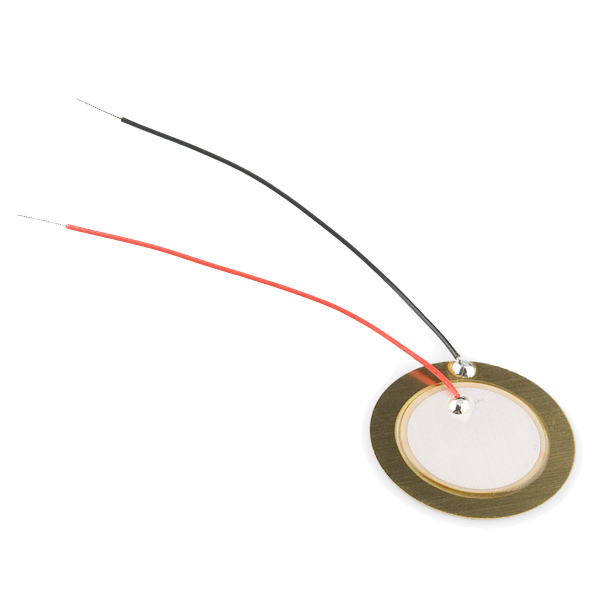 Piezo Element1 개
 2액형 에폭시 접착제(속경화)1 tube
 글리세롤20 ml
 식용 색소5 ml
필요한 도구:
 실험실용 주사기
 분젠 버너
분젠 버너 휴대용 확대경 10배
 디지털 현미경
2
2
Shape the waveform until the satellites stop
Shape the waveform until the satellites stop
Drive the element from the arbitrary generator through the amplifier, starting with a single 100 V push a few microseconds long. Catch the drops on a slide and look at them.
Now add a pull before the push and a small reverse pulse after it, and sweep each segment length through a few microseconds. There is a setting where the trailing satellite drops merge back into the main drop. That setting is the chamber's acoustic round trip, measured.
이 단계의 재료:
 슬라이드 글라스10 개
필요한 도구:
 함수 발생기
 고전압 증폭기(탁상)
 디지털 오실로스코프디지털 현미경
 밀폐형 보안경
3
3
Drop volume to drive volts, ringing, and three ejectors
Drop volume to drive volts, ringing, and three ejectors
Jupyter 노트북 불러오는 중…
필요한 도구:
 데스크톱 컴퓨터
4
4
Compendium: four modes, and the nozzle plate
Compendium: four modes, and the nozzle plate
The 1972 pair became four modes, all the same trick in different geometry. SQUEEZE is Zoltan's tube round a capillary, easy to build one of and impossible to build a thousand of side by side. BEND is Kyser and Sears' diaphragm, and it is what nearly every desktop piezo head uses because it photolithographs into a silicon plate. PUSH drives a rod into the chamber end-on. SHEAR uses poled ceramic walls between adjacent chambers that rock sideways, so the wall between two nozzles does the work for both - the densest arrangement, and the one industrial heads use.
The nozzle plate is the part nobody expects to matter. Ink must not wet the outside face, or a film creeps across and pulls the next drops off-axis, so the plate carries a fluoropolymer coating and a wiper cleans it between passes. Everything that goes wrong with a working head - drops landing left of where they should, a nozzle that fires weakly, a sudden band across the page - is usually the last micrometre of that face rather than anything happening inside the chamber.
재료
6- 1 개플레이스홀더
- Piezo Element10% 수수료1 개₩29
- 1 tube플레이스홀더
- 20 ml플레이스홀더
- 5 ml플레이스홀더
- 10 개플레이스홀더
필요 도구
9- 플레이스홀더
- 플레이스홀더
- 플레이스홀더
- 플레이스홀더
- 플레이스홀더
- 플레이스홀더
- 1 vendor sell this, none ship to you yet플레이스홀더
- 플레이스홀더
- 플레이스홀더
예상 총액
만든 사람이 산 것. 가격이 없는 재료는 구매하는 곳에서 구하면 됩니다.
관련 블루프린트
이 블루프린트들은 지식을 공유합니다 — 기술, 재료 또는 원리


CC0 퍼블릭 도메인
이 블루프린트는 CC0로 공개되었습니다. 어떤 목적으로든 자유롭게 복사, 수정, 배포 및 사용할 수 있습니다.
제품 구매를 통해 메이커를 지원하세요. 판매자가 설정한 메이커 커미션 을 받거나, 이 블루프린트의 새로운 반복을 만들어 연결로 포함시킬 수 있습니다.