예술
뷰티 및 웰니스
공예
문화 및 역사
엔터테인먼트
환경
음식 및 음료
역공학
과학
스포츠
기술
웨어러블
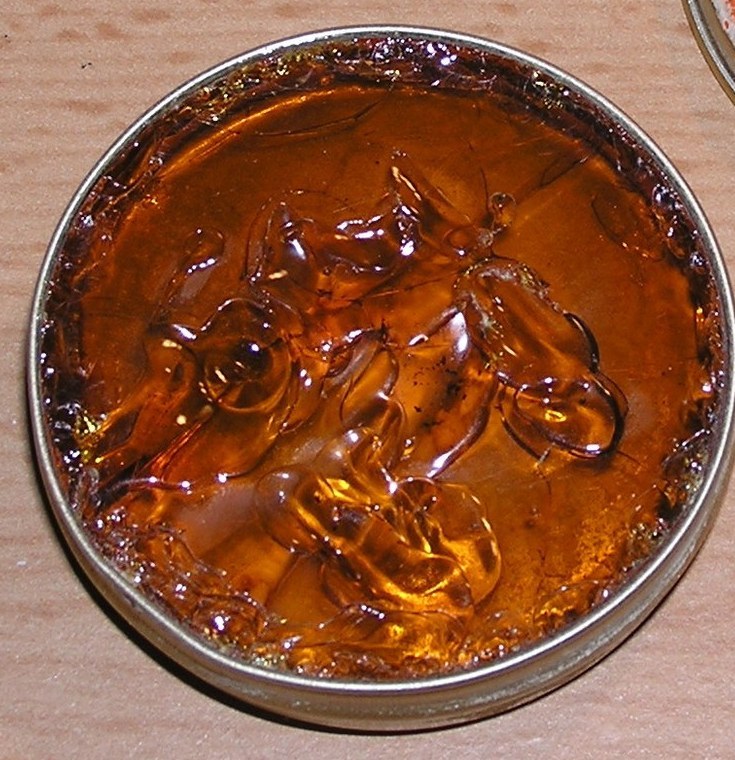


Plastic Rosin Flux: Ripley, 1929
Perry C. Ripley of Chicago, for the Kester Solder Company, patented this flux in 1929, US 1,724,680. In cored solder the heat releases the flux onto the surfaces to be joined. Rosin in the usual dry, powdered form cracks, lets in air and moisture and decomposes. Mixed with turpentine, rosin stays permanently plastic: it does not crystallise or crack, and it keeps air and moisture out. Ripley made it as the core of rosin-core solder.
초급
Workshop process
안내
1
1
Melt the rosin
Melt the rosin
Melt the rosin in a suitable container until it is fluid.
이 단계의 재료:
 소나무 로진1 as required
필요한 도구:
 솥
솥 전열판(핫플레이트)
2
2
Add the turpentine
Add the turpentine
Add turpentine as the plasticiser, from 2% to 50% by weight depending on the grade of rosin, since rosins contain varying amounts of fluids. It may also be added while the rosin is still melting. Ripley lists other solvents (kerosene, naphtha, alcohol, acetone and more), but chose turpentine: it is not very volatile at soldering temperatures and does not conduct electricity.
이 단계의 재료:
 테레빈유1 as required
필요한 도구:
 계량 저울
계량 저울3
3
Mix thoroughly
Mix thoroughly
Agitate the rosin and turpentine mechanically until the turpentine has penetrated the whole rosin mass. The result is a rosin flux in a substantially permanent plastic form.
필요한 도구:
 젓개
젓개

관련 블루프린트
이 블루프린트들은 지식을 공유합니다 — 기술, 재료 또는 원리


CC0 퍼블릭 도메인
이 블루프린트는 CC0로 공개되었습니다. 어떤 목적으로든 자유롭게 복사, 수정, 배포 및 사용할 수 있습니다.
제품 구매를 통해 메이커를 지원하세요. 판매자가 설정한 메이커 커미션 을 받거나, 이 블루프린트의 새로운 반복을 만들어 연결로 포함시킬 수 있습니다.