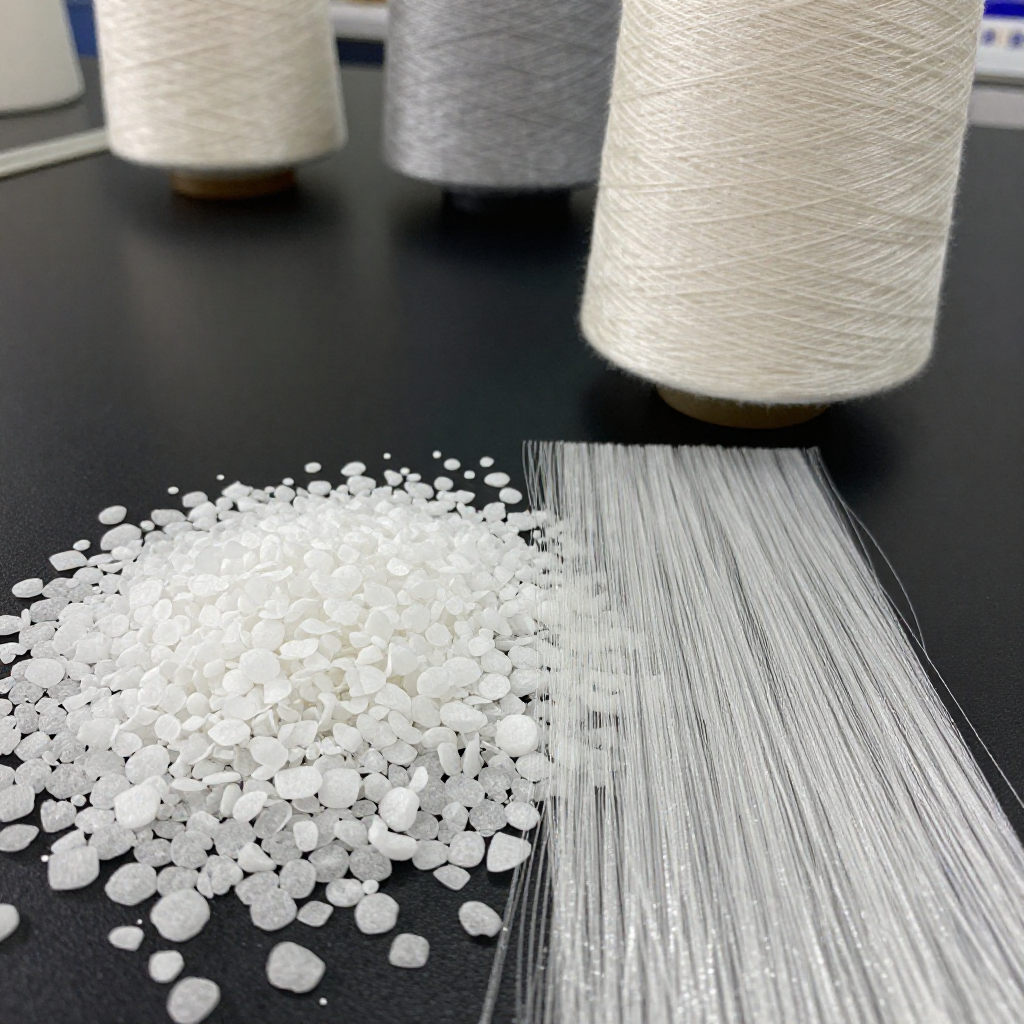


Polyester (PET) — The Fiber That Clothed the World
On March 22, 1941, John Rex Whinfield and James Tennant Dickson, working at the Calico Printers' Association laboratory in Accrington, Lancashire, synthesized polyethylene terephthalate (PET) — the polyester fiber that would become the most produced textile fiber in human history. By 2024, polyester accounts for over 54% of all fiber production worldwide: roughly 60 million tonnes per year, more than cotton, wool, silk, and all other fibers combined.
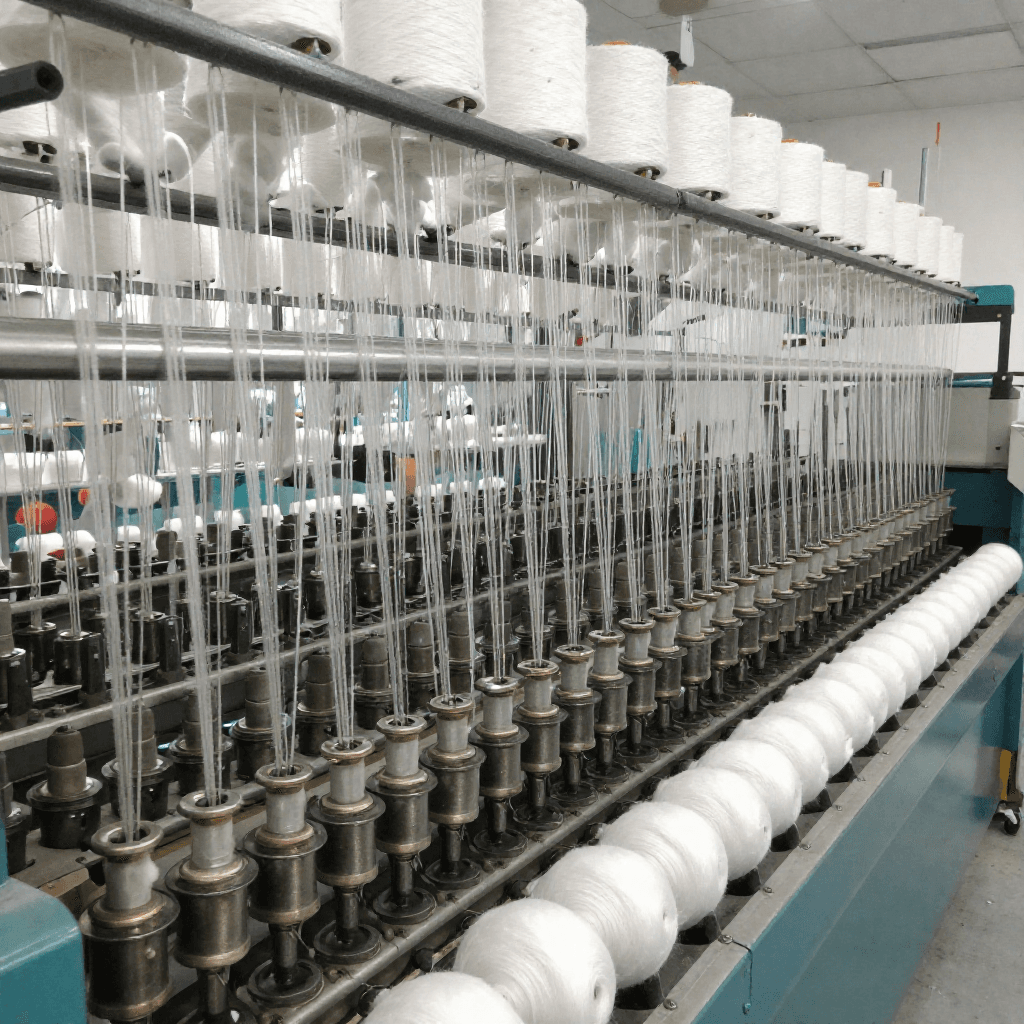
PET is made from two petrochemical monomers: terephthalic acid (or its ester, dimethyl terephthalate) and ethylene glycol. These react via condensation polymerization to form long chains linked by ester bonds (-COO-), hence 'polyester.' The resulting polymer is melt-spun into fibers, just like nylon — but polyester has properties nylon lacks. It resists stretching (high modulus), holds its shape through washing (dimensional stability), resists wrinkling (elastic recovery), and dries quickly (low moisture absorption at only 0.4%).
Whinfield and Dickson's work built directly on Wallace Carothers' polymer research at DuPont. Carothers had actually synthesized polyesters in the early 1930s but abandoned them as inferior to polyamides (nylon) because his polyesters had low melting points. Whinfield realized that using an aromatic acid (terephthalic acid, with its rigid benzene ring) instead of Carothers' aliphatic acids would raise the melting point above 250°C — high enough for textile use. DuPont licensed the patents and commercialized the fiber as Dacron in 1953; ICI launched it as Terylene in Britain. The wash-and-wear revolution of the 1960s and the global fast-fashion industry both depend on Whinfield's insight.
이 블루프린트로 만드는 것

관련 블루프린트
이 블루프린트들은 지식을 공유합니다 — 기술, 재료 또는 원리

CC0 퍼블릭 도메인
이 블루프린트는 CC0로 공개되었습니다. 어떤 목적으로든 자유롭게 복사, 수정, 배포 및 사용할 수 있습니다.
제품 구매를 통해 메이커를 지원하세요. 판매자가 설정한 메이커 커미션 을 받거나, 이 블루프린트의 새로운 반복을 만들어 연결로 포함시킬 수 있습니다.