

Etching a Printed Circuit Board at Home — Toner Transfer Method
안내
Design and Print the Circuit Layout
Design and Print the Circuit Layout
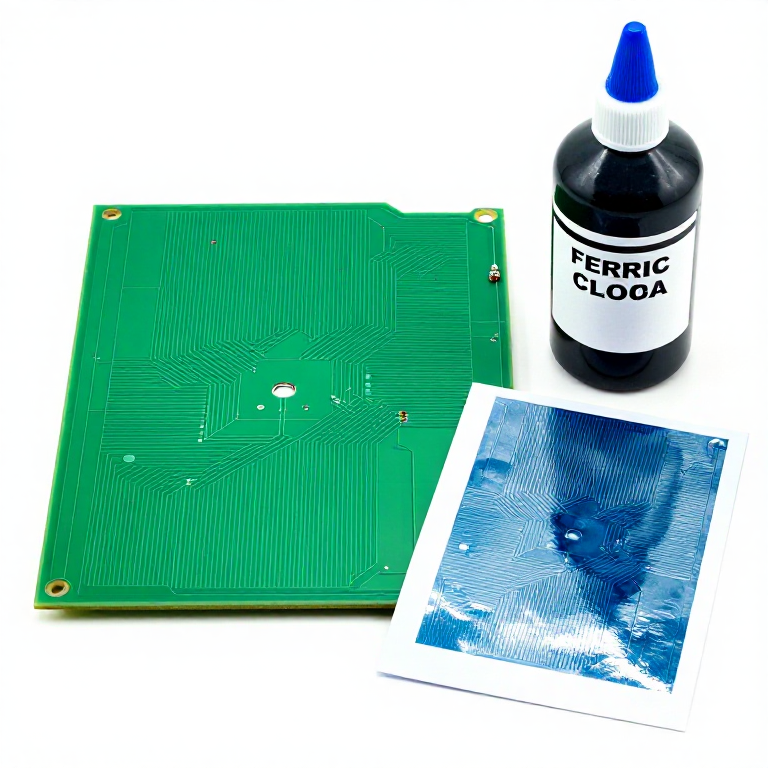
Design the circuit layout in PCB design software (KiCad, EasyEDA, Eagle, or Fritzing). The layout must be printed as a mirror image because it will be transferred face-down onto the copper. Print the layout on glossy photo paper using a laser printer at the highest toner density setting. Laser printer toner is a plastic polymer that bonds to the copper surface when heated, acting as an etch resist — inkjet ink will not work because it is water-based and dissolves in the etchant. The trace widths should be at least 0.3mm for reliable home etching (professional PCB factories can go much finer). Print a test copy on regular paper first and hold it against the copper-clad board to verify sizing.
이 단계의 재료:
 동박 적층 생기판1 piece, sized for your circuit 개
 산 부식액(염화제이철)200-500ml ml
 아세톤50ml ml
 스틸울1 piece 개
Prepare the Copper Surface and Transfer Toner
Prepare the Copper Surface and Transfer Toner
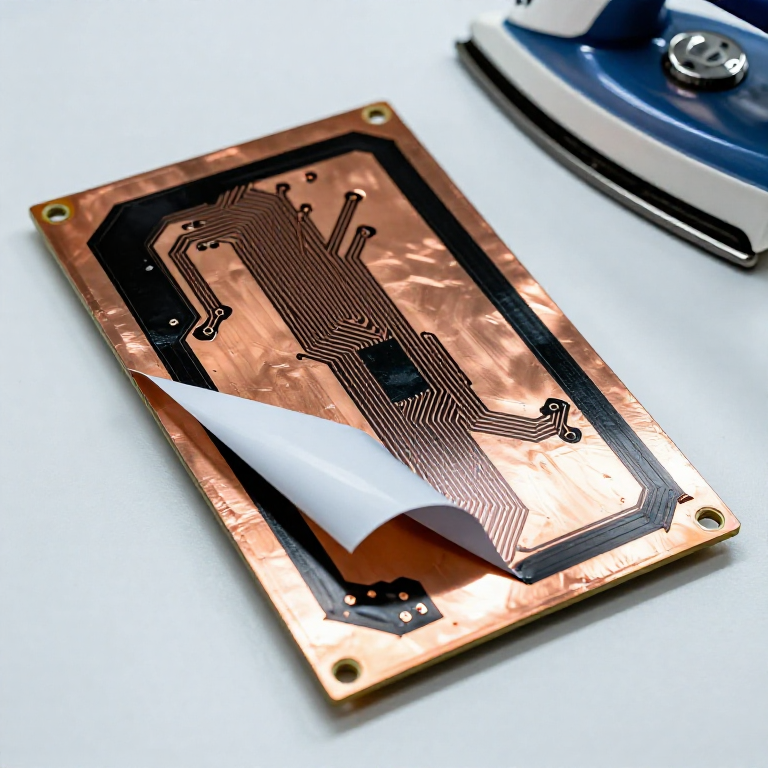
Clean the copper surface of the PCB blank by scrubbing with fine steel wool or a Scotch-Brite pad until it is uniformly bright and shiny with no oxidation, fingerprints, or grease. Any contamination prevents toner adhesion. Handle the cleaned board by the edges only. Place the printed glossy paper face-down on the cleaned copper surface, aligning the circuit layout. Apply heat and pressure with a clothes iron set to the highest heat (no steam). Press firmly and evenly for 3-5 minutes, moving the iron slowly across the entire surface. The heat melts the toner (approximately 180 degrees C), and the pressure bonds it to the copper. Allow to cool slightly, then soak the board in warm water for 10-15 minutes until the paper softens and peels away, leaving the toner pattern on the copper.
Inspect and Touch Up the Transfer
Inspect and Touch Up the Transfer
Inspect the transferred toner pattern carefully under bright light. Look for any areas where the toner did not transfer cleanly — breaks in traces, pinholes, or missing pads. Touch up any defects using a permanent marker (Sharpie) or PCB resist pen — the marker ink acts as etch resist just like the toner. This inspection step is critical: a single break in a trace means a broken electrical connection in the finished board, which can be very difficult to diagnose later. Pay particular attention to fine traces and the spaces between closely spaced pads — these are the most common failure points in toner transfer.
Etch the Board
Etch the Board
Wearing safety gloves and goggles (ferric chloride stains permanently and is mildly corrosive), pour ferric chloride solution into a plastic etching tray to a depth of approximately 1cm. Submerge the board copper-side down, floating it on the surface of the etchant. Gently agitate the tray every minute by rocking it back and forth — agitation brings fresh etchant to the copper surface and speeds the process. Etching takes 15-45 minutes depending on the solution temperature and freshness (warmer etchant works faster, 40-50 degrees C is optimal). Check progress periodically by lifting the board — you will see the copper gradually dissolving from around the toner-protected traces. Etching is complete when all exposed copper has dissolved, leaving only the traces protected by toner. Do not over-etch, as the solution will undercut beneath the toner edges, thinning the traces.
Clean, Drill, and Finish
Clean, Drill, and Finish
Remove the etched board from the solution, rinse thoroughly with water, and remove the toner with acetone or nail polish remover, revealing the bright copper traces beneath. Inspect the traces for continuity — use a multimeter in continuity mode to verify that each trace connects its intended points without short circuits to adjacent traces. Drill component holes using a 0.8-1.0mm drill bit in a small drill press or rotary tool. PCB drill bits are carbide because fibreglass (FR4) is extremely abrasive and dulls steel bits instantly. After drilling, lightly sand the copper with fine steel wool to remove any oxidation and improve solderability. The finished board is ready for component soldering. For longer-term protection, apply a flux coating or clear lacquer to the copper to prevent oxidation before components are installed.
재료
5- 1 piece, sized for your circuit 개플레이스홀더
- 200-500ml ml플레이스홀더
- 50ml ml플레이스홀더
- 1 piece 개플레이스홀더
- 1-2 sheets 개플레이스홀더
필요 도구
7- 플레이스홀더
- 플레이스홀더
- 플레이스홀더
- 플레이스홀더
- 1 vendor sell this, none ship to you yet플레이스홀더
- Drill with 0.8-1.0mm PCB drill bits플레이스홀더
- 플레이스홀더
이 블루프린트로 만드는 것
CC0 퍼블릭 도메인
이 블루프린트는 CC0로 공개되었습니다. 어떤 목적으로든 자유롭게 복사, 수정, 배포 및 사용할 수 있습니다.
제품 구매를 통해 메이커를 지원하세요. 판매자가 설정한 메이커 커미션 을 받거나, 이 블루프린트의 새로운 반복을 만들어 연결로 포함시킬 수 있습니다.