
Boiling Water in a Leaf over Direct Flame — Why Water Keeps the Vessel from Burning
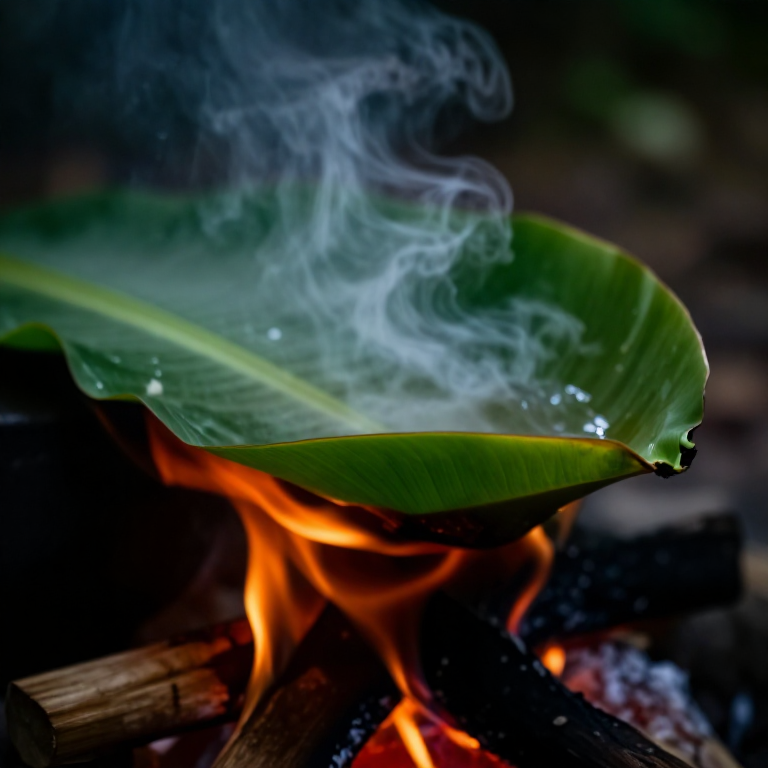
You can boil water in a leaf, a bark tray, or even a paper cup held directly over a flame. This seems impossible — the fire should burn through the container. But it works because of a simple physical principle: as long as water is in contact with the vessel wall, that wall cannot exceed 100 °C. Water absorbs all the heat energy from the flame and carries it away as it heats toward boiling. Since most organic materials need at least 200-300 °C to ignite, the water keeps the vessel far below its burning point.
This technique predates pottery and stone boiling. All it requires is fire, water, and a large leaf or piece of bark. Hunter-gatherers across the world used it — banana leaves in the tropics, birch bark in the north, large burdock or taro leaves in temperate regions. It is the simplest possible method of cooking with boiling water and demonstrates a key insight: the container does not need to be heat-resistant, only watertight.
The only limitation is that any part of the vessel above the water line will dry out and burn. The leaf must be shaped to hold water well above the flame contact point, and the fire must be controlled — a roaring blaze that licks above the waterline will destroy the vessel.
안내
Select a suitable leaf
Select a suitable leaf
이 단계의 재료:
 크고 나긋한 잎
Form the leaf into a bowl
Form the leaf into a bowl
이 단계의 재료:
 나무 핀
나무 핀Build a small controlled fire
Build a small controlled fire
이 단계의 재료:
 장작
장작Fill with water and position over the fire
Fill with water and position over the fire
Maintain heat until boiling
Maintain heat until boiling
Remove and serve
Remove and serve
관련 블루프린트
이 블루프린트들은 지식을 공유합니다 — 기술, 재료 또는 원리


CC0 퍼블릭 도메인
이 블루프린트는 CC0로 공개되었습니다. 어떤 목적으로든 자유롭게 복사, 수정, 배포 및 사용할 수 있습니다.
제품 구매를 통해 메이커를 지원하세요. 판매자가 설정한 메이커 커미션 을 받거나, 이 블루프린트의 새로운 반복을 만들어 연결로 포함시킬 수 있습니다.