예술
뷰티 및 웰니스
공예
문화 및 역사
엔터테인먼트
환경
음식 및 음료
역공학
과학
스포츠
기술
웨어러블



Random or Systematic: Two Ways to Be Wrong, and Only One of Them Averages Away
A RANDOM error is different every time and as often high as low. A SYSTEMATIC error is the same every time, in the same direction, and it does not care how many readings you take.
That difference decides what you should do next. Random error is beaten by repeating; systematic error is beaten only by comparing against something you did not measure yourself. Doing the first when you needed the second produces a tight cluster of confidently wrong numbers.
The trap is that a systematic error looks like SUCCESS. Your repeats agree beautifully, the spread is tiny, and the answer is off by a mile — and nothing in your own data can tell you so.
중급
3 hours
안내
1
1
Precision is agreement; accuracy is truth
Precision is agreement; accuracy is truth
PRECISION is how closely your repeats agree with each other. ACCURACY is how close they are to the real value. They are independent, and you can have either without the other.
Tight repeats prove precision and say nothing about accuracy. That is the whole problem: the evidence you can gather by yourself only ever speaks to the first one, so a systematic error is invisible from the inside.
So the question to ask of a set of readings is not "do they agree?" but "what would make them all wrong in the same direction?" A caliper that does not close to zero. A thermometer immersed too shallow. A stopwatch always started late. Each produces perfect agreement on the wrong number.
필요한 도구:
 디지털 캘리퍼스 6인치
 실험용 온도계
2
2
Averaging kills one and not the other
Averaging kills one and not the other
Jupyter 노트북 불러오는 중…
필요한 도구:
 데스크톱 컴퓨터
 스톱워치
스톱워치 진자
진자3
3
Where systematic errors actually come from
Where systematic errors actually come from
Four families cover most of them. A ZERO that is off, which the previous rung deals with. A SCALE that is stretched or squashed, so the error grows with the reading. An instrument used OUTSIDE its assumptions — a thermometer not immersed deep enough, an infrared reading taken off a shiny surface. And the OBSERVER: reading a scale from an angle, always rounding the same way, starting a watch late.
Each has a signature. A zero offset shifts everything by the same amount; a scale error shifts small readings a little and large ones a lot; an assumption failure appears only in certain conditions. Measuring two known values, one small and one large, separates the first two immediately.
The pyrometer rung is a worked example of the third: polished steel at 900 degrees reads hundreds of degrees cold, not because the instrument is faulty but because its emissivity assumption is wrong for that surface.
필요한 도구:
 교정용 분동 세트실험용 온도계디지털 캘리퍼스 6인치
4
4
Hunt them by disagreement, and write down what you ruled out
Hunt them by disagreement, and write down what you ruled out
The practical method is to make two things disagree. Measure the same object with two different instruments. Have two people measure it. Measure it, turn it round, and measure it again. Each disagreement is a systematic error becoming visible.
Agreement is evidence too, and it is worth recording. "Checked against the second caliper, agreed to 0.02 mm" is a line that makes a later reader trust everything around it — and saves you repeating the check in six months.
Quote what you could not rule out, plainly. A result that says "2.08 plus or minus 0.02 s; the stopwatch was not checked against a known interval, so a start-delay bias of up to about 0.1 s may be present" is far more useful than a confident 2.08, and it tells the next person exactly what to do first.
필요한 도구:
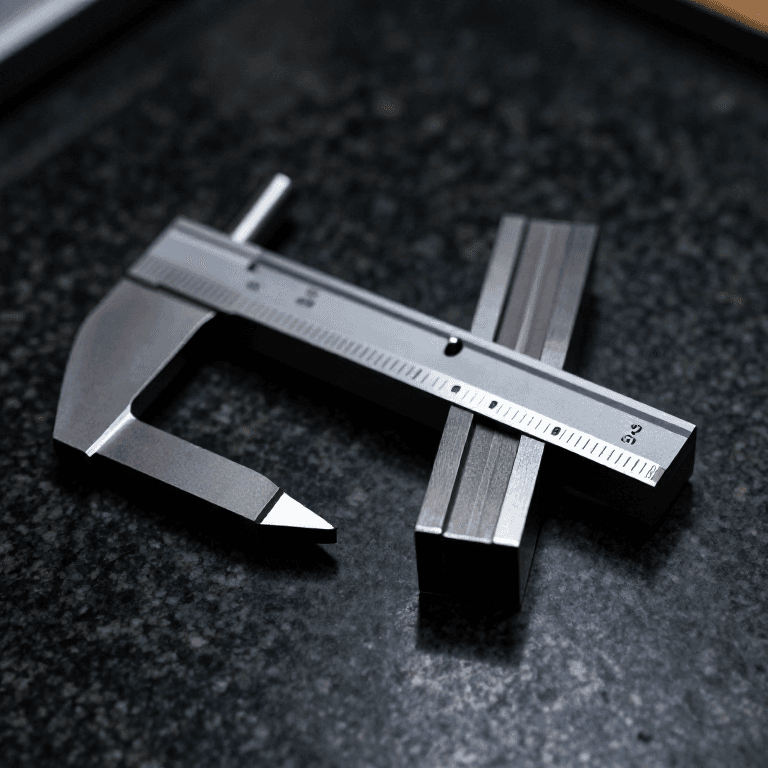
디지털 캘리퍼스 6인치 버니어 캘리퍼스
관련 블루프린트
이 블루프린트들은 지식을 공유합니다 — 기술, 재료 또는 원리


CC0 퍼블릭 도메인
이 블루프린트는 CC0로 공개되었습니다. 어떤 목적으로든 자유롭게 복사, 수정, 배포 및 사용할 수 있습니다.
제품 구매를 통해 메이커를 지원하세요. 판매자가 설정한 메이커 커미션 을 받거나, 이 블루프린트의 새로운 반복을 만들어 연결로 포함시킬 수 있습니다.