

예술
뷰티 및 웰니스
공예
문화 및 역사
엔터테인먼트
환경
음식 및 음료
그린 퓨처
역공학
과학
스포츠
기술
웨어러블
Casting Reinforced Concrete — Marrying Steel and Stone into the Modern Structure
Balin

작성자

Balin

25. 6월 2026US
0
0
0
0
0

Casting Reinforced Concrete — Marrying Steel and Stone into the Modern Structure

Concrete is wonderful stuff in compression — squeeze it and it holds — but pull on it and it cracks like a biscuit. Steel is the opposite: superb in tension, useless if you try to build a wall of it. In the late 1800s builders like Joseph Monier and François Hennebique realised that embedding steel inside concrete combines the best of both, and reinforced concrete became the material that built the modern world.

The idea works because of three lucky properties. Concrete and steel expand and contract at almost exactly the same rate, so temperature changes do not tear them apart. Wet concrete is strongly alkaline, which coats the steel in a protective film that stops it rusting. And the two grip each other firmly, so a load shared between them is truly shared. Put steel where the structure is stretched and concrete where it is squeezed, and you get a member strong in every direction.

From this came bridges, dams, tunnels, and the skeletons of skyscrapers — shapes impossible in stone or iron alone. The skill is in knowing where the steel must go and in surrounding it completely with sound, well-cured concrete.

중급
A day to pour, plus weeks to cure

안내

1

Understand the partnership

Concrete is strong when squeezed but weak when stretched; steel is strong when stretched. Reinforced concrete puts steel inside concrete so that concrete carries the compression and steel carries the tension. Each does what it is good at.
2

Know where the steel goes

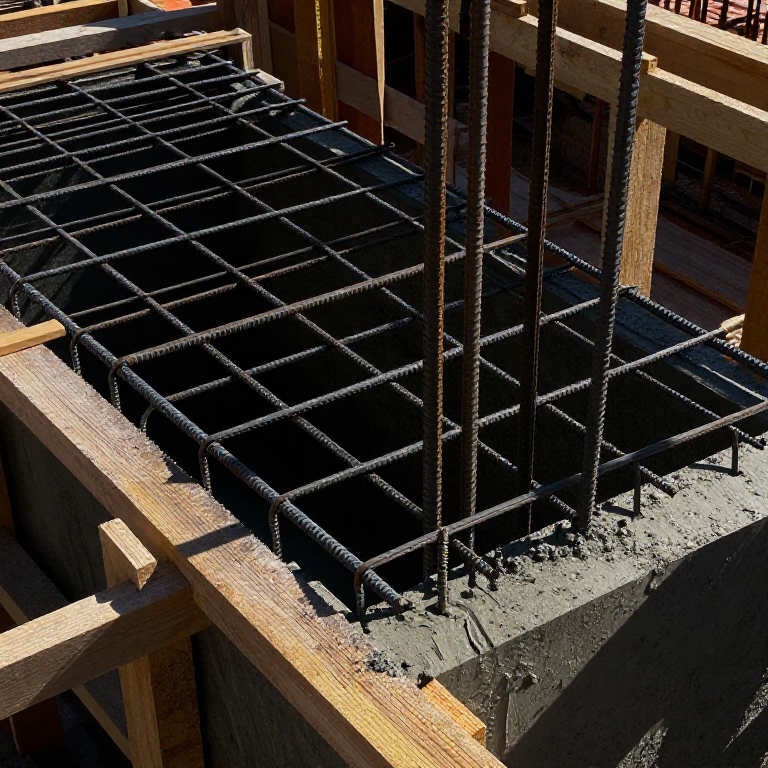
Work out which parts of the structure will be stretched under load and put the steel there. In a simple beam, the underside stretches, so the reinforcing bars run near the bottom; in a column, bars run the full height. Steel in the wrong place does nothing.
3

Build the formwork

Build sturdy timber formwork in the exact shape of the finished member — beam, slab, or column. It must be rigid and well braced, because wet concrete is heavy and will bulge or burst weak forms.

이 단계의 재료:

Timber PlankTimber Plank10

필요한 도구:

HammerHammer
4

Cut and bend the rebar

Cut steel reinforcing bars to length and bend hooks on their ends so they anchor firmly in the concrete. Bending and hooking the bars stops them pulling out under load and ties the structure together.

이 단계의 재료:

Steel RebarSteel Rebar15 미터

필요한 도구:

Bar BenderBar Bender
5

Place and tie the cage

Assemble the bars into a cage and set it in the formwork on small spacers so that concrete will surround every bar with a layer of cover. Tie the intersections with wire. The cover layer is vital — it protects the steel from rust and fire.

이 단계의 재료:

Tie WireTie Wire1
6

Mix the concrete

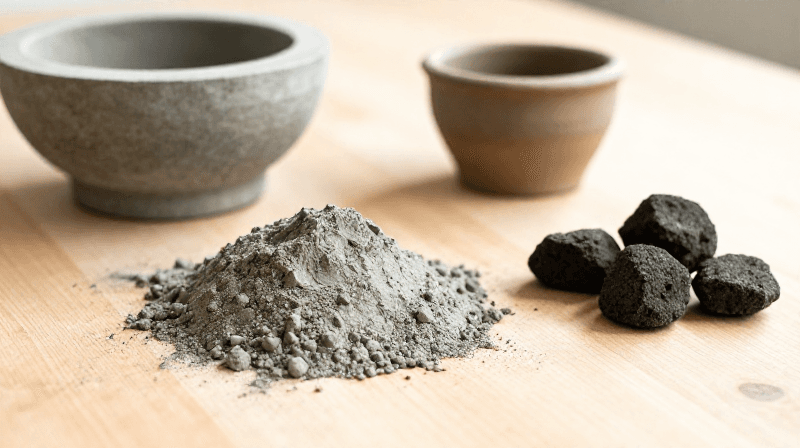
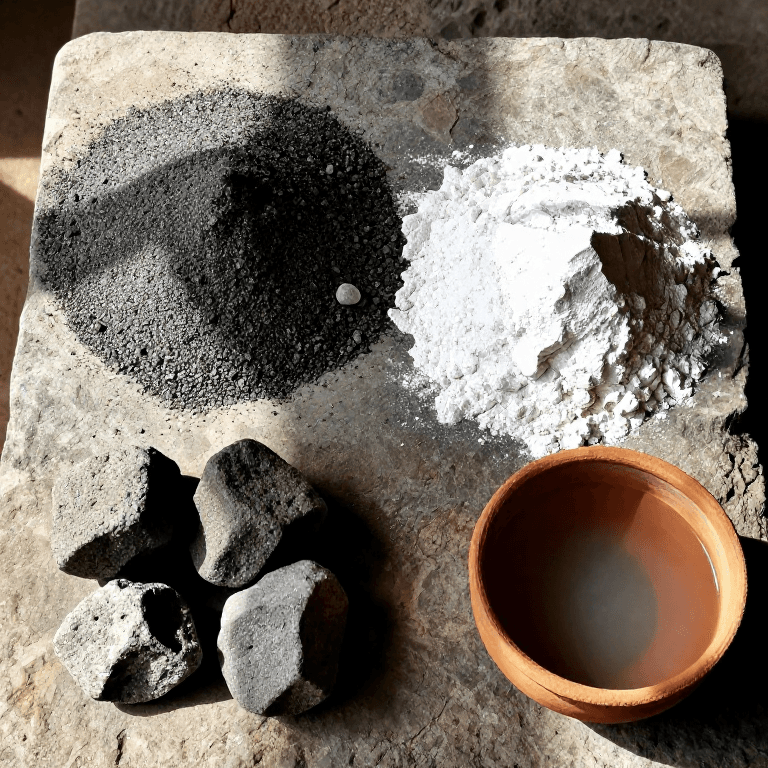
Mix Portland cement, clean sand, and gravel in proportions of roughly one to two to four, with just enough water to make a workable paste. Too much water weakens the concrete, so use the least that lets it flow around the bars.

이 단계의 재료:

Portland CementPortland Cement50 kg
SandSand100 kg
GravelGravel200 kg

필요한 도구:

Concrete MixerConcrete Mixer
7

Pour around the steel

Pour the wet concrete into the formwork, filling it completely around the rebar cage. Work it into the corners and under the bars so no steel is left exposed and no large pockets are left empty.

이 단계의 재료:

WaterWater30 리터
8

Compact out the air

Vibrate or rod the wet concrete to drive out trapped air bubbles so it flows tight against the steel and fills the form solidly. Voids next to a bar break the bond and let water reach the steel, so thorough compaction is essential.

필요한 도구:

Tamping RodTamping Rod
9

Cure it slowly

Keep the concrete damp and protected for at least a week. Concrete hardens by a slow chemical reaction with water, not by drying, so letting it dry out too fast leaves it weak and cracked. Patience here makes strong concrete.
10

Strip the formwork

Once the concrete has gained enough strength — days for slabs, longer for beams that carry load — carefully remove the formwork. Strip too early and the member can sag or crack before it is ready to bear weight.

필요한 도구:

Pry BarPry Bar
11

Understand why it lasts

Three properties make the marriage durable: concrete and steel expand at nearly the same rate so heat does not split them, the alkaline concrete coats the steel and stops it rusting, and the two grip tightly so they share load. Keep the steel well covered and the concrete sound and it will last generations.
12

See what it built

Reinforced concrete made shapes impossible in stone or iron alone — long bridge spans, thin floor slabs, dams, tunnels, and the frames of tall buildings. Cheap, mouldable, and strong in every direction, it became the dominant structural material of the modern world.

재료

7

필요 도구

5

연결된 블루프린트 재료

관련 블루프린트

이 블루프린트들은 지식을 공유합니다 — 기술, 재료 또는 원리
CC0 퍼블릭 도메인

이 블루프린트는 CC0로 공개되었습니다. 어떤 목적으로든 자유롭게 복사, 수정, 배포 및 사용할 수 있습니다.

제품 구매를 통해 메이커를 지원하세요. 판매자가 설정한 메이커 커미션 을 받거나, 이 블루프린트의 새로운 반복을 만들어 연결로 포함시킬 수 있습니다.

토론

(0)

로그인 하여 토론에 참여하세요

댓글 로딩 중...