예술
뷰티 및 웰니스
공예
문화 및 역사
엔터테인먼트
환경
음식 및 음료
역공학
과학
스포츠
기술
웨어러블
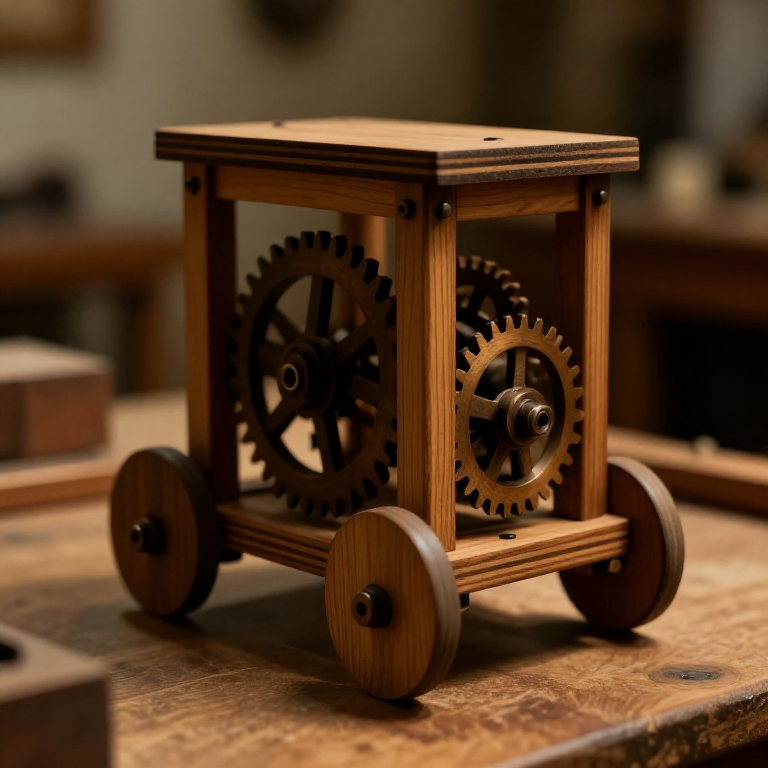


Building Leonardo da Vinci's Self-Propelled Cart — The First Programmable Robot
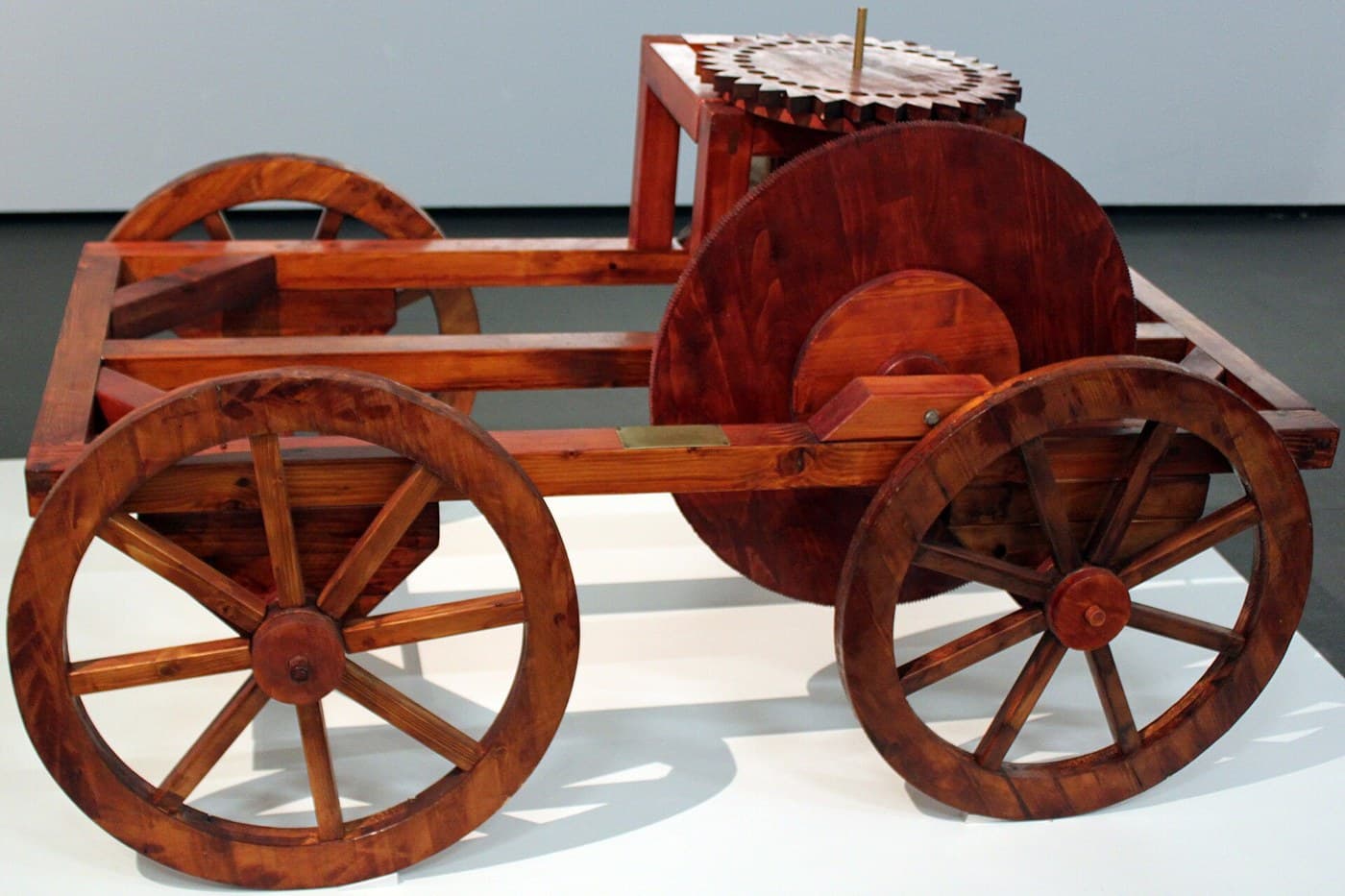
Around 1478 Leonardo da Vinci designed a cart that drives itself: no ox, no push, no rider. Coiled springs store the power, wooden gears carry it to the wheels, an escapement doles it out evenly, and pegs set into a control wheel steer the cart along a route decided in advance. It is spring power, gear reduction, escapement timing and programmable control in one machine — an ancestor of both the automobile and the robot. In 2004 a museum in Florence built it to his drawings and it ran exactly as designed. This blueprint reconstructs that remarkable machine.
고급
30
안내
1
1
Understand the machine
Understand the machine
Leonardo's cart carries its own power source and steers itself. Wound springs drive it, gears set the speed, an escapement keeps it steady, and pegs on a control wheel turn it left or right on cue. Often called the first robot, it was reconstructed in Florence in 2004 and ran just as he drew it.
2
2
Build the frame and wheels
Build the frame and wheels
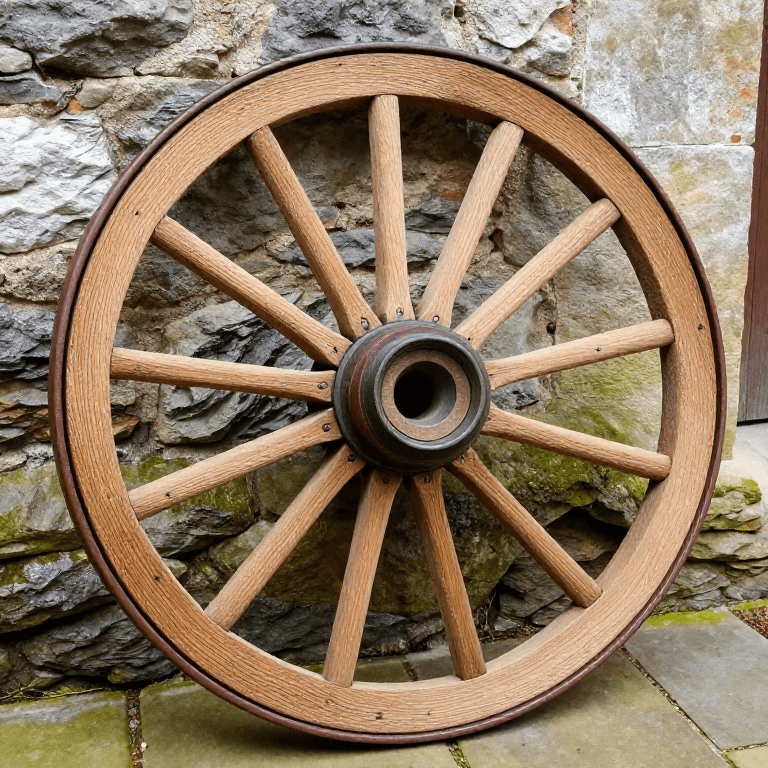
Build a low, sturdy wooden frame carrying an axle front and rear. Cut round wheels and mount them so they turn freely, and bore the axle bearings cleanly so there is little friction to waste the spring's energy.
이 단계의 재료:
 너도밤나무 제재목3 개
필요한 도구:
 손톱(핸드소)
 손 오거(나사송곳)
3
3
Make the coiled springs
Make the coiled springs
The power comes from two coiled leaf springs set in drums beneath the frame. Winding them stores energy; as they slowly unwind they turn the drive. This clockwork-style spring drive — not a falling weight — is Leonardo's key idea.
이 단계의 재료:
 판 스프링2 개
필요한 도구:
 나무 망치
나무 망치4
4
Cut and fit the wooden gears
Cut and fit the wooden gears
Cut cogged wooden gearwheels that take the drive from the spring drums and gear it down to the road wheels, so the stored energy is delivered at a slow, steady, useful speed instead of one violent burst.
이 단계의 재료:
 나무 기어4 개
필요한 도구:
 둥근끌(구우지)
 칼
칼5
5
Add the escapement
Add the escapement
Fit an escapement — the same regulating trick used in clocks — between the springs and the gears. It releases the spring's energy in small, even steps, keeping the cart's speed controlled rather than letting it bolt and stop.
이 단계의 재료:
나무 기어1 개필요한 도구:
칼6
6
Build the programmable steering
Build the programmable steering
Set removable pegs into a horizontal control wheel geared to the drive. As that wheel turns, each peg nudges the steering to a preset angle, so the cart follows a path you program in advance by where you place the pegs — turn the pegs, change the route.
이 단계의 재료:
너도밤나무 제재목1 개 결속용 로프5 미터
필요한 도구:
손 오거(나사송곳)7
7
Wind, set down, release
Wind, set down, release
Wind the springs to store energy, place the cart on the floor, and release the catch. It rolls away under its own power and steers itself left and right exactly as the pegs command, with no one touching it.
8
8
See why it was centuries ahead
See why it was centuries ahead
Spring power, gear reduction, escapement regulation and programmable control together in one device — roughly 400 years before the automobile and the programmable machine. The 2004 Florence reconstruction proved these were not fantasies: Leonardo's cart genuinely works.
재료
6- 4 개플레이스홀더
- 2 개플레이스홀더
- 5 개플레이스홀더
- 5 미터플레이스홀더
- 1 개플레이스홀더
- 1 개플레이스홀더

관련 블루프린트
이 블루프린트들은 지식을 공유합니다 — 기술, 재료 또는 원리
CC0 퍼블릭 도메인
이 블루프린트는 CC0로 공개되었습니다. 어떤 목적으로든 자유롭게 복사, 수정, 배포 및 사용할 수 있습니다.
제품 구매를 통해 메이커를 지원하세요. 판매자가 설정한 메이커 커미션 을 받거나, 이 블루프린트의 새로운 반복을 만들어 연결로 포함시킬 수 있습니다.