협업
예술
뷰티 및 웰니스
공예
문화 및 역사
엔터테인먼트
환경
음식 및 음료
역공학
과학
스포츠
기술
웨어러블



Reverse Osmosis: Pushing Water Uphill Through a Membrane
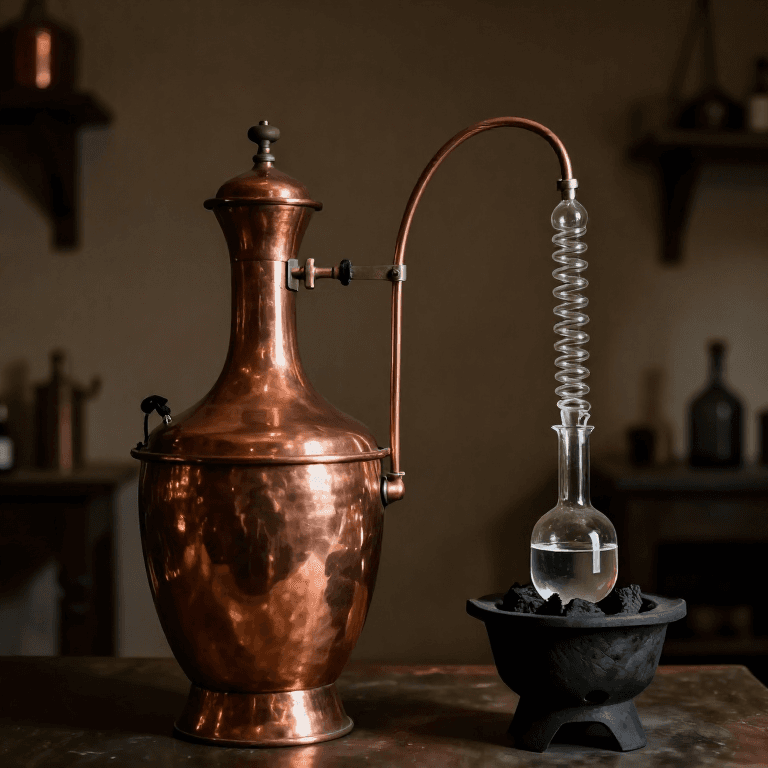
The solar still and the alembic both separate salt from water by evaporating the water — and both pay the latent heat of vaporisation to do it, about 2,400 kilojoules for every kilogram. That energy bill is why distillation stayed expensive for three thousand years.
Reverse osmosis does the same separation without a phase change. Osmosis drives fresh water INTO brine through a membrane that passes water and rejects salt; push back harder than that osmotic pressure and the flow reverses, leaving the salt behind. The idea was old, but it was useless until Sidney Loeb and Srinivasa Sourirajan at UCLA made a cellulose acetate film in 1959 with a dense skin a fraction of a micrometre thick on a porous backing — thin enough to pass useful water, sound enough to hold back the salt (US 3,133,132). Every desalination plant since descends from that film.
고급
1 day
안내
1
1
Understand what you are pushing against
Understand what you are pushing against
Osmotic pressure is not friction and it is not the membrane resisting you. It is the pressure the salt solution would pull water in with, and you must exceed it before a single drop crosses the other way.
For sea water at 35 grams per litre that is about 27 bar. For the brackish water most small systems treat, a few bar. This one number decides whether your build is a bicycle pump or an industrial plant, and the notebook later works it out for your own water.
이 단계의 재료:
 소금35 g
필요한 도구:
 정밀 디지털 저울
 메스실린더
2
2
Get a membrane and treat it gently
Get a membrane and treat it gently
Use a small domestic RO element — the kind sold for under-sink filters. Note which way round it runs: feed in, permeate out of the centre tube, concentrate out of the far end.
Two things kill a membrane quickly. Chlorine destroys polyamide film in hours, so anything chlorinated must go through carbon first — and note the irony, because the previous rung in this batch was about deliberately adding chlorine. And letting it dry out permanently collapses the pore structure: a membrane that has dried never recovers its flux.
필요한 도구:
 역삼투막
3
3
Build the pressure side
Build the pressure side
Plumb a feed vessel to the membrane through a pump with a gauge in the line, and lead two outlets away: permeate to one jar, concentrate to another through a restrictor.
You need BOTH outlets flowing. A membrane run with the concentrate closed off becomes a dead end where salt piles up against the film — concentration polarisation — and the local osmotic pressure climbs until flow stops and scale forms. Every RO system in the world throws away a stream of concentrate; that is not waste, it is what carries the rejected salt out.
이 단계의 재료:
 실리콘 튜브3 metre
필요한 도구:
 자전거 스탠드 펌프
 압력계
4
4
Make brackish water and run it
Make brackish water and run it
Dissolve 2 grams of salt per litre — brackish, not sea — and run it through at increasing pressure while you watch the permeate outlet.
Below the osmotic pressure, nothing comes out. Cross it and permeate starts, slowly at first and then rising roughly in step with how far past it you push. Seeing that threshold with your own gauge is the whole point of building this: it is the moment an abstract equation becomes a thing you did with a pump.
이 단계의 재료:
소금20 g 증류수10 리터
필요한 도구:
압력계메스실린더 스톱워치
5
5
Rejection, flux and the energy bill
Rejection, flux and the energy bill
Jupyter 노트북 불러오는 중…
필요한 도구:
메스실린더스톱워치6
6
Taste, test, and notice what is missing
Taste, test, and notice what is missing
Compare feed, permeate and concentrate. The permeate should read near neutral and taste flat; the concentrate should be noticeably saltier than what you started with, because the salt has to go somewhere.
RO strips almost everything — salts, metals, most organics, and microbes, which are enormous compared to the pores. That completeness is also the criticism: it removes the calcium and magnesium the body uses, which is why large plants remineralise afterwards rather than delivering the pure product.
필요한 도구:
 pH 시험지
 유리병
7
7
Flush it, and never let it dry
Flush it, and never let it dry
Flush with clean water at low pressure for a few minutes after every run, to wash the concentrated layer off the film before it can crystallise.
For storage, keep the element wet and cool. If you will not use it for weeks, store it in the preservative solution it came in. A dried-out membrane looks identical to a working one, and behaves like a blank sheet of plastic — the most expensive way there is to learn this lesson.
이 단계의 재료:
증류수5 리터필요한 도구:
자전거 스탠드 펌프관련 블루프린트
이 블루프린트들은 지식을 공유합니다 — 기술, 재료 또는 원리


CC0 퍼블릭 도메인
이 블루프린트는 CC0로 공개되었습니다. 어떤 목적으로든 자유롭게 복사, 수정, 배포 및 사용할 수 있습니다.
제품 구매를 통해 메이커를 지원하세요. 판매자가 설정한 메이커 커미션 을 받거나, 이 블루프린트의 새로운 반복을 만들어 연결로 포함시킬 수 있습니다.