예술
뷰티 및 웰니스
공예
문화 및 역사
엔터테인먼트
환경
음식 및 음료
역공학
과학
스포츠
기술
웨어러블
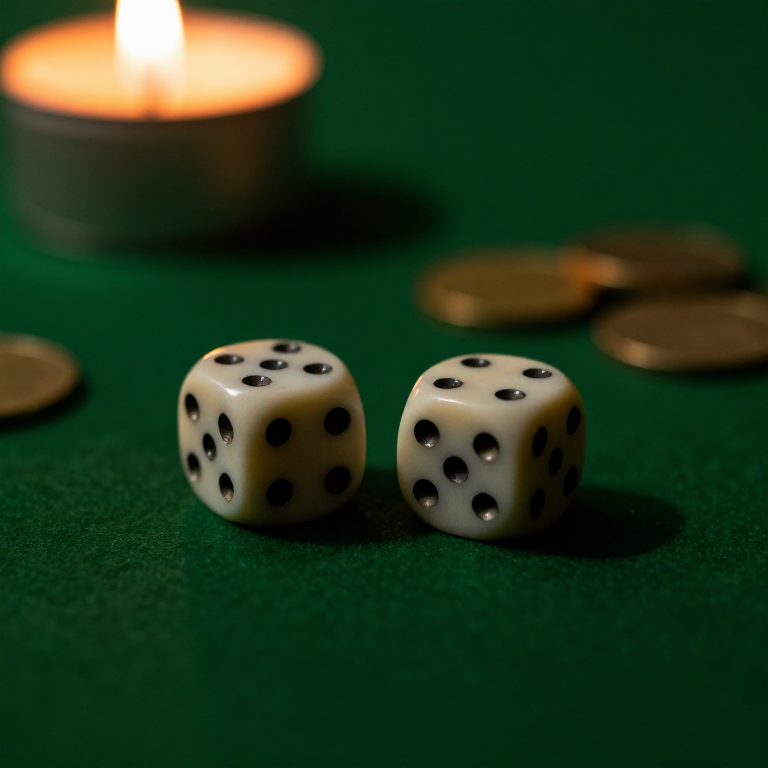

The Birth of Probability — Roll the Dice and Find the Odds
A hands-on maths project: roll two dice fifty times, tally the totals, and discover that 7 comes up most often -- the start of probability, born from a gambler's question to Pascal and Fermat in 1654. A Python cell gives the exact odds and simulates thousands of rolls, and a compendium reaches from dice to modern statistics.
초급
30 minutes
안내
1
1
A gambler's question
A gambler's question
In 1654 a gambler asked Blaise Pascal how to split the stakes in an unfinished game. Pascal and Pierre de Fermat worked out the answer in a famous exchange of letters -- and invented the mathematics of chance. You will rediscover its first lesson with two dice.
2
2
Roll and tally
Roll and tally
Take two dice. On paper, make a tally chart with a row for each possible total from 2 to 12. Now roll the two dice fifty times, and each time add a tally mark next to the total you rolled. Take your time and be honest with every roll.
이 단계의 재료:
 주사위(여섯 면, 5개 한 벌)1 개
 종이1 장
종이1 장필요한 도구:
 흑연 연필 세트
3
3
Which total wins?
Which total wins?
Turn your tallies into a little bar chart. You should find the middle totals -- especially 7 -- came up far more often than 2 or 12. Why? Because there are six ways to make 7 (1+6, 2+5, 3+4, 4+3, 5+2, 6+1) but only ONE way to make 2 (1+1) or 12 (6+6). More ways means more likely.
4
4
Compare with the exact odds
Compare with the exact odds
Jupyter 노트북 불러오는 중…
필요한 도구:
 데스크톱 컴퓨터
5
5
Compendium: the mathematics of uncertainty
Compendium: the mathematics of uncertainty
What your dice teach. (1) When outcomes are equally likely, a probability is just favourable outcomes divided by all outcomes -- 6 ways out of 36 for a seven, so one in six. (2) Your fifty rolls wobble around the true odds; a thousand rolls hug them tightly -- the 'law of large numbers'. (3) The counts of ways to make each total are hidden in Pascal's triangle, tying chance to counting. (4) The reasoning Pascal and Fermat invented for a gambling dispute now underlies insurance, weather forecasts, medical trials, quantum physics and the machine-learning behind modern AI. A question about dice became the mathematics of uncertainty itself.
관련 블루프린트
이 블루프린트들은 지식을 공유합니다 — 기술, 재료 또는 원리
CC0 퍼블릭 도메인
이 블루프린트는 CC0로 공개되었습니다. 어떤 목적으로든 자유롭게 복사, 수정, 배포 및 사용할 수 있습니다.
제품 구매를 통해 메이커를 지원하세요. 판매자가 설정한 메이커 커미션 을 받거나, 이 블루프린트의 새로운 반복을 만들어 연결로 포함시킬 수 있습니다.