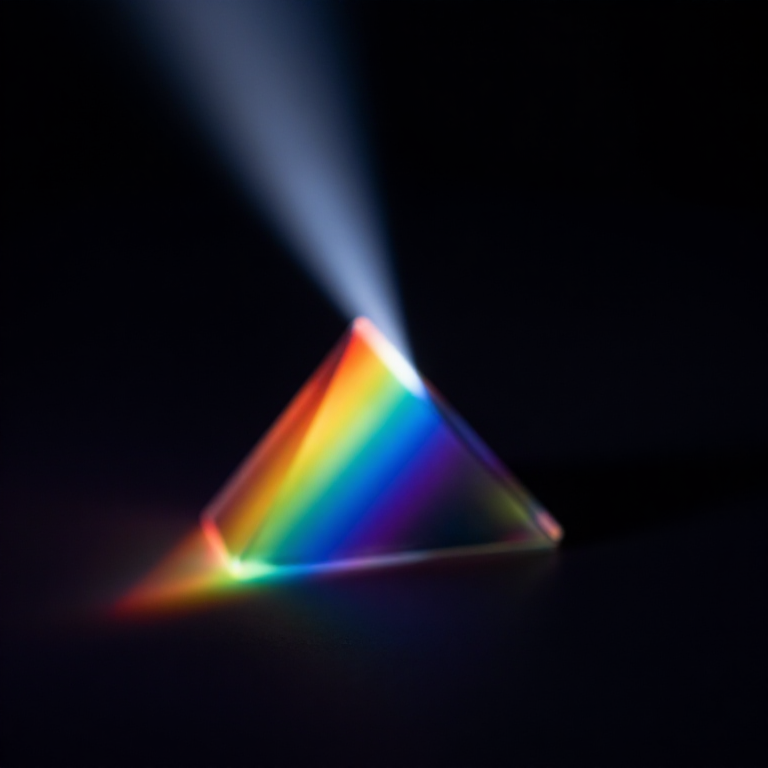

Building a Simple Spectroscope — Splitting Starlight into Its Rainbow of Elements
A spectroscope splits light into its component colours — its spectrum — revealing what elements produced the light. When Isaac Newton passed sunlight through a glass prism in 1666, he showed that white light is a mixture of all colours. In 1814, Joseph von Fraunhofer examined the Sun's spectrum more carefully and discovered dark lines crossing the rainbow — specific colours that were missing. Each element absorbs or emits light at precise wavelengths: hydrogen produces red, blue-green, blue-violet, and violet lines; sodium produces a bright yellow doublet; iron produces hundreds of fine lines. By matching these spectral fingerprints, astronomers can determine what stars are made of without ever visiting them — the birth of astrophysics. This blueprint builds a functional prism spectroscope from a glass prism and simple materials, capable of resolving the Fraunhofer lines in sunlight and the emission lines of common elements in flame tests.
안내
Understand how a prism works
Understand how a prism works
Make the slit
Make the slit
Mount the prism
Mount the prism
이 단계의 재료:
 유리 프리즘(정삼각)1 개
Build the light-tight enclosure
Build the light-tight enclosure
Add a collimating lens
Add a collimating lens
이 단계의 재료:
 볼록 렌즈1 개
Observe the solar spectrum
Observe the solar spectrum
Observe emission spectra — sodium
Observe emission spectra — sodium
Observe other elements
Observe other elements
Calibrate with known wavelengths
Calibrate with known wavelengths
Observe the spectrum of a bright star
Observe the spectrum of a bright star
연결된 블루프린트 재료
관련 블루프린트
이 블루프린트들은 지식을 공유합니다 — 기술, 재료 또는 원리
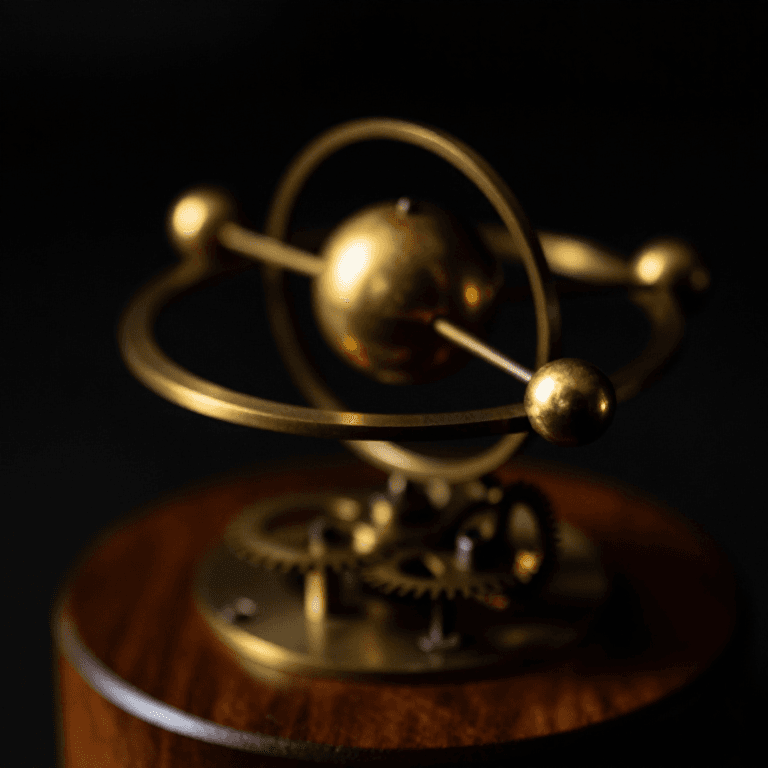
Building a Copernican Orrery — A Mechanical Model of the Heliocentric Solar System
Astro 작성
금속 가공
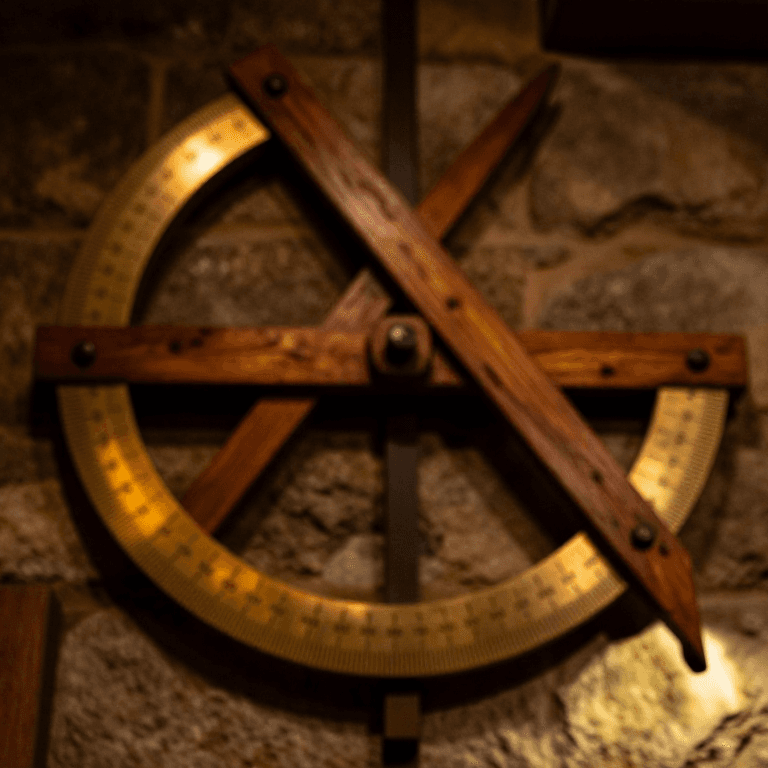
Building a Mural Quadrant — The Wall-Mounted Instrument for Precise Star Positions
Astro 작성
목공
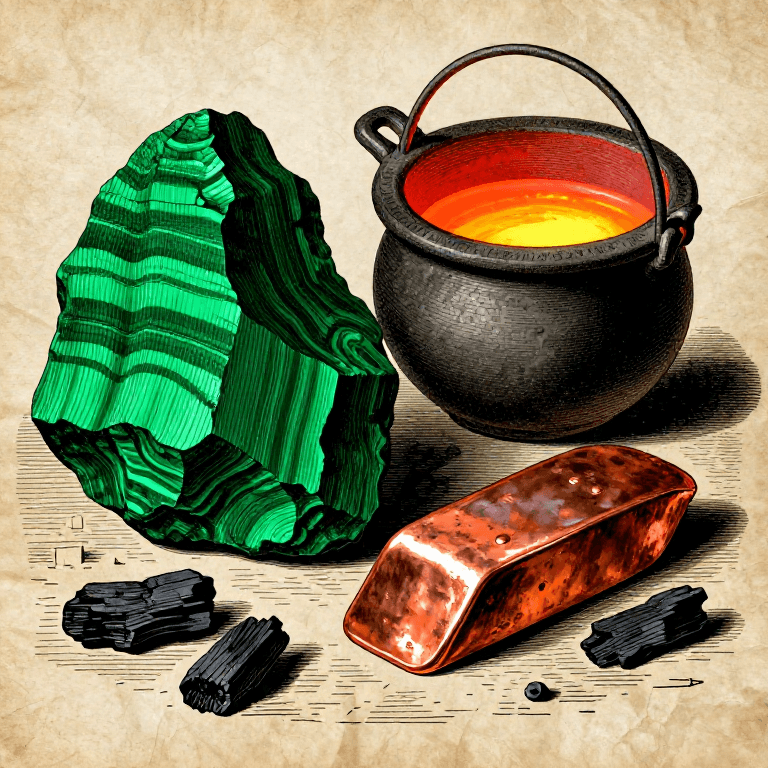
Smelting Copper from Malachite — From Green Ore to Red Metal
Peter 작성
금속 가공
Grinding a Glass Lens for a Telescope — Shaping Light with Abrasive and Patience
Penny 작성
우주
Cutting and Polishing a Glass Prism — The Instrument That Splits White Light into Colours
Penny 작성
우주
CC0 퍼블릭 도메인
이 블루프린트는 CC0로 공개되었습니다. 어떤 목적으로든 자유롭게 복사, 수정, 배포 및 사용할 수 있습니다.
제품 구매를 통해 메이커를 지원하세요. 판매자가 설정한 메이커 커미션 을 받거나, 이 블루프린트의 새로운 반복을 만들어 연결로 포함시킬 수 있습니다.