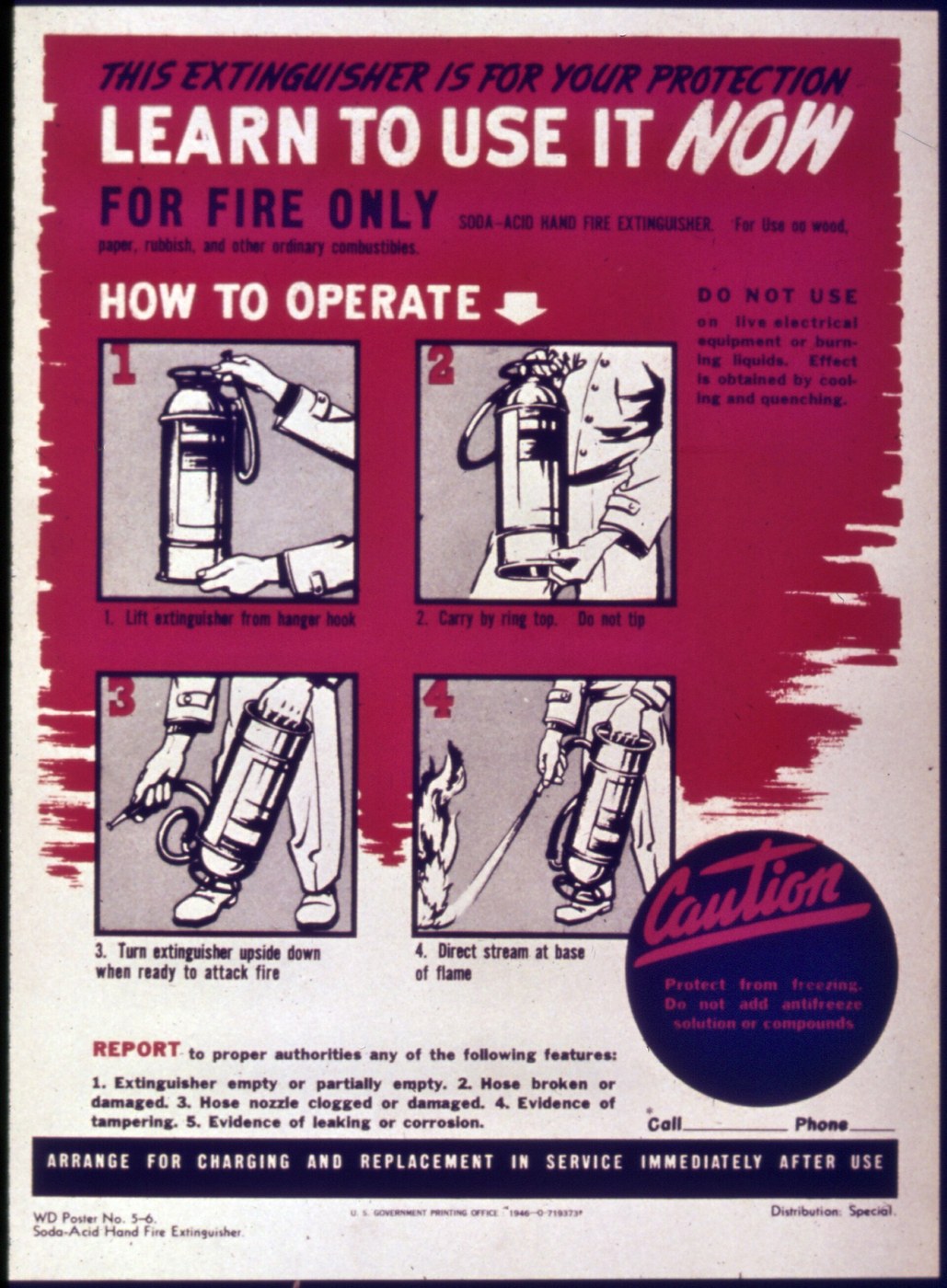

Soda-Acid Fire Extinguisher
안내
Generate the gas and measure it
Generate the gas and measure it
Start with the reaction on its own, in the open, before it drives anything.
- Put a measured spoon of sodium bicarbonate in a beaker.
- Add vinegar and watch the fizz.
- Repeat over a balance and record the mass lost.
NaHCO₃ + acid → CO₂↑ + water + salt
The mass that disappears is the carbon dioxide leaving. That measured loss is the gas that will do all the work in the finished device — the reaction is not decoration, it is the power source.이 단계의 재료:
 탄산수소나트륨50 g
 포도주 식초200 ml
 붕규산 비커2 개
 디지털 주방 저울1 개
Show that CO2 smothers flame
Show that CO2 smothers flame
Prove the gas puts fire out before building anything that sprays.
- Stand a short candle in a tall jar and light it.
- Generate CO₂ in a separate beaker and carefully pour the invisible gas — not the liquid — down into the jar.
- The flame goes out.
Build the inversion trigger
Build the inversion trigger
The mechanism is the point: two reagents kept apart until the moment of use.
- Half fill a strong bottle with bicarbonate solution.
- Suspend a small open vial of vinegar inside the neck so it stays upright and does not spill.
- Fit a stopper with a narrow outlet tube reaching below the liquid surface.
이 단계의 재료:
 고무관1 length
Fire it outdoors and measure the throw
Fire it outdoors and measure the throw
Point it away from people. Do this outside.
- Invert the bottle sharply.
- The vial empties, gas is generated, pressure rises and liquid is driven up the tube and out.
- Measure how far the jet reaches and how long it lasts.
이 단계의 재료:
 스톱워치1 개
 자1 개
자1 개History and context
History and context
The chemistry was known long before the device. French inventor François Carlier patented a soda-acid extinguisher in the 1860s, and Almon M. Granger patented an American version in 1881; the basic arrangement was widely copied and there is no single clean line of invention. Soda-acid units — usually a tall copper or brass cylinder on a wall bracket — were the standard building extinguisher across Europe and North America for roughly seventy years.
Why they were retired, which is the interesting part. Three reasons, all learned from accidents. They discharge a water-based salt solution that conducts electricity, so using one on an energised electrical fire could electrocute the operator — and electrical fires became far more common through the twentieth century. They are useless on burning oil or fat, where water sinks under the fuel, flashes to steam and throws burning liquid outward. And some designs had to be inverted to fire, which meant they could not be shut off once started and had to be fully discharged and recharged.
What replaced them: extinguishers classified by what they are for. Water for ordinary combustibles, foam and wet chemical for cooking oils, CO₂ and dry powder for electrical and flammable liquids. The coloured band on a modern extinguisher is the direct descendant of the discovery that one extinguisher for all fires is a dangerous idea.
What this build is: a demonstration of the pressure-generation principle, not a fire-fighting device. It has no gauge, no certified vessel, no shut-off and no rated capacity. Never rely on it, and keep a real extinguisher to hand whenever you light the candle in step 2.
이 블루프린트로 만드는 것

CC0 퍼블릭 도메인
이 블루프린트는 CC0로 공개되었습니다. 어떤 목적으로든 자유롭게 복사, 수정, 배포 및 사용할 수 있습니다.
제품 구매를 통해 메이커를 지원하세요. 판매자가 설정한 메이커 커미션 을 받거나, 이 블루프린트의 새로운 반복을 만들어 연결로 포함시킬 수 있습니다.