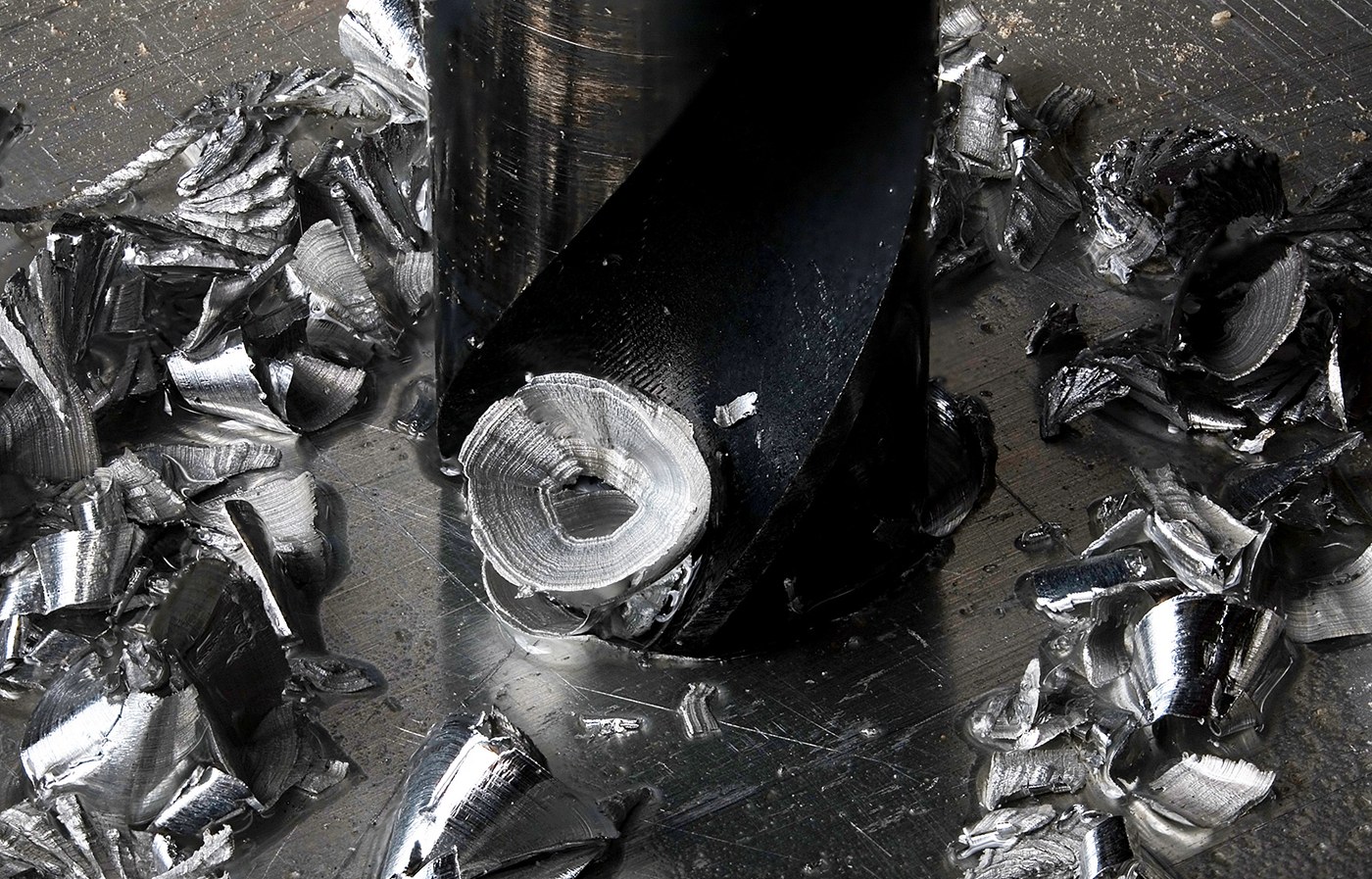


High-Speed Steel
Carbon-steel cutting tools have one hard limit: heat them past a dull red and they lose their hardness for good. That single fact capped how fast every machine tool on earth could cut — not the machine's power, the tool's temper.
US 668,270, “Metal-Cutting Tool and Method of Making Same”, Frederick W. Taylor of South Bethlehem and Maunsel White of Bethlehem, Pennsylvania. Filed 10 August 1900, granted 19 February 1901, assigned to Bethlehem Steel. The document specifies a steel of not less than 3% chromium with tungsten or molybdenum, heated above 1,725 °F (about 940 °C) — far hotter than anyone then dared — and cooled. The treated tool keeps its edge while glowing.
The honest version of the story. Taylor and White did not invent the alloy; similar tungsten steels already existed. What they found, by running many hundreds of trials, was the heat treatment that transformed them. Their patent was later contested and nullified on exactly that ground. The demonstration at the Paris Exposition of 1900 — tools cutting with the chip glowing red — is nonetheless one of the genuine turning points in manufacturing: shops re-tooled worldwide because the old machines were now too weak for their own cutters.
안내
Write down the limit being attacked
Write down the limit being attacked
Note the problem in one line: a carbon-steel tool softens permanently above roughly 200 °C, so cutting speed is capped by the tool, not the machine.
Identify your two tool materials
Identify your two tool materials
Lay out an HSS end mill and an ordinary carbon-steel drill bit from the set. Note which is which; they look almost identical.
필요한 도구:
 고속도강 엔드밀 세트
 드릴 비트 세트
Measure both with the micrometer
Measure both with the micrometer
Measure and record each cutting diameter before any test, so wear can be measured afterwards.
이 단계의 재료:
 모눈종이1 장
필요한 도구:
 마이크로미터
Clamp the test bar
Clamp the test bar
Clamp the mild steel square bar firmly in the bench vise, well supported.
이 단계의 재료:
 연강 각봉1 개
필요한 도구:
 바이스(만력)
Drill at low speed with cutting oil
Drill at low speed with cutting oil
Drill one hole at low speed with a drop of cutting oil. Time it. Measure the bit temperature immediately after with the infrared thermometer.
이 단계의 재료:
연강 각봉1 개 절삭유5 ml
필요한 도구:
 탁상 드릴드릴 비트 세트
 적외선 온도계
Drill again at high speed, dry
Drill again at high speed, dry
Drill a second hole dry at high speed. Time it and measure the temperature the same way.
이 단계의 재료:
연강 각봉1 개필요한 도구:
탁상 드릴드릴 비트 세트적외선 온도계Re-measure the cutting edge
Re-measure the cutting edge
Measure the bit's diameter again with the micrometer and inspect the edge under the loupe. Record the wear.
이 단계의 재료:
모눈종이1 장필요한 도구:
마이크로미터 돋보기
돋보기Repeat the whole test with the HSS cutter
Repeat the whole test with the HSS cutter
Run steps 5-7 again using the HSS tool. Same bar, same speeds, same measurements.
이 단계의 재료:
연강 각봉1 개절삭유5 ml필요한 도구:
탁상 드릴고속도강 엔드밀 세트적외선 온도계마이크로미터Plot temperature against wear
Plot temperature against wear
Plot the four points: temperature reached versus edge wear, one line per material. The HSS line stays flat where the carbon line climbs.
이 단계의 재료:
모눈종이1 장Read the patent's own threshold
Read the patent's own threshold
Write down 1,725 °F = 940 °C, the treatment temperature the patent specifies. Compare it with the 200 °C at which your carbon bit gave up.
Compare a carbide insert
Compare a carbide insert
Examine a carbide insert beside the HSS cutter under the loupe. Note the difference in edge geometry: carbide is harder but far more brittle, so it cannot be sharpened as keenly.
필요한 도구:
 교체형 초경 인서트 세트 (CCMT/TCMT)돋보기
Calculate the shop economics
Calculate the shop economics
If HSS cuts three times faster, a shop's machines do three times the work per hour — but only if they are stiff enough to take the load. Write down which machine you would re-buy first.
이 단계의 재료:
모눈종이1 장History & Context
History & Context
US 668,270, Frederick Winslow Taylor and Maunsel White, Bethlehem Steel Company, Bethlehem, Pennsylvania. Filed 10 August 1900, granted 19 February 1901. The claim covers an air-hardening steel of not less than 3% chromium with tungsten or molybdenum, heated above 1,725 °F and then cooled — a temperature high enough that contemporaries considered it ruinous.
The patent did not survive. It was contested and eventually nullified, on the ground that the applicants had not created the steel itself but only a treatment for steels that already existed. That is a fair criticism of the claim and no criticism at all of the result: the treatment worked, and the industry adopted it immediately.
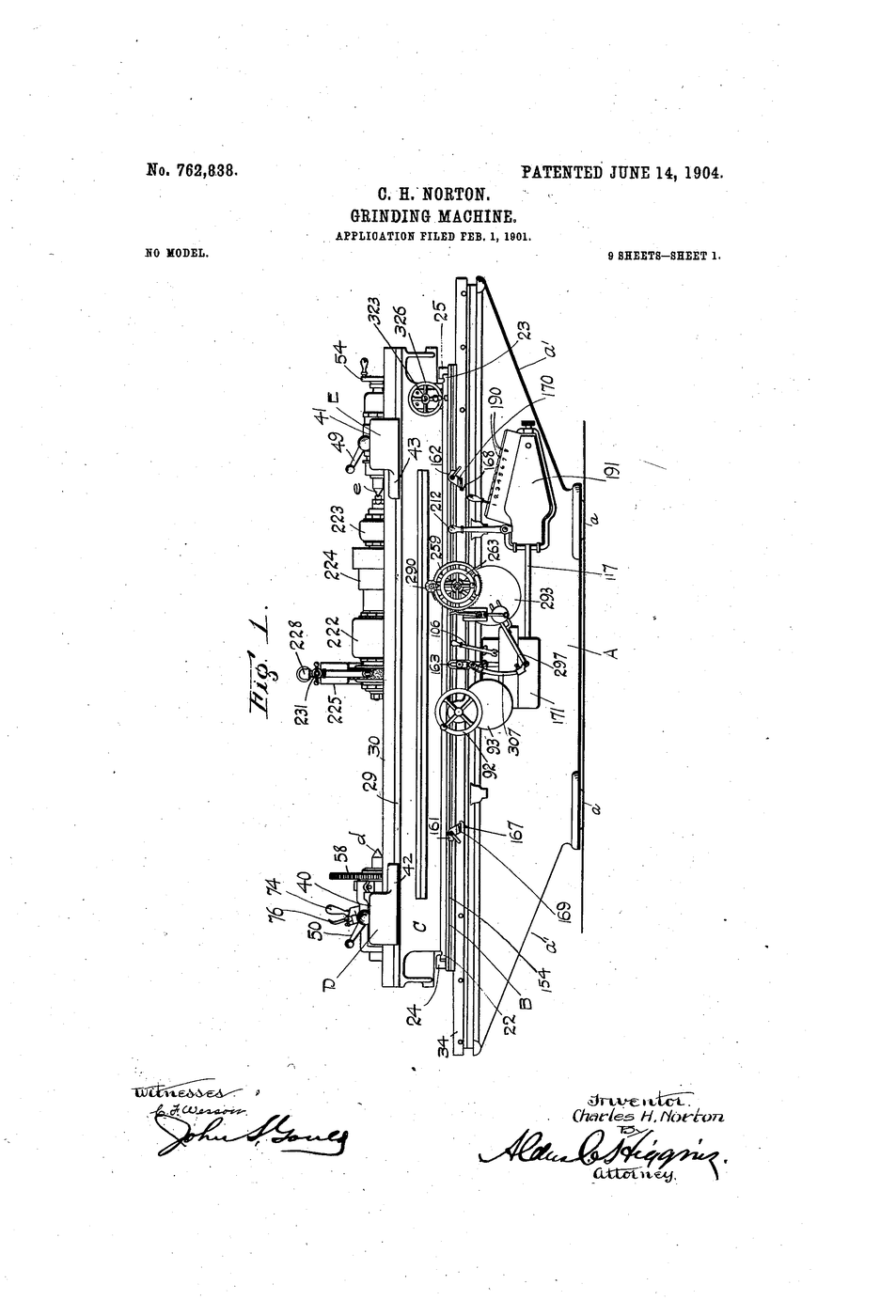
Paris, 1900. At the Exposition Universelle, Bethlehem's tools cut steel with the chip coming off dull red — a speed no visitor had seen. Machine-tool builders went home and redesigned their machines, because the existing ones flexed and chattered long before the new tools reached their limit. The tool material forced a generation of heavier, stiffer, more powerful machines; batch 35's Norton grinder and this batch's Bridgeport head are both downstream of that.
Red hardness, plainly. Ordinary hardened carbon steel holds its hardness only while it stays cool. High-speed steel keeps a working hardness at roughly 600 °C, so the heat generated by fast cutting no longer destroys the tool creating it. That single property is the entire invention.
And the other Taylor. The same F. W. Taylor is the author of The Principles of Scientific Management (1911). His metal-cutting work was empirical on an industrial scale — decades of tests, tens of thousands of trials — and it is inseparable from his management theories, which have been debated ever since. This blueprint takes no position on those; it reports what the tool does.
연결된 블루프린트 재료

관련 블루프린트
이 블루프린트들은 지식을 공유합니다 — 기술, 재료 또는 원리

CC0 퍼블릭 도메인
이 블루프린트는 CC0로 공개되었습니다. 어떤 목적으로든 자유롭게 복사, 수정, 배포 및 사용할 수 있습니다.
제품 구매를 통해 메이커를 지원하세요. 판매자가 설정한 메이커 커미션 을 받거나, 이 블루프린트의 새로운 반복을 만들어 연결로 포함시킬 수 있습니다.