
Тэмээний ноос самнах — Бактриан тэмээний ноолуурыг бэлтгэх
안내
Бактриан тэмээний ноосыг ойлгох
Бактриан тэмээний ноосыг ойлгох
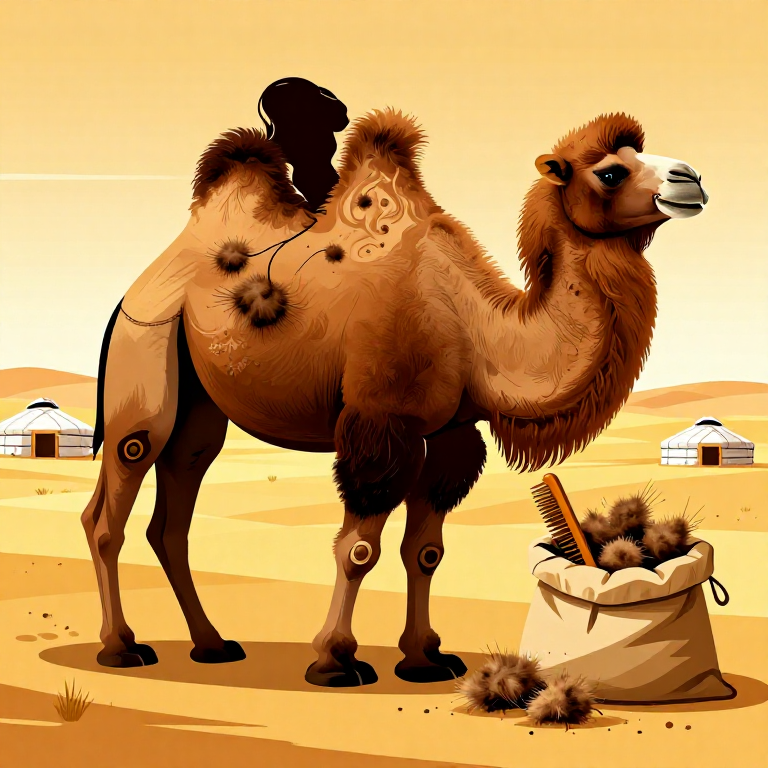
Монгол Бактриан тэмээ (Camelus bactrianus) нь хоёр бөхтэй тэмээний зүйл бөгөөд Төв Азийн хүйтэн уур амьсгалд дасан зохицсон. Тэмээний ноос нь хоёр давхаргатай: гадна талд бүдүүн хялгас (guard hair, диаметр нь 20-120 микрон, урт нь 15-40 см) ба дотор талд нарийн ноолуур (down fiber, диаметр нь 17-20 микрон, урт нь 3-12 см). Ноолуур нь хамгийн үнэ цэнэтэй хэсэг юм — энэ нь кашемиртай ижил нарийн, гэхдээ илүү урт, бат бөх. Нэг тэмээ жилд 3-5 кг түүхий ноос (ноолуур + хялгас) өгдөг бөгөөд үүнээс 1.5-3.5 кг нь цэвэр ноолуур байдаг. Монголын Говийн бүсэд ойролцоогоор 470,000 тэмээ байдаг.
Ноос гөлийх цагийг тодорхойлох
Ноос гөлийх цагийг тодорхойлох
Бактриан тэмээ жил бүрийн хавар (4-р сарын эхнээс 6-р сарын дунд үе хүртэл) өвлийн зузаан ноолуураа байгалийн аргаар гөлийдөг (molt). Гөлийх нь толгой, хүзүүнээс эхэлж, мөр, хажуу тал, нурууруу тархдаг. Тэмээний биед ноолуур бөөн бөөнөөр салж, салбайн унах нь самнах цаг болсныг илтгэнэ. Хэт эрт (3-р сар) самнавал тэмээ хаврын хүйтнээс хамгаалалтгүй болно. Хэт оройтвол (7-р сар) ноолуур газар унаж алдагдана. Өдрийн агаарын дулаан нь тогтмол +10°C-ээс дээш болоход самнаж эхлэх нь тохиромжтой.
Багаж хэрэгслийг бэлтгэх
Багаж хэрэгслийг бэлтгэх
Тэмээний ноос самнахад дараах багаж хэрэгсэл хэрэгтэй. Самнах сам нь том хэмжээтэй (15-20 см өргөн), ган шүдтэй, шүдний зай нь 2-3 мм, шүдний үзүүр нь дугуй байх ёстой — хурц үзүүр тэмээний арьсыг шархлуулна. Ноосыг өнгөөр нь (бор, цайвар шар, цагаан, саарал) тусад нь цуглуулахын тулд 4-5 даавуун уут бэлтгэнэ. Мөн хурц хайч нь салбайсан ноосны зангилааг таслахад хэрэгтэй.
이 단계의 재료:
 천 수집 주머니(색마다)5 개
필요한 도구:
 큰 강철 빗(둥근 이끝)
 가위
가위Тэмээг бэлтгэх
Тэмээг бэлтгэх
Самнахын өмнө тэмээг тайван, стрессгүй болгох нь чухал. Тэмээг хашаанд оруулж, 30-60 минут амруулна. Стресстэй тэмээ нуугаа цацаж (тэмээний өвөрмөц хамгаалах зан), самнах ажлыг хүндрүүлнэ. Тэмээний ноосноос том шороо, өвс, зэрлэг өвсний үр, хатсан аргалыг гараар ялгаж авна. Нойтон ноостой тэмээг самнахгүй — бороо орсон дараа 1 өдөр хүлээх хэрэгтэй.
필요한 도구:
 가축 우리
가축 우리Тэмээг зөв байрлуулах
Тэмээг зөв байрлуулах
Тэмээг суулгаж самнах нь хамгийн тохиромжтой. Монгол малчид тэмээг хэвтрийн байрлалд суулгаж, урд болон хойд хөлийг зөөлөн уяж, тайван байлгадаг. Тэмээ маш том амьтан (450-700 кг) тул хоёр хүн хамтран ажиллах нь аюулгүй. Нэг хүн тэмээний толгойн ойролцоо байж тайвшруулна, нөгөө нь самнана. Тэмээтэй зөөлөн ярих, тогтмол хөдөлгөөн хийх нь тэмээг тайвшруулдаг.
이 단계의 재료:
 부드러운 무명 밧줄2 미터
Биеийн бөөн ноосыг гараар цуглуулах
Биеийн бөөн ноосыг гараар цуглуулах
Самнахын өмнө тэмээний биеэс аль хэдийн салж салбайсан ноосны бөөнг (shed clumps) гараар татаж авна. Тэмээний хүзүү, мөр, хажуу тал, хэвлий, бөхний хооронд том бөөн ноос зангилаатай салбайж байдаг. Эдгээр бөөнг зөөлөн чиглэлд нь татахад хялбар салдаг. Хүчлэхгүй — хүчтэй татвал арьсыг өвтгөнө. Энэ аргаар тэмээний нийт ноосны 30-50%-ийг цуглуулж болно.
Ноолуурыг самнаж авах
Ноолуурыг самнаж авах
Самыг тэмээний ноосонд оруулж, арьсны ойролцоо (гэхдээ арьсанд хүрэхгүй) байрлуулна. Ноосны ургалтын чиглэлд (дээрээс доош) зөөлөн, тогтмол хурдаар татна. Сам ноолуурыг барьж авч, бүдүүн хялгасыг нэвтрүүлнэ. Нэг газрыг 3-5 удаа давтан самнана. Тэмээний арьс нь ямааных шиг нимгэн биш, харин зузаан тул арай илүү хүч хэрэглэж болно, гэхдээ огцом, хурдан хөдөлгөөнөөс зайлсхийнэ. Тэмээний биеийн зарим хэсэгт (хэвлий, хонгилцогны дотор тал) арьс нимгэн тул онцгой болгоомжтой самнана.
필요한 도구:
큰 강철 빗(둥근 이끝)Биеийн бүх хэсгийг дарааллаар самнах
Биеийн бүх хэсгийг дарааллаар самнах
Тэмээг дараах дарааллаар самнана: (1) Хүзүү — ноолуур хамгийн нарийн, хамгийн их хэмжээтэй хэсэг, (2) Мөр, (3) Хажуу тал, (4) Нуруу, (5) Хэвлий — зөөлөн самнана, арьс нимгэн, (6) Хөлний дээд хэсэг, (7) Бөхний хооронд. Толгой, хөлний доод хэсэг, сүүлийг самнахгүй — эдгээр хэсэгт ноолуур маш бага, харин бүдүүн хялгас давамгайлдаг. Нэг тэмээг бүрэн самнахад 2-3 цаг зарцуулагдана.
Ноосыг өнгөөр нь ангилах
Ноосыг өнгөөр нь ангилах
Тэмээний ноосыг самнасан даруй өнгөөр нь тусад нь уутанд хийнэ. Бактриан тэмээний ноосны байгалийн өнгө нь: хүрэн бор (хамгийн түгээмэл, ~70%), цайвар шар/элсний өнгө (~15%), цагаан (ховор, ~5%), бараан хүрэн (~10%). Цагаан ноолуур нь хамгийн үнэтэй — будагдахад хялбар, ямар ч өнгөөр будагдана. Бор ноолуур нь байгалийн өнгөөрөө хэрэглэгддэг. Өнгө холилдсон ноос нь үнэ буурна, тиймээс самнах явцад л өнгөөр нь салгах нь чухал.
이 단계의 재료:
천 수집 주머니(색마다)4 개Ноолуурыг бүдүүн хялгаснаас ялгах
Ноолуурыг бүдүүн хялгаснаас ялгах
Самнасан ноосонд ноолуур болон бүдүүн хялгас холилдсон байна. Урьдчилсан ялгалтыг гараар хийнэ: бүдүүн, шулуун, гялалзсан хялгас (guard hair, 20-120 микрон, 15-40 см урт) -ыг нэг нэгээр нь татаж ялгана. Нарийн ноолуур (down) нь зөөлөн, буржгар, 3-12 см урт, матовый (гялалзахгүй) байдаг. Бүрэн ялгалтыг дараа нь үйлдвэрийн dehairing машинаар хийнэ — энэ машин нь нарийн, бүдүүн ширхэгийг механик аргаар салгадаг. Гар ялгалтаар 60-70% бүдүүн хялгасыг салгаж болно.
필요한 도구:
 선별 작업대
Хог хаягдлыг цэвэрлэх
Хог хаягдлыг цэвэрлэх
Ялгасан ноолуурноос өвс, шавхай, элс, хатсан аргал, зангилаатай бөөн зэрэг хог хаягдлыг гараар ялгаж авна. Энэ ажлыг гэрэлтэй газар, цагаан даавуун дээр тавьж хийх нь дээр — жижиг хог хаягдал илүү сайн харагдана. Зангилаатай ноосны бөөнг (matted clumps) хайчаар хайчилж болно, гэхдээ сайн ноолуурыг хамт хайчлахгүй байхыг анхаарна. Говийн нөхцөлд тэмээний ноосонд нарийн элс их байдаг — энэ нь дараагийн угаах үе шатанд арилна.
필요한 도구:
선별 작업대가위Ноолуурыг угаах
Ноолуурыг угаах
Ноолуурыг 35-40°C-ийн бүлээн усанд 20-30 минут дэвтээнэ. pH 7-8 саван (жишээ нь кастиль саван) нэмж, зөөлөн дарж угаана — хүчтэй мушгих, бөөрөнхийлөх, эсвэл хөөс гаргаж угаахгүй, эс тэгвээс ноолуур нэхээс (felt) болно. 2-3 удаа цэвэр бүлээн усаар зайлна. Температурын огцом өөрчлөлтөөс зайлсхийнэ — халуун ус (50°C+), хүйтэн ус (10°C-) ноолуурыг нэхээс болгодог. Тэмээний ноосонд тослог (ланолин) бага тул ямааны ноосноос угаахад хялбар. Угаасны дараа ноолуур жингийнхээ 15-20%-ийг алддаг (шороо, тослог арилснаар).
이 단계의 재료:
 미지근한 물(35-40 °C)20 리터
 카스티야 비누(액체)1 개
필요한 도구:
 큰 세척 대야
Ноолуурыг хатаах
Ноолуурыг хатаах
Угаасан ноолуурыг зөөлөн шахаж (мушгихгүй) илүүдэл усыг авна. Цэвэр алчуур эсвэл торон дэвсгэр дээр нимгэн давхаргаар дэлгэж, сэрүүн, сүүдэр, агаар сайн нэвтрэх газар хатаана. Шууд нарны гэрэлд хатаахгүй — UV туяа ноолуурын чанарыг муутгаж, өнгийг бүдгэрүүлнэ. 1-2 хоногт бүрэн хатна (агаарын чийглэгээс хамаарна). 6-8 цаг тутамд ноолуурыг эргүүлж, жигд хатаана. Хатсан ноолуур зөөлөн, хөвөнгөлөг, хуурай байх ёстой.
필요한 도구:
 그물 건조 틀
 무명천
무명천Ноолуурыг жинлэж, баглаж хадгалах
Ноолуурыг жинлэж, баглаж хадгалах
Хатсан ноолуурыг жинлэнэ. Нэг Бактриан тэмээнээс 1.5-3.5 кг цэвэр ноолуур гарна (нас, үүлдэр, тэжээлээс хамаарна). Ноолуурыг өнгөөр нь тусад нь агаар нэвтрэх даавуун уутанд хийнэ — хуванцар уут чийг хуримтлуулж, хөгц үүсгэнэ. Уут бүрт жин, өнгө, огноо, тэмээний тоог бичсэн шошго наана. Хуурай (чийглэг 50-60%), сэрүүн (15-20°C), агаар сайн нэвтрэх газар хадгална. Хорхой, эрвээхэйнээс хамгаалахын тулд хуш модны бөмбөлөг хамт хадгална. Монгол тэмээний ноолуур дэлхийн зах зээлд килограмм нь 15-40 ам.доллараар үнэлэгддэг (чанар, нарийнаас хамаарна).
이 단계의 재료:
 통기성 면 보관 주머니4 개
 종이 라벨4 개
 삼나무 좀 방지 알4 개
필요한 도구:
 디지털 주방 저울
재료
9- 플레이스홀더
- 2 미터플레이스홀더
- 20 리터플레이스홀더
- 1 개플레이스홀더
- 4 개플레이스홀더
- 4 개플레이스홀더
- 4 개플레이스홀더
- 20 리터플레이스홀더
- 1 개플레이스홀더
이 블루프린트로 만드는 것
CC0 퍼블릭 도메인
이 블루프린트는 CC0로 공개되었습니다. 어떤 목적으로든 자유롭게 복사, 수정, 배포 및 사용할 수 있습니다.
제품 구매를 통해 메이커를 지원하세요. 판매자가 설정한 메이커 커미션 을 받거나, 이 블루프린트의 새로운 반복을 만들어 연결로 포함시킬 수 있습니다.