협업
예술
뷰티 및 웰니스
공예
문화 및 역사
엔터테인먼트
환경
음식 및 음료
역공학
과학
스포츠
기술
웨어러블
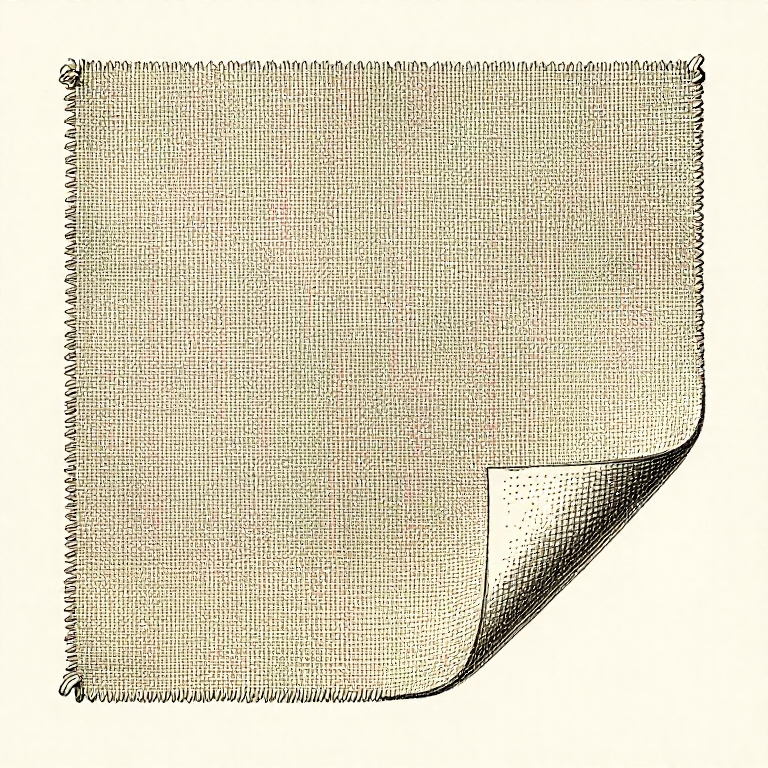


The Grain of Cloth: Three Directions, Three Different Materials
Woven cloth is made of threads at right angles, and it behaves completely differently depending on which way you pull it. Along the WARP it barely stretches. Across the WEFT it gives a little. At 45 degrees — the BIAS — it stretches a great deal and drapes like something else entirely.
That is why every pattern piece carries a grainline arrow, and why ignoring it produces a garment that twists on the body, hangs crooked, and cannot be fixed by altering it.
It is also a tool. A bias-cut strip stretches round a curve where a straight strip buckles, which is the entire reason bias binding exists, and a bias-cut skirt hangs in a way a straight-cut one never will.
초급
2 hours
안내
1
1
Find the grain: the selvedge is the reference
Find the grain: the selvedge is the reference
The SELVEDGE is the finished edge running down both sides of the cloth as it comes off the loom, and it runs parallel to the warp. That makes it the reference for everything else — the face side and face edge of a piece of cloth.
The WARP (or lengthwise grain) runs parallel to the selvedge. The WEFT (or crosswise grain) runs from selvedge to selvedge. The BIAS is any diagonal, and TRUE bias is exactly 45 degrees to both.
Test it by pulling. Tug along the selvedge and the cloth hardly moves; tug selvedge to selvedge and it gives a little; tug diagonally and it stretches noticeably and narrows as it does. Ten seconds with any scrap teaches this better than any diagram.
이 단계의 재료:
 무명천1 개
 리넨 원단1 개
필요한 도구:
 자
 재단용 초크
2
2
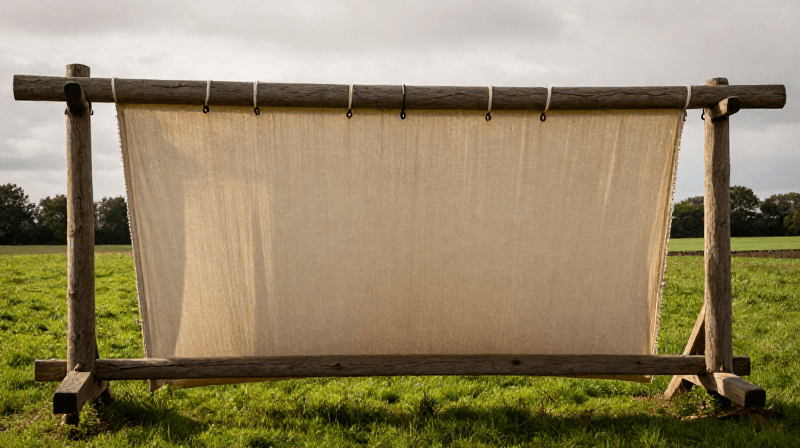
Straighten the grain before cutting anything
Straighten the grain before cutting anything
Cloth is often stored and sold off-grain — pulled skew on the bolt, so the weft is not at right angles to the selvedge. Cut a piece from it and the piece is born crooked.
Find the true crosswise line by snipping the selvedge and TEARING across, or by pulling one weft thread out and cutting along the gap it leaves. Either gives a line that follows the weave rather than the edge of the bolt.
If the two ends are not square to the selvedges, pull the cloth firmly on the bias in the opposite direction, or press it back square with steam. That is the same operation as tentering woollen cloth on a frame, done at a small scale.
이 단계의 재료:
무명천1 개필요한 도구:
 가위
 스팀다리미
 다리미판(받침대형)자
3
3
The grainline arrow is an instruction, not a hint
The grainline arrow is an instruction, not a hint
Every pattern piece has an arrow. Lay the piece so that arrow is exactly parallel to the selvedge — measure from the arrow to the selvedge at both ends of the arrow and make the two measurements equal.
Both ends is the whole technique. Eyeballing it gets you within a few degrees, and a few degrees on a trouser leg is a leg that spirals round the body over a day's wear.
Pieces cut on the FOLD have the fold line marked instead, and that line must also lie on grain. A fold that is not on grain produces a piece that is not symmetrical, which is worse than merely being off-grain.
이 단계의 재료:
 종이1 개무명천1 개
필요한 도구:
 줄자
 시침핀재단용 초크자
4
4
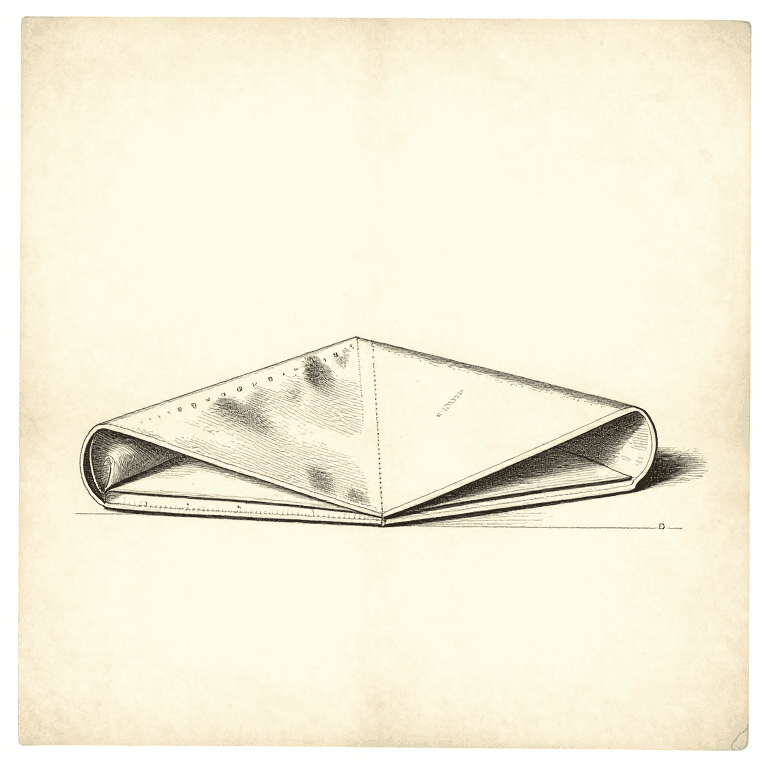
Using the bias on purpose
Using the bias on purpose
Cut a strip at 45 degrees and it will stretch round an outside curve and ease round an inside one without a single pleat. That is why a neckline is bound with bias strips, and why a straight strip put there ripples however carefully it is sewn.
Bias also drapes. A bias-cut skirt falls in soft folds and follows the body because the cloth can extend where it needs to, which no amount of shaping on the straight grain reproduces.
The cost is that bias grows. A bias-cut garment hangs and lengthens for a day or two before it settles, so it is left hanging before the hem is marked — and a hem marked immediately after cutting will be uneven by the time it is worn.
이 단계의 재료:
무명천1 개 무명실1 개
필요한 도구:
가위자시침핀관련 블루프린트
이 블루프린트들은 지식을 공유합니다 — 기술, 재료 또는 원리
CC0 퍼블릭 도메인
이 블루프린트는 CC0로 공개되었습니다. 어떤 목적으로든 자유롭게 복사, 수정, 배포 및 사용할 수 있습니다.
제품 구매를 통해 메이커를 지원하세요. 판매자가 설정한 메이커 커미션 을 받거나, 이 블루프린트의 새로운 반복을 만들어 연결로 포함시킬 수 있습니다.