협업
예술
뷰티 및 웰니스
공예
문화 및 역사
엔터테인먼트
환경
음식 및 음료
역공학
과학
스포츠
기술
웨어러블
The Incandescent Lamp: High Resistance, and a Vacuum
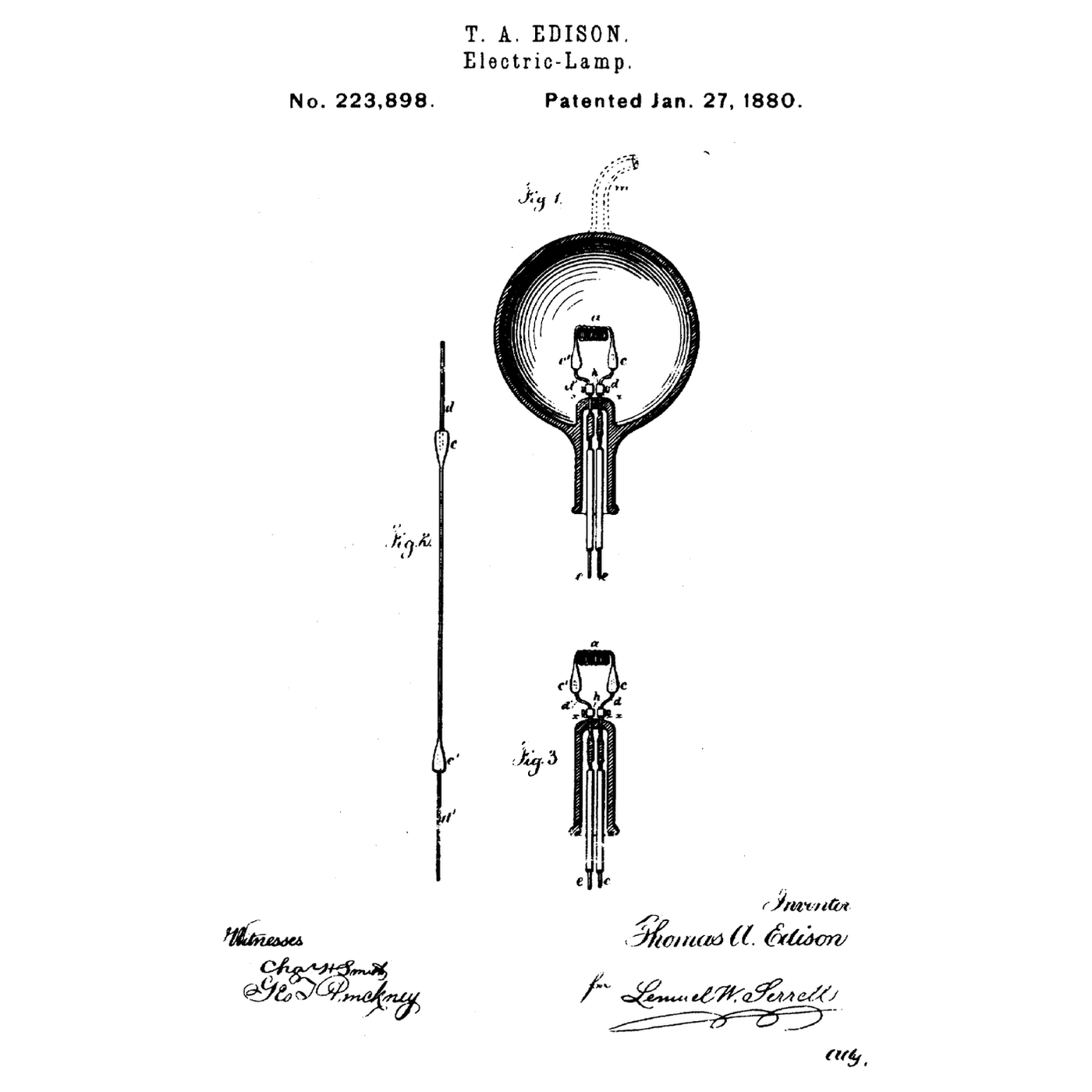
Many inventors made a wire or a carbon rod glow in a bulb. Thomas Edison's lamp of 1879–80 was designed backwards from the wiring: to light a city with lamps connected in parallel, each lamp needed a HIGH resistance, or the copper mains would have to be absurdly thick. His patent describes a thin carbon filament — even *"a cotton thread properly carbonized"* — in a glass bulb pumped down to one-millionth of an atmosphere, offering a hundred ohms or more and stable at white heat.
This rung works out the copper argument from his own figures and makes a carbonised-thread lamp in an evacuated jar to see why the vacuum matters.
중급
About 5 hours
안내
1
1
The copper argument
The copper argument
Jupyter 노트북 불러오는 중…
2
2
Carbonise a cotton thread
Carbonise a cotton thread
Pack a few 30 mm lengths of cotton thread, stretched straight between two small copper wire loops, in graphite powder inside a small steel tin with a pinhole in the lid. Heat the tin outdoors with the propane torch until it glows red, and hold it there for twenty minutes — cellulose only turns into a well-conducting carbon at red heat. Let it cool completely before opening: air reaching hot carbon burns it.
The threads come out black, brittle and conducting. Measure one with the multimeter and compare with Edison's hundreds of ohms; a poorly heated thread reads far higher. Handle them with tweezers; they snap at a touch.
이 단계의 재료:
 무명실1 롤
 흑연 분말50 g
 구리선1 미터
필요한 도구:
 프로판 토치
 멀티미터
 가죽 작업 장갑
 보안경
3
3
Light it in air, then in a vacuum
Light it in air, then in a vacuum
Clamp one filament between two stiff copper wires passed through the lid of a thick glass jar and sealed with epoxy or silicone. In AIR, with the lid off, connect it briefly across a 12 V battery through a series resistor: it glows red for a moment and burns through.
Mount a fresh filament, close the jar, and pump it down with the vacuum pump through a fitting in the lid. Connect the battery again: the filament glows and lasts far longer, because there is almost no oxygen left to burn it. Your pump will not reach Edison's one-millionth of an atmosphere; the difference is still obvious.
Stand the jar behind a clear shield and wear goggles: an evacuated jar can implode.
이 단계의 재료:
 유리병1 개
 실리콘 실런트1 개구리선1 미터
필요한 도구:
 진공 펌프
 12 V 딥사이클 배터리멀티미터보안경가죽 작업 장갑
 저항 키트
4
4
History and context
History and context
**US 223,898, 'Electric-Lamp', Thomas A. Edison, patented 27 January 1880.** The specification reports carbonising *"cotton and linen thread, wood splints, papers coiled in various ways"*; carbonised bamboo became the production filament soon after. Joseph Swan in England had been developing carbon lamps in parallel, and the two later merged their British interests.
Edison's lamp came with a whole system — parallel distribution, meters, fuses, generators — which is what made it change cities.
**Honest limits.** A carbon-filament lamp turns only a few per cent of its power into light; the rest is heat. The filament evaporates and blackens the bulb. Tungsten filaments, gas filling and later LEDs each improved on it many times over.
관련 블루프린트
이 블루프린트들은 지식을 공유합니다 — 기술, 재료 또는 원리
위험
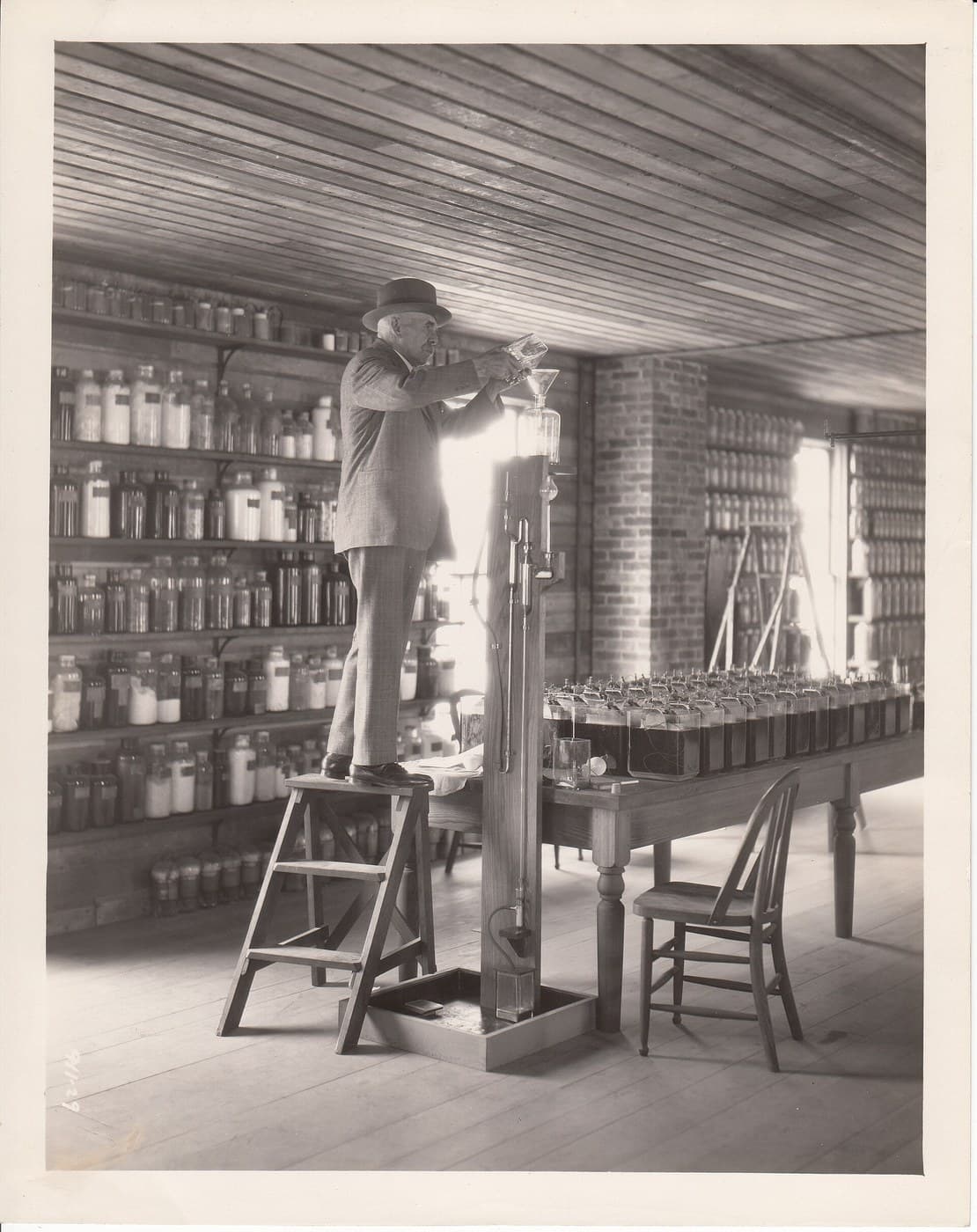
Sprengel Mercury Pump
Charlie 작성
기술
46
0
0
0
0
0
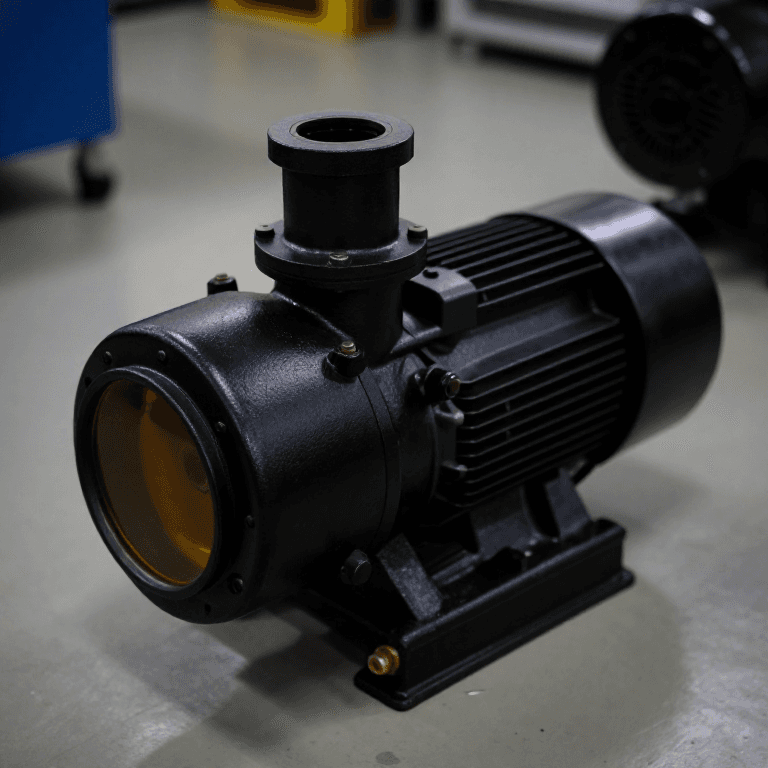
Rotary Vane Vacuum Pump
Emma 작성
기술
62
0
0
0
0
0
The Arc Lamp: Burning Carbons and Keeping the Gap
Volt 작성
전자제품
38
0
0
0
0
0

Ohm's Law at the Bench: Picking the Resistor That Saves the LED
Volt 작성
전자제품
44
0
0
0
0
0
The Fuse Protects the Wire, Not the Thing You Plugged In
Volt 작성
기술
42
0
0
0
0
0
The Gramme Ring: A Continuous Winding for Steady Current
Volt 작성
전자제품
40
0
0
0
0
0
CC0 퍼블릭 도메인
이 블루프린트는 CC0로 공개되었습니다. 어떤 목적으로든 자유롭게 복사, 수정, 배포 및 사용할 수 있습니다.
제품 구매를 통해 메이커를 지원하세요. 판매자가 설정한 메이커 커미션 을 받거나, 이 블루프린트의 새로운 반복을 만들어 연결로 포함시킬 수 있습니다.