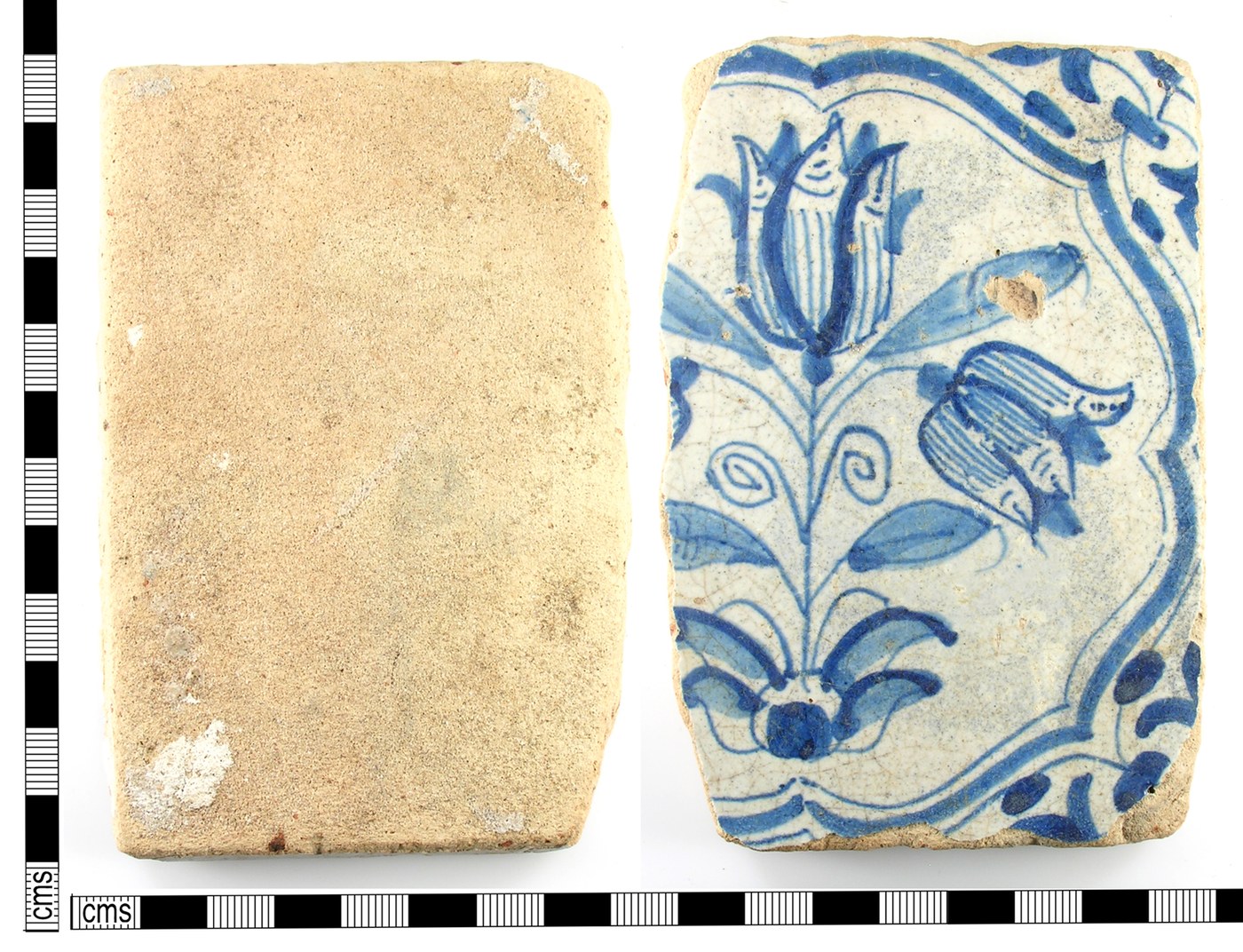


Tin Oxide Opaque White Glass
Most glass colourants dissolve. Add cobalt and the glass goes blue but stays transparent, because the cobalt ions sit in the melt as part of it. Tin oxide does the opposite: it barely dissolves at all. It stays as countless tiny crystals suspended through the glass, and every one of them scatters light.
That is what opacity is — not a colour, a suspension. Enough particles with a refractive index different from the surrounding glass and light cannot pass in a straight line. The glass turns dense, milky white, and you can no longer see through it.
This is the chemistry that gave the Islamic world its white-glazed pottery and later gave Europe maiolica and delftware: a white surface you can paint on, made without any white pigment being visible at all.
안내
Wear a mask for every powder step
Wear a mask for every powder step
Tin oxide and the silica in any glass batch are respiratory hazards as airborne dust — silica particularly, because fine crystalline silica dust causes permanent lung damage. Weigh and mix with a mask on, in still air, and wipe surfaces down wet rather than brushing them.
필요한 도구:
 N95 방진 마스크
Start from a clear base glass
Start from a clear base glass
Use a known clear glass — a frit, or crushed clear cullet — as the base. Testing an opacifier against an unknown glass tells you nothing, because the result depends on both.
이 단계의 재료:
 유리 파쇄물500 g
Weigh a series, not a single mix
Weigh a series, not a single mix
Weigh out five 50 g batches and add tin oxide at 2, 4, 6, 8 and 10 % by weight. Opacity is a curve, not a threshold, and one sample cannot show you where it turns.
이 단계의 재료:
 산화주석(이산화주석)15 g
필요한 도구:
 디지털 저울
Grind each batch fine and mix it dry
Grind each batch fine and mix it dry
Grind and mix each batch thoroughly in a mortar. Particle size is the mechanism here — coarse tin oxide gives streaks and specks rather than an even milkiness.
필요한 도구:
 막자사발과 막자
Label the crucibles before firing
Label the crucibles before firing
Put each batch in its own small crucible or test tile and mark the percentage on it in a way that survives the kiln. Five unmarked white samples are five useless samples.
Fire the series together
Fire the series together
Fire all five in one kiln load to the same temperature and hold. One variable at a time — if the firings differ, the comparison is meaningless.
Keep the temperature moderate
Keep the temperature moderate
Do not overfire. Tin oxide works because it stays undissolved, and pushing the melt too hot dissolves more of it into the glass — the sample goes clearer, not whiter. Opacity lost to overfiring cannot be recovered by adding more tin.
Cool slowly and anneal
Cool slowly and anneal
Cool the samples slowly through the annealing range. Thick glass cooled fast cracks, and a cracked sample cannot be judged for opacity.
Rank the samples against a light
Rank the samples against a light
Hold each sample over a lamp and rank them. Note where the glass stops transmitting a visible outline — that is your working opacity, and it usually arrives well before 10 %.
Compare equal thicknesses only
Compare equal thicknesses only
Grind the samples to the same thickness before judging. A thick sample of a weak mix looks as opaque as a thin sample of a strong one — thickness is a second variable and it will fool you.
필요한 도구:
 사포
사포Look at a fracture under magnification
Look at a fracture under magnification
Break one sample and look at the fresh edge under a lens. The tin oxide is visible as a dispersion of fine particles through the glass, not a layer. That is the whole mechanism in one look.
필요한 도구:
 돋보기
돋보기Apply the best mix as a glaze
Apply the best mix as a glaze
Take the lowest percentage that gave full opacity, grind it to a slip and glaze a fired clay tile with it. A white, paintable surface over a dull brown body is the whole point of the technology.
Paint on the raw glaze
Paint on the raw glaze
Paint a design with a metal oxide directly onto the unfired white glaze and fire again. The colour sinks in and fuses with it — the in-glaze painting that maiolica and delftware are built on.
이 단계의 재료:
 산화코발트5 g
History & Context
History & Context
Suspension, not solution. Colourants like cobalt and copper dissolve into glass as ions and leave it transparent. Tin oxide is nearly insoluble in a silicate melt at working temperatures, so it stays as fine crystals with a refractive index well above the surrounding glass. Light hitting those countless boundaries scatters instead of passing through. The same principle makes milk white and clouds white — dispersed particles, not pigment.
The dating has been revised. The standard account gave tin-opacified white glazes to ninth-century Abbasid Iraq. More recent analytical work pushes tin-based opacifiers earlier and further west: lead stannate producing opaque yellow glazes in Egypt and Syria in the eighth century, with the so-called Coptic Glazed Wares and Yellow Glaze Family now placed in the late seventh to eighth century, before tin oxide is used for opaque white in Iraq in the ninth. The technology appears to have transferred from glassmakers, who continued Byzantine practice, to potters. Worth stating plainly: the confident "invented in ninth-century Iraq" line is out of date.
What it was actually for. Local clays fire to buff, brown or red. A tin-opacified glaze lays a dense white ground over that body, giving a surface that can be painted like paper. Every subsequent white-ground painted ceramic tradition in the Mediterranean and Europe — Hispano-Moresque, Italian maiolica, Dutch delftware, English delft — runs on this one trick.
Why tin and not something cheaper. Tin is expensive, and potters have looked for substitutes for a thousand years. Zirconium opacifiers do the job industrially today at a fraction of the cost. Tin still gets used in studio and restoration work because the white it gives is softer and warmer, and it takes in-glaze colour differently — a case where the cheaper replacement is not quite the same material.
이 블루프린트로 만드는 것

CC0 퍼블릭 도메인
이 블루프린트는 CC0로 공개되었습니다. 어떤 목적으로든 자유롭게 복사, 수정, 배포 및 사용할 수 있습니다.
제품 구매를 통해 메이커를 지원하세요. 판매자가 설정한 메이커 커미션 을 받거나, 이 블루프린트의 새로운 반복을 만들어 연결로 포함시킬 수 있습니다.