예술
뷰티 및 웰니스
공예
문화 및 역사
엔터테인먼트
환경
음식 및 음료
역공학
과학
스포츠
기술
웨어러블
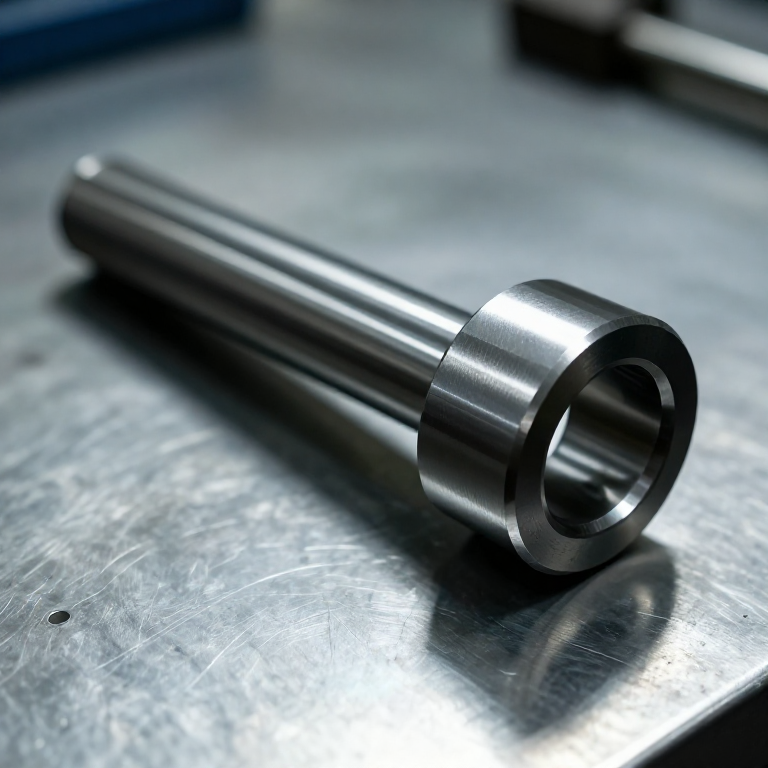


Tolerance and Fit: Clearance, Transition and Interference
A drawing that says 25 mm is asking for something impossible, and everyone knows it. What it means is 25 mm within some allowance — and the size of that allowance decides the cost of the part, so it is an engineering decision rather than a formality.
What it decides beyond cost is how the parts BEHAVE together. A shaft slightly smaller than its hole spins; slightly larger, it has to be pressed in and will never come out. The gap between those two cases is a few tens of micrometres, and inside it sits every bearing, every dowel, every keyed hub and every press-fitted bush ever made.
This rung is where the measurements of the previous ones acquire a purpose: you now know how to find the size, and this is how to know what size to want.
고급
4 hours
안내
1
1
Write limits, not a size and a hope
Write limits, not a size and a hope
Every dimension that matters gets two numbers: the largest and the smallest the feature may be. 25.000/25.021 for a hole is a complete specification. '25 mm' is not a specification at all.
The difference between them is the TOLERANCE, and it is what you are really buying. Halving a tolerance does not halve the cost of a part, it roughly doubles it: tighter tolerances mean slower cuts, more passes, better machines, temperature control and more rejects.
So the first question on any dimension is not 'how accurate can we be' but 'how loose can we get away with'. Tolerance is a budget being spent, and the dimensions that do not touch anything should be spending nothing.
필요한 도구:
 계산기
계산기2
2
Hole basis: fix the hole, vary the shaft
Hole basis: fix the hole, vary the shaft
By convention the hole is held at one size and the shaft is changed to produce the fit you want. In the ISO system that is the H hole — H7 being the common one — whose lower limit is exactly nominal.
The reason is practical. A hole is made by a tool of fixed size: a reamer or a drill produces the size it produces, and you own a set of them. A shaft is turned to whatever diameter you like by moving the cross-slide. So it is far cheaper to keep one reamer and turn the shaft three different ways than to buy three reamers.
Shaft basis exists and is used where the shaft is bought in as a fixed size — ground bar stock, or a drawn shaft carrying several different components along its length.
3
3
The three fits, in numbers
The three fits, in numbers
Jupyter 노트북 불러오는 중…
필요한 도구:
계산기4
4
Stack the tolerances before you trust the assembly
Stack the tolerances before you trust the assembly
Jupyter 노트북 불러오는 중…
필요한 도구:
계산기5
5
Make one of each and feel the difference
Make one of each and feel the difference
Turn three short shafts to sit in the same reamed hole: one a few hundredths under, one within a hundredth, one a few hundredths over. Measure each with the micrometer and the bore with the telescoping gauge, and write the numbers down before you try them.
Then try them. The clearance one falls through. The transition one goes with thumb pressure and holds its position. The interference one will not start without a press or a temperature difference.
Nothing on paper substitutes for that. Twenty micrometres is invisible and unimaginable until it is the difference between a part falling out of your hand and a part you cannot move, and after that the numbers on a drawing stop being abstract.
이 단계의 재료:
 강 봉재3 개
필요한 도구:
 마이크로미터
 텔레스코핑 게이지 세트
관련 블루프린트
이 블루프린트들은 지식을 공유합니다 — 기술, 재료 또는 원리


CC0 퍼블릭 도메인
이 블루프린트는 CC0로 공개되었습니다. 어떤 목적으로든 자유롭게 복사, 수정, 배포 및 사용할 수 있습니다.
제품 구매를 통해 메이커를 지원하세요. 판매자가 설정한 메이커 커미션 을 받거나, 이 블루프린트의 새로운 반복을 만들어 연결로 포함시킬 수 있습니다.