예술
뷰티 및 웰니스
공예
문화 및 역사
엔터테인먼트
환경
음식 및 음료
역공학
과학
스포츠
기술
웨어러블
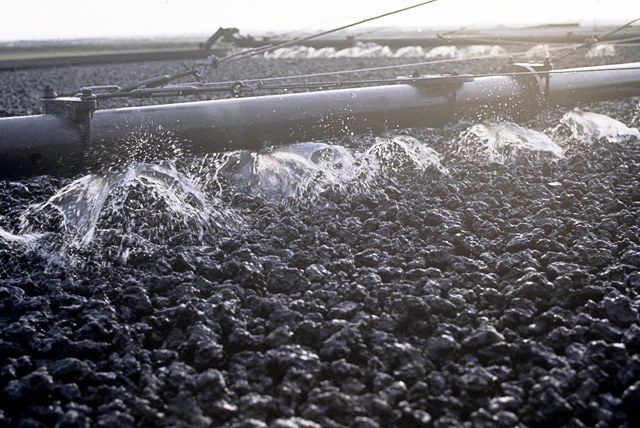


The Trickling Filter
The name is wrong and the wrongness matters. A trickling filter filters nothing. Water runs down over a bed of stones and comes out cleaner, but the stones are not straining anything out — they are furniture. What cleans the water is a film of bacteria, protozoa and fungi growing on every stone surface, and the whole design exists to keep that film fed with sewage and fed with air at the same time.
That is the problem the device solves. A settling tank removes what sinks. It cannot touch dissolved organic matter, and dissolved organic matter is most of what makes sewage sewage. To remove that you need organisms to eat it, and organisms that work fast need oxygen. Sewage has almost none. So you must bring the water and the air together across a very large surface, continuously, without pumping air at all.
The answer arrived at Salford in 1893: dose the sewage in intermittent doses over a deep bed of broken stone and let air move through the bed on its own. It works because a bed of 50 mm stone is roughly half void space, and because the temperature difference between the sewage and the outside air drives a natural draught through those voids — upward in winter, downward in summer, reversing twice a year with no moving parts.
The predecessor was the contact bed: fill a stone tank with sewage, leave it, drain it, rest it, repeat. It worked, slowly, and each bed spent most of its day doing nothing. The trickling filter's real advance was continuity — the same stones working all day because the water only ever wets them rather than drowning them.
You will build a bench-scale bed, ripen it, watch the film appear, measure what it removes, and measure the draught that feeds it. Ripening takes weeks; there is no way to hurry it, and the waiting is part of the lesson.
중급
8 hours to build, 4 to 6 weeks to ripen
안내
1
1
Build the bed, and build the underdrain as an air inlet
Build the bed, and build the underdrain as an air inlet
Take a 200 litre food-grade barrel and cut the top out. The bed depth you want is at least a metre; deeper is better for treatment and worse for draught, and 1.8 m is the classic figure for a rock filter.
The media is the part people get wrong. Use washed stone of a narrow size range, 40 to 60 mm. Two properties fight each other here and you are choosing a point between them. Small stone gives more surface area per cubic metre, which is where the biofilm lives, so it treats more. Small stone also gives smaller voids, and the voids are what the air moves through and what the sloughed film has to fall out through. Go too fine and the bed ponds: the surface seals with film, water sits on top, air stops moving, and the whole thing goes anaerobic and smells. A 50 mm stone gives roughly 45 to 55 percent void space and around 40 to 60 square metres of surface per cubic metre. Graded 25 mm stone would roughly double the surface and roughly halve the tolerance for error.
Wash the stone until the water runs clear. Fines are what block a bed, and they arrive with the delivery, not with the sewage.
Now the underdrain, which is the actual air inlet and is why this step is not just 'put stones in a barrel'. Build a false floor: a grid of 32 mm PVC pipe drilled with 8 mm holes on its underside, sitting on 100 mm spacer blocks so there is a continuous open plenum beneath the media. Bring at least two 50 mm vent pipes from that plenum out through the barrel wall and turn them up, open to atmosphere. These are not overflow pipes. They are how air gets in, and a filter whose underdrain is flooded or sealed cannot breathe and will not work no matter how well the top is dosed.
Lay 150 mm of 75 mm stone directly on the false floor to carry the load, then fill with the 40 to 60 mm media. Leave 200 mm of freeboard above the media.
이 단계의 재료:
 식품용 드럼통1 개
 자갈120 kilogram
 굵은 자갈25 kilogram
 투명 PVC 파이프3 metre
 PVC 배관 부속 모음1 세트
 PVC 용제 접착제1 개
필요한 도구:
 쇠톱(핵소)
 무선 드릴
무선 드릴 드릴 비트 세트
 20리터 양동이
 Digital Calipers - 152.4 mm
2
2
Dose it in pulses, not in a stream, and wait for the film
Dose it in pulses, not in a stream, and wait for the film
The feed must arrive as a flush and then stop. Continuous dribble finds one channel through the stone and polishes it forever while the rest of the bed stays dry; a pulse floods the whole surface, spreads sideways, and then drains so air can follow the water down. Intermittent dosing is not a convenience, it is the mechanism.
The 1893 installations used fixed spray nozzles and, shortly after, tipping troughs and dosing siphons that filled slowly and emptied all at once. Rotary distributors — the four-arm sprinkler most people picture — came later and do the same job continuously by moving the pulse around the bed instead of turning it on and off.
The bench version: feed from a small submersible pump on a repeat-cycle timer, two minutes on and eight minutes off, through a length of 32 mm pipe drilled with 2 mm holes and capped, laid across the media. Aim for a hydraulic loading in the region of 1 to 4 cubic metres per square metre of bed surface per day. On a 560 mm diameter barrel that is about 0.25 square metres, so 250 to 1000 litres per day, which is 10 to 40 litres an hour. Start at the bottom of that range.
Feed a defined synthetic wastewater, not real sewage. Per 10 litres of tap water: 1.5 g glucose, 1.5 g peptone, 0.5 g ammonium chloride, 0.2 g potassium dihydrogen phosphate, 0.5 g sodium bicarbonate for alkalinity. That gives roughly 250 to 300 mg/l of biochemical oxygen demand, which is ordinary domestic strength, and it is safe to handle. Seed the bed once with a litre of settled effluent or ditch water to introduce the organisms; after that it colonises itself.
Now wait. For the first week nothing visible happens. Somewhere in the second or third week the stones near the top go slippery and take on a brown-grey cast, and the outlet turns from cloudy to clear. That is the film. In cold weather it can take six weeks. You cannot dose your way past this and a bed that is starved or dried during ripening starts over.
이 단계의 재료:
 포도당(덱스트로스)200 gram
 펩톤(세균학용)200 gram
 염화암모늄(NH₄Cl)100 gram
 탄산수소나트륨100 gram
 수중 펌프1 개투명 PVC 파이프1 metre
 반복 주기 타이머(상용 전원)1 개
필요한 도구:
 정밀 디지털 저울
 양동이
양동이 탁도계
탁도계 스톱워치
스톱워치3
3
The draught that feeds it, and the day each year it stops
The draught that feeds it, and the day each year it stops
Jupyter 노트북 불러오는 중…
필요한 도구:
 데스크톱 컴퓨터
 실험용 온도계
 실외 온도계
4
4
Sloughing, and the recirculation that keeps it under control
Sloughing, and the recirculation that keeps it under control
The film grows. It has to — that is the process — and growth is the problem, because a film thicker than about two millimetres cannot get oxygen to its base. The inner layer goes anaerobic, loses its grip on the stone, and the whole patch lets go and washes out. This is sloughing, and it is normal and necessary. What you do not want is all of the bed sloughing at once, which shows up as a sudden slug of solids in the effluent and a filter that treats badly for days afterwards while it regrows.
Measure it. Take a settled sample of the effluent daily and read its turbidity, and once a week measure suspended solids properly by filtering a known volume through a dried, pre-weighed glass-fibre filter and drying it at 105 degrees Celsius to constant mass. A ripened bed running well gives a low, boring baseline with small peaks. A bed about to pond gives a rising baseline.
The control you have is recirculation: return some of the settled effluent to the head of the filter and mix it with the incoming feed. Three things happen at once. The total flow over the bed rises, and higher flow scours the film continuously so it sheds in small amounts rather than in sheets. The incoming feed is diluted, so the top of the bed sees a lower organic strength and grows a thinner film. And the bed never goes dry between doses at low flow.
Recirculation ratios of 0.5:1 to 3:1 against the raw flow are ordinary. The cost is real: you are pumping the same water repeatedly, and the hydraulic loading rises while the organic loading does not, so the tank downstream sees more flow. Run yours at 1:1 for a fortnight and then at 2:1, and compare effluent solids and how often you have to rake the surface. That comparison is the whole engineering judgement of the device.
One more failure to know by name: ponding. Water standing on the surface means the top voids are blocked, by film or by fines. It is fixed by raking or by resting the bed, and prevented by washing the stone properly at the start and not overloading the top.
이 단계의 재료:
 증류수2 리터
 유리섬유 여과지50 개
필요한 도구:
탁도계정밀 디지털 저울 눈금 실린더
 뷰흐너 깔때기(자기)양동이
5
5
Where it sits in the train, and how it fails
Where it sits in the train, and how it fails
A trickling filter is never the whole works. It is the middle of a train, and it depends absolutely on what is in front of it and behind it.
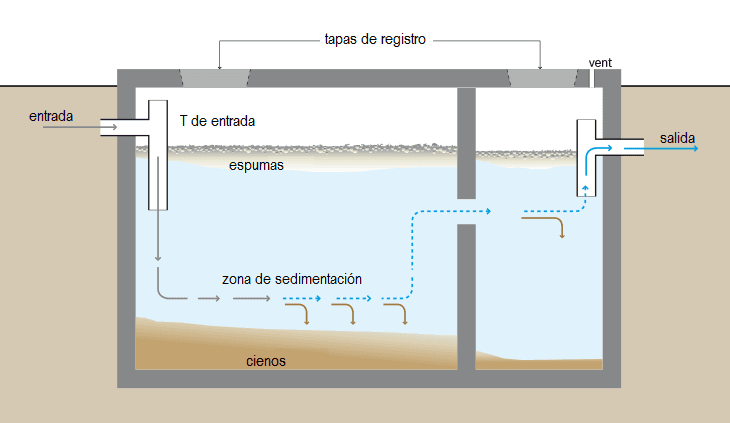
In front: primary settlement. Feed a filter unsettled sewage and the rags and grit go straight into the voids and stay there. The bed has no way to clean itself of anything that does not slough.
Behind: a humus tank, which is simply another settling tank. The filter converts dissolved organic matter into suspended film, and then sheds that film. If you do not settle it out, the effluent is worse in suspended solids than what went in — a filter without a humus tank measurably fails at the one job it appears to do.
The diagram shows the train and the five ways the bed goes wrong. Read the failure paths as conditions of use rather than defects: each one marks a boundary of where this approach applies, which is exactly what tells you when to reach for a different one.
Flow
Loading...
재료
14- 1 개플레이스홀더
- 120 kilogram플레이스홀더
- 25 kilogram플레이스홀더
- 4 metre플레이스홀더
- 1 세트플레이스홀더
- 1 개플레이스홀더
- 200 gram플레이스홀더
- 200 gram플레이스홀더
- 100 gram플레이스홀더
- 100 gram플레이스홀더
- 1 개플레이스홀더
- 플레이스홀더
- 2 리터플레이스홀더
- 50 개플레이스홀더
관련 블루프린트
이 블루프린트들은 지식을 공유합니다 — 기술, 재료 또는 원리
CC0 퍼블릭 도메인
이 블루프린트는 CC0로 공개되었습니다. 어떤 목적으로든 자유롭게 복사, 수정, 배포 및 사용할 수 있습니다.
제품 구매를 통해 메이커를 지원하세요. 판매자가 설정한 메이커 커미션 을 받거나, 이 블루프린트의 새로운 반복을 만들어 연결로 포함시킬 수 있습니다.