예술
뷰티 및 웰니스
공예
문화 및 역사
엔터테인먼트
환경
음식 및 음료
역공학
과학
스포츠
기술
웨어러블

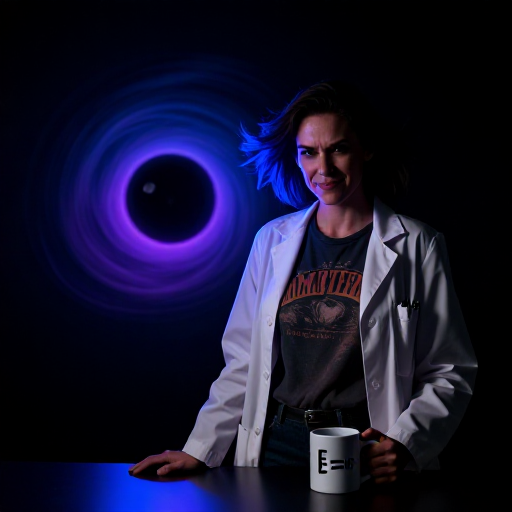

Ultraviolet Water Disinfection
Chlorine leaves a residual, which is its great virtue and also its cost: it has to react with the water, it changes the taste, and with certain organics it forms by-products nobody wants to drink.
Ultraviolet light does the same job with no chemistry at all. Light at about 254 nanometres is absorbed by DNA, welding adjacent thymine bases into dimers that the cell can no longer read — the organism is still there, still intact, and can no longer reproduce. Marseille put the first municipal UV plant into service in 1910. You will build a flow cell around a germicidal lamp, work out the dose it delivers, and find out why the thing that defeats it is not the microbe but the water.
⚠ Germicidal UV burns eyes and skin within seconds and you will not feel it happening until hours later. The lamp must never be run where its light can reach you.
중급
4 hours
안내
1
1
Respect the lamp before you wire it
Respect the lamp before you wire it
A low-pressure mercury germicidal lamp emits at 254 nm, right in the band DNA absorbs — which is exactly why it is also the band that damages your cornea and skin. The injury, photokeratitis, feels like sand in the eye and arrives six to twelve hours after the exposure that caused it.
Rules, not suggestions: the lamp runs only inside a closed, opaque housing; you switch it on only when it is enclosed; ordinary glasses do not protect you, and ordinary window glass, usefully, blocks 254 nm almost completely. Check any lamp you buy is a germicidal type and not a 'blacklight' at 365 nm, which does nothing to microbes.
필요한 도구:
 밀폐형 보안경
2
2
Build the flow cell
Build the flow cell
Run the lamp down the axis of an opaque pipe, sealed at both ends, with the water flowing through the annular gap around it. Keep the gap small — 10 to 20 millimetres of water between lamp and wall.
The gap is the single most important dimension in the build, and the next step explains why. Seal the ends properly: this is mains voltage next to water, so the lamp's electrical end must be dry and outside the wetted volume, and the whole thing should run through an RCD.
이 단계의 재료:
 PVC 파이프1 length
 실리콘 튜브2 metre
3
3
Feed it clear water only
Feed it clear water only
Plumb the cell after your filter, never before it. Feed it from a header bucket with a valve so you can set a steady, slow flow.
Turbidity is the enemy of UV in a way it is not for chlorine. A particle does not merely absorb light — it gives a microbe somewhere to hide, and a bacterium in the shadow of a clay particle receives no dose at all while the water around it is thoroughly sterilised. This is why UV is the LAST rung, and why the coagulation and filtration rungs are what make it work.
필요한 도구:
 양동이
양동이 볼 밸브
볼 밸브4
4
Dose: the number that decides everything
Dose: the number that decides everything
Jupyter 노트북 불러오는 중…
필요한 도구:
 메스실린더
메스실린더 스톱워치
스톱워치5
5
Measure flow and set it slow
Measure flow and set it slow
Time how long the cell takes to fill a measuring jug, and set the valve until the dose calculation clears 40 mJ/cm² with room to spare. On a small lamp that usually means a flow you would call disappointing.
Resist the urge to open the valve. Dose falls exactly in proportion to flow: double the litres per minute and you have halved the treatment. A UV unit run beyond its rating produces perfectly clear, perfectly untreated water, and nothing about it looks wrong.
필요한 도구:
메스실린더스톱워치6
6
The sleeve, the lamp's age, and the two silent failures
The sleeve, the lamp's age, and the two silent failures
If your lamp sits in a quartz sleeve, clean it on a schedule. Ordinary glass blocks 254 nm, so the sleeve must be quartz — and a film of iron or hardness scale on it blocks the light just as thoroughly as the wrong material would.
The second failure is the lamp itself. A germicidal lamp keeps glowing visibly long after its 254 nm output has faded, typically to 70 per cent by 9,000 hours or so. It looks exactly as it did on day one. Both failures are invisible, which is why plants fit a UV sensor and an alarm rather than trusting the glow.
7
7
Compare the three disinfectants honestly
Compare the three disinfectants honestly
Run the same filtered water three ways — chlorinated, UV-treated, and untreated — and think about where each belongs rather than which wins.
UV: no chemicals, no taste, no by-products, works in seconds, beats Cryptosporidium which chlorine barely touches. But no residual, needs power, and fails silently. Chlorine: leaves protection all the way to the tap, cheap, storable. But it needs contact time, forms by-products with organics, and struggles against Cryptosporidium. Large systems often use both, in that order, for exactly these reasons. Neither one can rescue cloudy water, and that is the thread running through this whole batch.
필요한 도구:
 유리병
유리병관련 블루프린트
이 블루프린트들은 지식을 공유합니다 — 기술, 재료 또는 원리


CC0 퍼블릭 도메인
이 블루프린트는 CC0로 공개되었습니다. 어떤 목적으로든 자유롭게 복사, 수정, 배포 및 사용할 수 있습니다.
제품 구매를 통해 메이커를 지원하세요. 판매자가 설정한 메이커 커미션 을 받거나, 이 블루프린트의 새로운 반복을 만들어 연결로 포함시킬 수 있습니다.