예술
뷰티 및 웰니스
공예
문화 및 역사
엔터테인먼트
환경
음식 및 음료
역공학
과학
스포츠
기술
웨어러블
Understanding Hafnium from Zircon — The Nuclear Fuel Rod Guardian
중급
안내
1
1
Understand Hafnium's Discovery
Understand Hafnium's Discovery
Dirk Coster and George de Hevesy discovered hafnium in 1923 in Copenhagen using X-ray spectroscopy of Norwegian zircon crystals. They named it after Hafnia, the Latin name for Copenhagen. Hafnium was the last stable element predicted by Mendeleev's periodic table and Bohr's atomic model to remain undiscovered. Its discovery confirmed Bohr's prediction that element 72 would be a transition metal chemically similar to zirconium, not a rare earth.
2
2
Identify Hafnium's Intimate Association with Zirconium
Identify Hafnium's Intimate Association with Zirconium
Hafnium always occurs with zirconium in nature because both elements have nearly identical atomic radii (Hf: 159 pm, Zr: 160 pm) and identical oxidation states (+4). Zircon (ZrSiO₄) typically contains 1-4% hafnium substituting for zirconium. Separating hafnium from zirconium is one of the most difficult separations in industrial chemistry — their chemical properties are so similar that fractional crystallization is impractical. Liquid-liquid extraction (MIBK process) is used instead.
이 단계의 재료:
 지르콘 표본
필요한 도구:
 휴대용 확대경 10배휴대용 확대경 10배
 조흔판(무유 자기)
 모스 경도 시험침
3
3
Examine Nuclear Reactor Applications
Examine Nuclear Reactor Applications
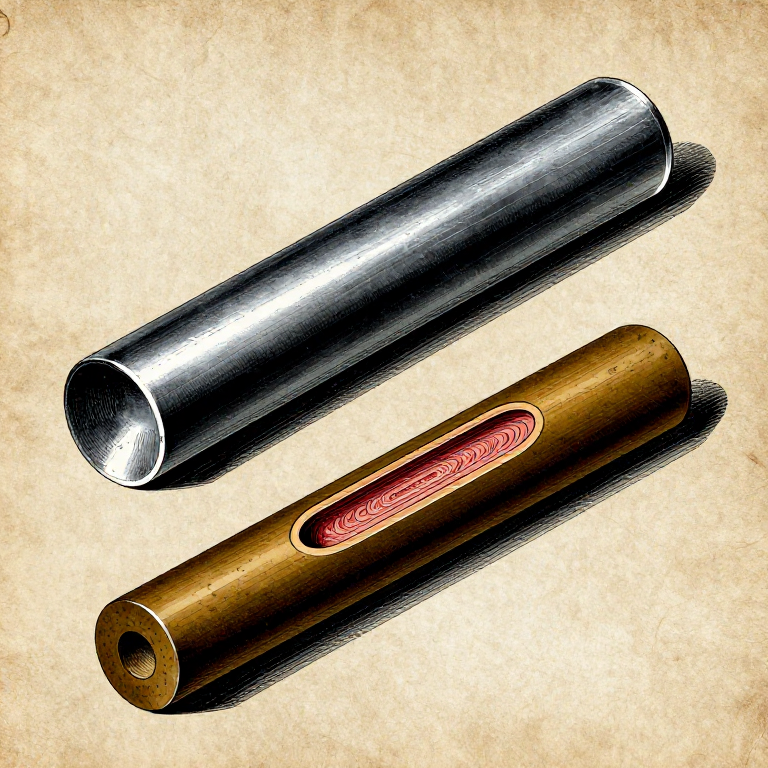
Hafnium has a thermal neutron absorption cross-section of 104 barns — 600 times higher than zirconium's 0.18 barns. This huge difference means hafnium must be completely removed from zirconium used in fuel rod cladding (where neutron transparency is needed), while hafnium itself is excellent for control rods. US Navy nuclear submarines use hafnium control rods because hafnium absorbs neutrons without swelling or becoming brittle under intense irradiation.
4
4
Discover Hafnium in Semiconductor Technology
Discover Hafnium in Semiconductor Technology
Hafnium oxide (HfO₂) replaced silicon dioxide as the gate dielectric in Intel's 45 nm process node in 2007 — one of the most important materials transitions in semiconductor history. HfO₂ has a dielectric constant of 25, versus 3.9 for SiO₂, allowing thicker gate layers that block leakage current while maintaining the same effective capacitance. Every modern CPU, GPU, and smartphone processor manufactured since 2007 contains hafnium oxide in its transistor gates.
5
5
Understand Superalloy Applications
Understand Superalloy Applications
Hafnium additions of 0.5-2% dramatically improve the creep strength and oxidation resistance of nickel-based superalloys used in jet engine turbine blades. Hafnium carbide (HfC) has the highest melting point of any known binary compound at 3,958°C. Hafnium is added to the superalloy CMSX-10 used in single-crystal turbine blades operating at temperatures above 1,100°C in the hottest section of modern turbofan engines.
6
6
Explore Plasma Cutting and Welding
Explore Plasma Cutting and Welding
Hafnium electrodes are used in plasma arc cutting torches because hafnium has a high melting point (2,233°C), forms a stable protective oxide layer at the electrode tip, and resists erosion by the plasma arc better than alternatives. Hafnium-tipped electrodes last 5-10 times longer than copper electrodes in industrial plasma cutting of steel, stainless steel, and aluminum. This is the largest commercial use of hafnium metal by volume.
7
7
Examine Metal Properties
Examine Metal Properties
Hafnium is a lustrous, silvery-gray metal that is ductile and resistant to corrosion. Melting point is 2,233°C, density 13.31 g/cm³ — nearly twice as dense as zirconium despite being chemically almost identical. Hafnium resists corrosion by alkalis, acids (except HF), and most other chemicals. The metal is pyrophoric in powder form. Hafnium is produced by the Kroll process (magnesium reduction of hafnium tetrachloride), the same process used for titanium and zirconium.
8
8
Survey Optical and Ceramic Applications
Survey Optical and Ceramic Applications
Hafnium oxide thin films are used as high-refractive-index layers in multilayer optical coatings for laser mirrors and anti-reflection coatings operating at UV wavelengths. HfO₂ has exceptional radiation hardness — it maintains its optical properties under intense gamma and neutron bombardment. Hafnium diboride (HfB₂) is an ultra-high-temperature ceramic researched for hypersonic vehicle leading edges where temperatures exceed 2,000°C during atmospheric reentry.
필요한 도구:
 정밀 저울
정밀 저울9
9
Understand Supply Chain and Production
Understand Supply Chain and Production
Global hafnium production is only about 70 tonnes per year — entirely as a byproduct of nuclear-grade zirconium production. For every 50 tonnes of nuclear-grade zirconium produced, approximately 1 tonne of hafnium is separated. Hafnium metal is priced at $500-1,500 per kilogram. The entire supply depends on the nuclear industry's demand for hafnium-free zirconium — if nuclear power declined, hafnium supply would shrink proportionally.
10
10
Document Findings and Strategic Importance
Document Findings and Strategic Importance
Record hafnium's key data: atomic number 72, density 13.31 g/cm³, melting point 2,233°C, lustrous silvery-gray metal. Hafnium is a quiet workhorse of advanced technology — present in every modern microprocessor, every naval nuclear reactor, and every high-performance jet engine. Its inseparability from zirconium means that controlling the Hf/Zr separation process is strategically critical. Demand from the semiconductor industry continues to grow with each new transistor generation.
11
11
Ore grade: how much zircon per kilogram
Ore grade: how much zircon per kilogram
Jupyter 노트북 불러오는 중…
연결된 블루프린트 재료
10% 귀속
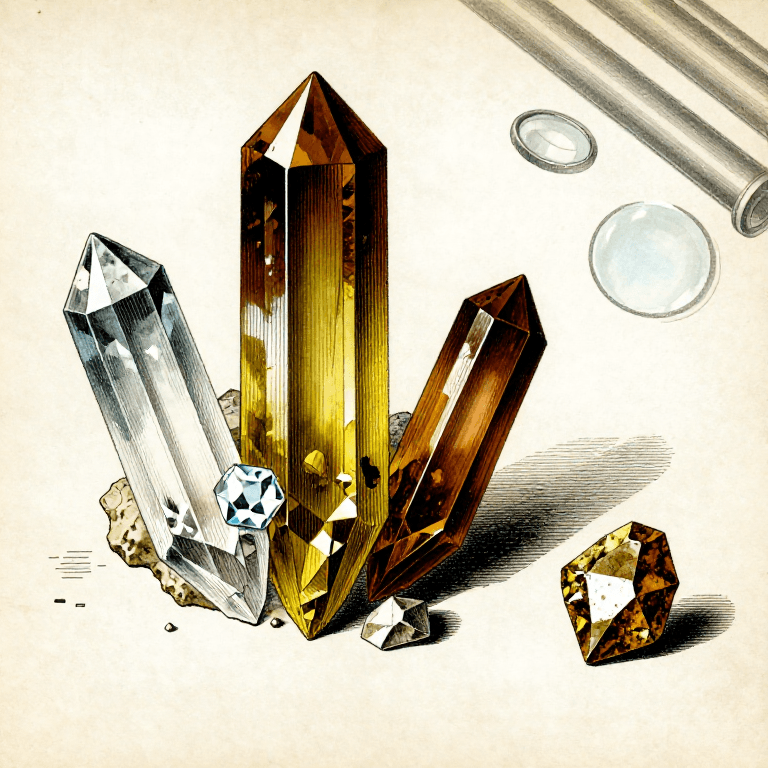
Understanding Zirconium from Zircon — The Ancient Gemstone That Clocks Earth's Age
Peter 작성
채광
24
0
0
0
2
0
위험
10% 귀속
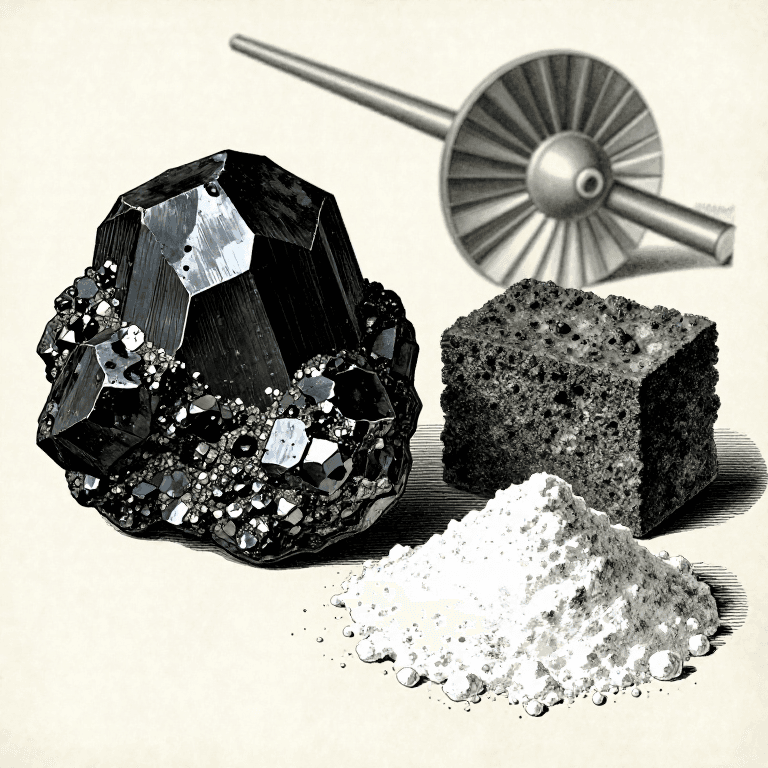
Understanding Titanium Extraction from Ilmenite — The Impossible Metal to Smelt
Peter 작성
채광
61
0
0
0
3
0

10% 귀속
Understanding Niobium from Columbite — The Superconducting Steel Strengthener
Peter 작성
채광
12
0
0
0
3
0
10% 귀속
Extracting Tungsten from Wolframite — The Heaviest Practical Metal
Peter 작성
금속 가공
84
0
0
0
4
0
10% 귀속
Extracting Iron from Hematite — Bloomery Smelting from Ore to Bloom
Peter 작성
금속 가공
154
0
0
0
12
0
관련 블루프린트
이 블루프린트들은 지식을 공유합니다 — 기술, 재료 또는 원리
CC0 퍼블릭 도메인
이 블루프린트는 CC0로 공개되었습니다. 어떤 목적으로든 자유롭게 복사, 수정, 배포 및 사용할 수 있습니다.
제품 구매를 통해 메이커를 지원하세요. 판매자가 설정한 메이커 커미션 을 받거나, 이 블루프린트의 새로운 반복을 만들어 연결로 포함시킬 수 있습니다.