예술
뷰티 및 웰니스
공예
문화 및 역사
엔터테인먼트
환경
음식 및 음료
역공학
과학
스포츠
기술
웨어러블
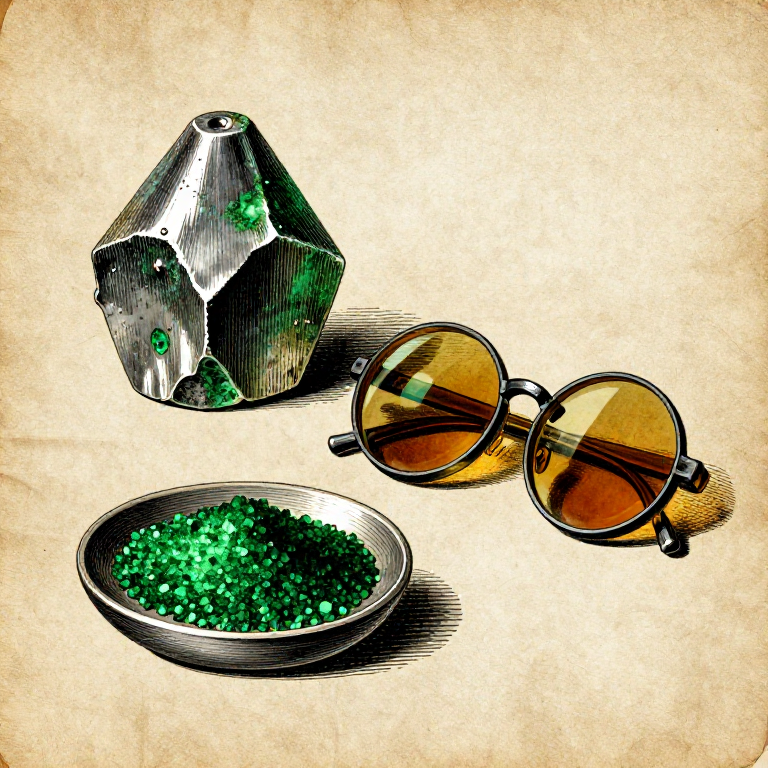
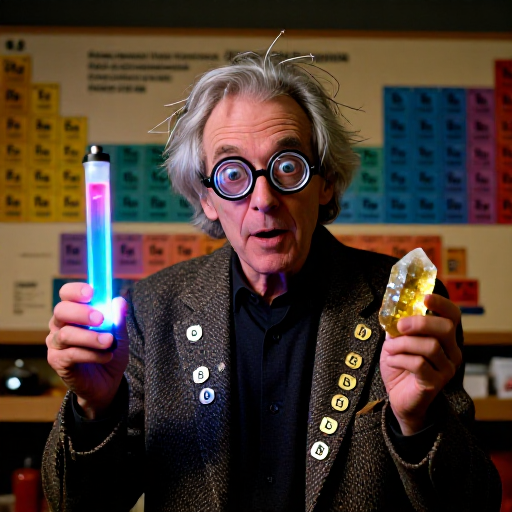
Understanding Praseodymium from Monazite — The Green Twin That Colors Glass
중급
안내
1
1
Understand the Didymium Separation
Understand the Didymium Separation
Carl Auer von Welsbach separated praseodymium from neodymium in 1885 after 40 years of failed attempts by other chemists. What Mosander had called 'didymium' (twin element) in 1841 was actually two elements so similar that ordinary chemical methods could not distinguish them. Von Welsbach used repeated fractional crystallization of double ammonium nitrate salts — over 100 recrystallizations — to obtain green praseodymium and pink neodymium salts.
2
2
Identify Praseodymium in Rare Earth Ores
Identify Praseodymium in Rare Earth Ores
Praseodymium comprises 4-5% of light rare earth concentrates from bastnasite and monazite — always accompanying cerium, lanthanum, and neodymium. Its name comes from Greek 'prasios' (green) and 'didymos' (twin) because Pr³⁺ salts are distinctly green, while Nd³⁺ salts are pink-violet. In solvent extraction cascades, praseodymium separates between lanthanum and neodymium. Annual production is approximately 7,000 tonnes of praseodymium oxide.
이 단계의 재료:
 모나자이트 표본
필요한 도구:
 휴대용 확대경 10배휴대용 확대경 10배
 조흔판(무유 자기)
 모스 경도 시험침
3
3
Examine Praseodymium Metal Properties
Examine Praseodymium Metal Properties
Praseodymium is a soft, silvery metal that develops a distinctive green oxide coating in air — the only lanthanide whose oxide is green rather than white. Melting point is 931°C, density 6.77 g/cm³. Praseodymium has a double-hexagonal close-packed crystal structure (DHCP), unusual among metals. It is paramagnetic and becomes antiferromagnetic below 20 K. The metal is obtained by molten salt electrolysis of PrCl₃ or reduction of PrF₃ with calcium.
4
4
Explore Didymium Glass for Welding
Explore Didymium Glass for Welding
Didymium glass containing praseodymium and neodymium oxides selectively absorbs the intense yellow sodium D-line emission at 589 nm while transmitting other wavelengths. This makes it essential for glassblowing and lampworking goggles — without it, the bright sodium flare from molten glass blinds the worker to the glass shape. Didymium filters are also used in photography to enhance autumn foliage colors by removing the yellow-green wavelengths that dull reds and oranges.
필요한 도구:
 밀폐형 보안경
5
5
Understand Praseodymium in Permanent Magnets
Understand Praseodymium in Permanent Magnets
Praseodymium substitutes for neodymium in NdFeB permanent magnets at up to 25% without significant performance loss, creating (Nd,Pr)₂Fe₁₄B magnets. This is commercially important because praseodymium is cheaper and more abundant than neodymium, and the mixed didymium fraction avoids expensive separation. Most Chinese magnet producers use a mixed Nd-Pr oxide (typically 75:25) called 'didymium metal' as feedstock.
6
6
Discover Praseodymium Yellow Pigment
Discover Praseodymium Yellow Pigment
Praseodymium-doped zirconium silicate (Pr-ZrSiO₄) is a bright yellow ceramic pigment stable to 1,300°C — used in tiles, tableware, and architectural ceramics where organic dyes would decompose. This is one of the few yellow pigments that survives kiln firing. Praseodymium also creates green colors in glass and enamel, and a unique amber color when combined with cerium in automotive glass.
7
7
Explore Aircraft Engine Alloy Applications
Explore Aircraft Engine Alloy Applications
Praseodymium is added to magnesium alloys (with neodymium) to improve high-temperature creep resistance — essential for jet engine gearboxes and missile components. The MEL (magnesium-rare earth-lithium) alloy family uses praseodymium-rich mischmetal. Praseodymium also strengthens aluminum alloys for aerospace applications. These alloys maintain strength at temperatures where conventional magnesium alloys soften and deform.
8
8
Survey Fiber Optic Amplifier Uses
Survey Fiber Optic Amplifier Uses
Praseodymium-doped fluoride glass fibers amplify optical signals at 1,300 nm — the wavelength used in older fiber optic networks. While erbium-doped amplifiers dominate the 1,550 nm band, praseodymium amplifiers served the 1,300 nm window that remains in legacy telecommunications infrastructure. Praseodymium-doped crystals also find use in solid-state lasers operating in the visible spectrum, producing orange, red, and deep-red laser output.
9
9
Understand the Praseodymium-Neodymium Balance
Understand the Praseodymium-Neodymium Balance
Rare earth economics are governed by the 'balance problem' — mining for one element inevitably produces all others in fixed ratios. Bastnasite yields a Ce:La:Nd:Pr ratio of roughly 50:25:18:5. The explosive demand for neodymium magnets creates surpluses of cerium, lanthanum, and praseodymium. Using praseodymium alongside neodymium in magnets is not just cheaper — it helps solve the balance problem by creating demand for an otherwise surplus element.
필요한 도구:
 정밀 저울
정밀 저울10
10
Document Findings and Market Context
Document Findings and Market Context
Record praseodymium's key data: atomic number 59, density 6.77 g/cm³, melting point 931°C, silvery metal with green oxide. Praseodymium oxide is priced at $50-80 per kilogram — intermediate between cheap cerium/lanthanum and expensive neodymium/dysprosium. Its ability to substitute for neodymium in magnets makes praseodymium increasingly strategic. China dominates production, but new rare earth projects in Australia, Canada, and the US are diversifying supply.
11
11
Ore grade: how much monazite per kilogram
Ore grade: how much monazite per kilogram
Jupyter 노트북 불러오는 중…
연결된 블루프린트 재료

위험
10% 귀속
Extracting Neodymium-Rich Rare Earth Oxide from Monazite — The Magnet Metal That Reshaped Technology
Peter 작성
채광
37
0
0
0
11
0
10% 귀속
Understanding Cerium from Bastnasite — The Self-Cleaning Rare Earth
Peter 작성
채광
10
0
0
0
9
0
10% 귀속
Understanding Lanthanum from Monazite — The Hidden Element That Bends Light
Peter 작성
채광
19
0
0
0
8
0
위험
10% 귀속
Understanding Yttrium from Xenotime — The Rare Earth That Lights Red Screens
Peter 작성
채광
42
0
0
0
12
0
10% 귀속
Extracting Iron from Hematite — Bloomery Smelting from Ore to Bloom
Peter 작성
금속 가공
154
0
0
0
12
0
관련 블루프린트
이 블루프린트들은 지식을 공유합니다 — 기술, 재료 또는 원리
CC0 퍼블릭 도메인
이 블루프린트는 CC0로 공개되었습니다. 어떤 목적으로든 자유롭게 복사, 수정, 배포 및 사용할 수 있습니다.
제품 구매를 통해 메이커를 지원하세요. 판매자가 설정한 메이커 커미션 을 받거나, 이 블루프린트의 새로운 반복을 만들어 연결로 포함시킬 수 있습니다.